
Del 182
Del 38 i serien De Gruyter Studies in Mathematics
Markov Processes, Semigroups and Generators
Inbunden, Engelska, 2011
3 169 kr
Beställningsvara. Skickas inom 5-8 vardagar. Fri frakt för medlemmar vid köp för minst 249 kr.
Markov processes represent a universal model for a large variety of real life random evolutions. The wide flow of new ideas, tools, methods and applications constantly pours into the ever-growing stream of research on Markov processes that rapidly spreads over new fields of natural and social sciences, creating new streamlined logical paths to its turbulent boundary. Even if a given process is not Markov, it can be often inserted into a larger Markov one (Markovianization procedure) by including the key historic parameters into the state space.This monograph gives a concise, but systematic and self-contained, exposition of the essentials of Markov processes, together with recent achievements, working from the "physical picture" - a formal pre-generator, and stressing the interplay between probabilistic (stochastic differential equations) and analytic (semigroups) tools.The book will be useful to students and researchers. Part I can be used for a one-semester course on Brownian motion, Lévy and Markov processes, or on probabilistic methods for PDE. Part II mainly contains the author's research on Markov processes.From the contents: Tools from Probability and AnalysisBrownian motionMarkov processes and martingalesSDE, ψDE and martingale problemsProcesses in Euclidean spacesProcesses in domains with a boundaryHeat kernels for stable-like processesContinuous-time random walks and fractional dynamicsComplex chains and Feynman integral
Produktinformation
- Utgivningsdatum2011-03-17
- Mått170 x 240 x 33 mm
- Vikt886 g
- FormatInbunden
- SpråkEngelska
- SerieDe Gruyter Studies in Mathematics
- Antal sidor448
- Upplaga11001
- FörlagDe Gruyter
- ISBN9783110250107
Tillhör följande kategorier
Hoppa över listan

Mer från samma författare
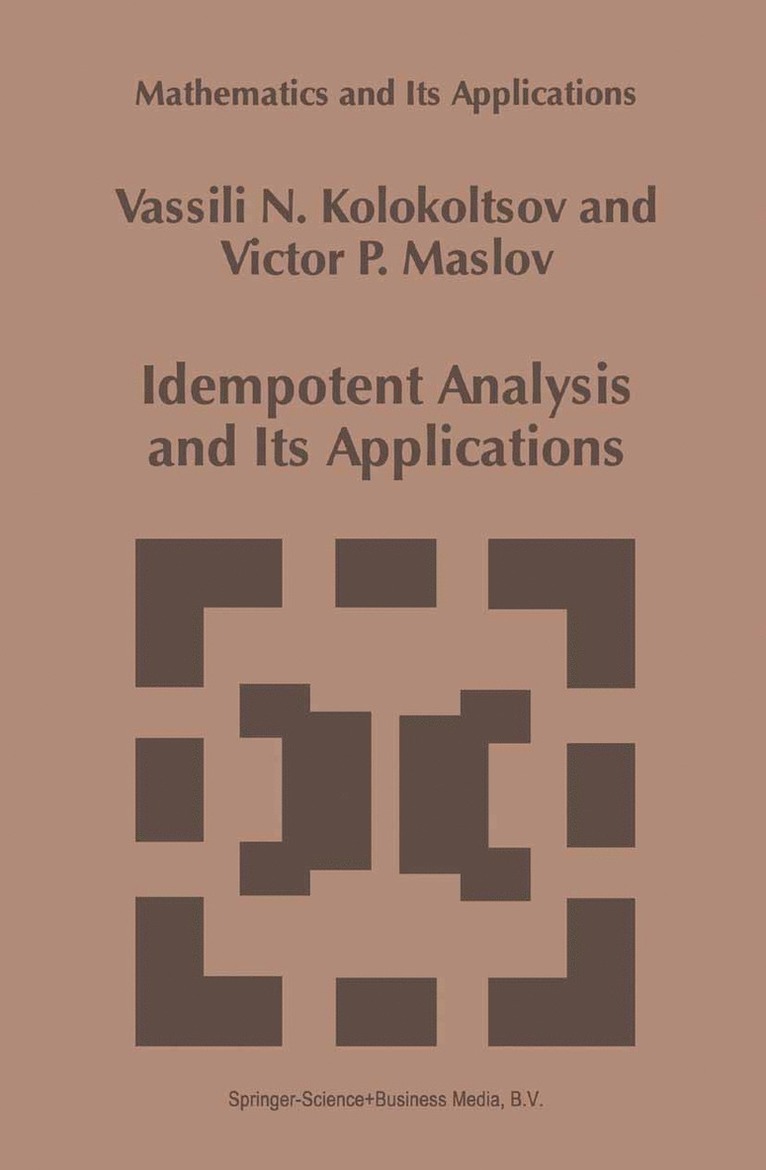
Idempotent Analysis and Its Applications
Vassili N. Kolokoltsov, Victor P. Maslov
Inbunden, 1997
3 139 kr
Many Agent Games in Socio-economic Systems: Corruption, Inspection, Coalition Building, Network Growth, Security
Vassili N. Kolokoltsov, Oleg A. Malafeyev
Inbunden, 2019
1 289 kr
Many Agent Games in Socio-economic Systems: Corruption, Inspection, Coalition Building, Network Growth, Security
Vassili N. Kolokoltsov, Oleg A. Malafeyev
Häftad, 2020
939 kr
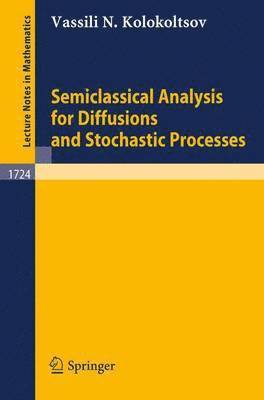
Semiclassical Analysis for Diffusions and Stochastic Processes
Vassili N. Kolokoltsov
Häftad, 2000
719 kr
Idempotent Analysis and Its Applications
Vassili N. Kolokoltsov, Victor P. Maslov
Häftad, 2010
3 149 kr
UNDERSTANDING GAME THEORY: INTRODUCTION TO THE ANALYSIS OF MANY AGENT SYSTEMS WITH COMPETITION AND COOPERATION (SECOND EDITION)
Vassili N Kolokoltsov, Oleg A Malafeyev
Inbunden, 2020
2 309 kr
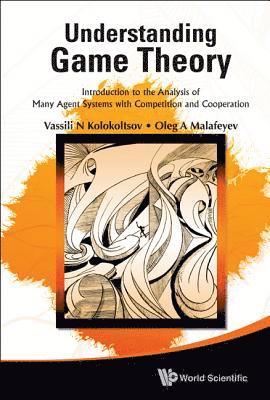
UNDERSTANDING GAME THEORY: INTRODUCTION TO THE ANALYSIS OF MANY AGENT SYSTEMS WITH COMPETITION AND COOPERATION
Vassili N Kolokoltsov, Oleg A Malafeyev
Inbunden, 2010
1 509 kr
Hoppa över listan



Mer från samma serie
Del 70
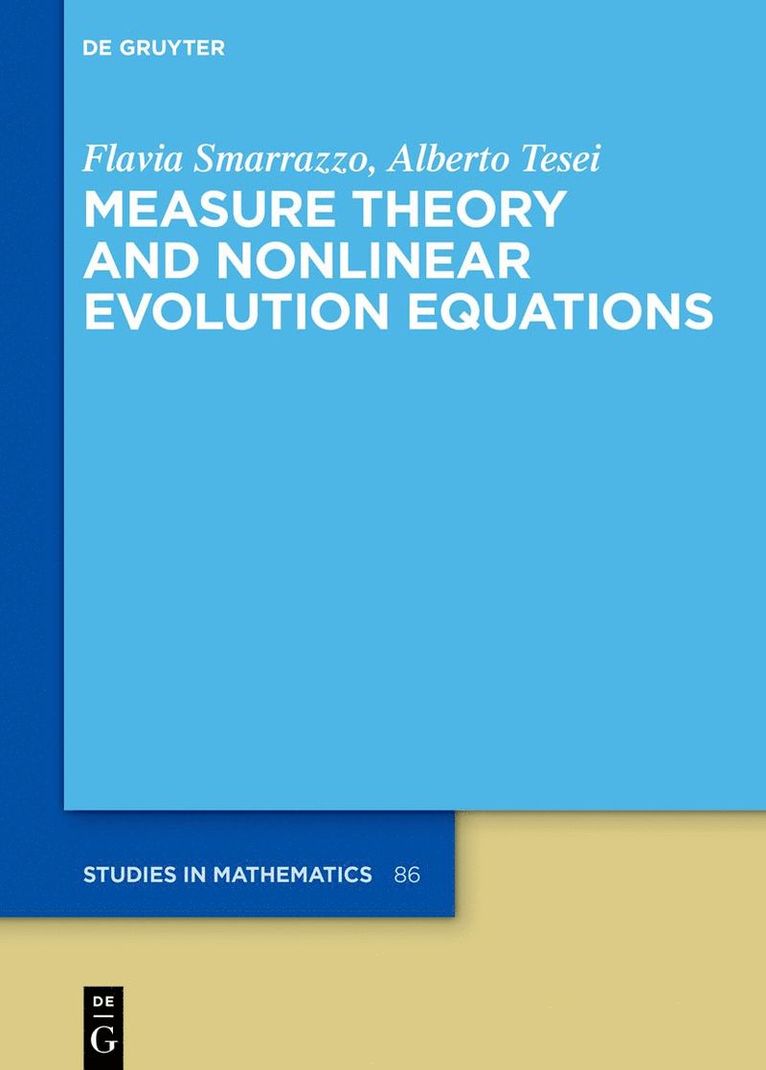
Measure Theory and Nonlinear Evolution Equations
Flavia Smarrazzo, Alberto Tesei
Inbunden, 2022
2 169 kr
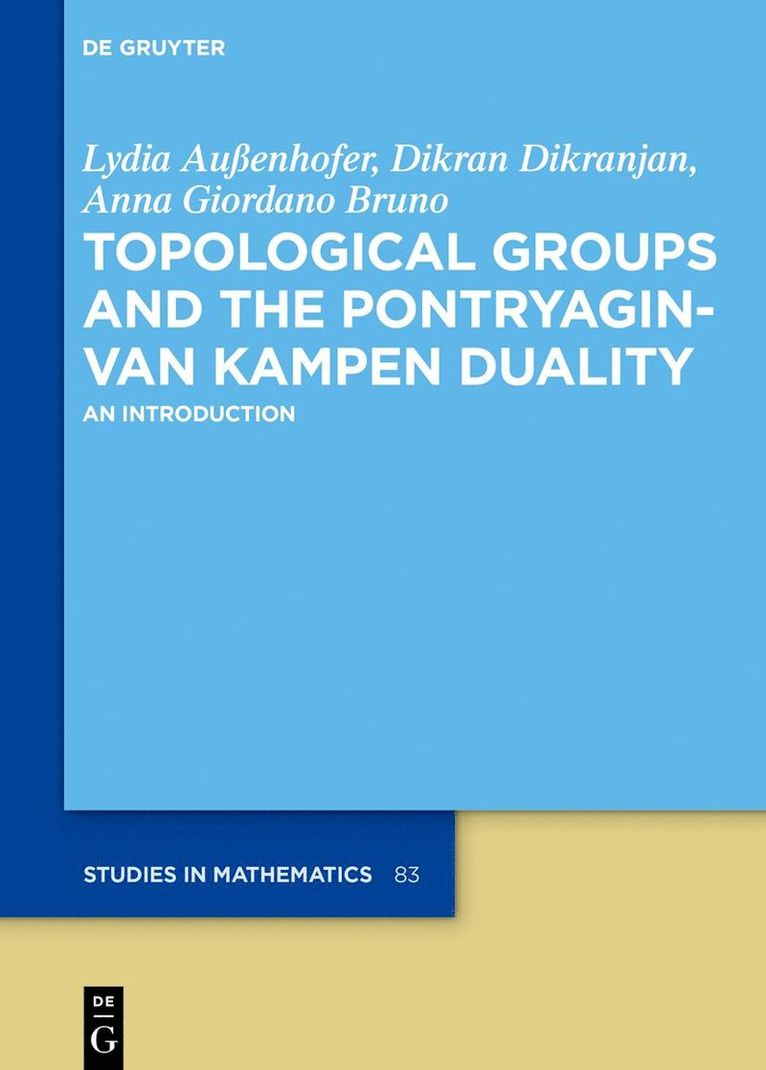
Topological Groups and the Pontryagin-van Kampen Duality
Lydia Außenhofer, Dikran Dikranjan, Anna Giordano Bruno
Inbunden, 2021
1 979 kr
Del 94
Del 3
Del 6
Del 2
Hoppa över listan

Du kanske också är intresserad av
Idempotent Analysis and Its Applications
Vassili N. Kolokoltsov, Victor P. Maslov
Inbunden, 1997
3 139 kr
Idempotent Analysis and Its Applications
Vassili N. Kolokoltsov, Victor P. Maslov
Häftad, 2010
3 149 kr
Del 182
Semiclassical Analysis for Diffusions and Stochastic Processes
Vassili N. Kolokoltsov
Häftad, 2000
719 kr
Many Agent Games in Socio-economic Systems: Corruption, Inspection, Coalition Building, Network Growth, Security
Vassili N. Kolokoltsov, Oleg A. Malafeyev
Häftad, 2020
939 kr
Many Agent Games in Socio-economic Systems: Corruption, Inspection, Coalition Building, Network Growth, Security
Vassili N. Kolokoltsov, Oleg A. Malafeyev
Inbunden, 2019
1 289 kr
UNDERSTANDING GAME THEORY: INTRODUCTION TO THE ANALYSIS OF MANY AGENT SYSTEMS WITH COMPETITION AND COOPERATION (SECOND EDITION)
Vassili N Kolokoltsov, Oleg A Malafeyev
Inbunden, 2020
2 309 kr
UNDERSTANDING GAME THEORY: INTRODUCTION TO THE ANALYSIS OF MANY AGENT SYSTEMS WITH COMPETITION AND COOPERATION
Vassili N Kolokoltsov, Oleg A Malafeyev
Inbunden, 2010
1 509 kr
- Nyhet
Del 3
- Nyhet
Del 11