
Del 91 i serien International Studies in Sociology and Social Anthropology
Immigration and Ethnic Formation in a Deeply Divided Society
The Case of the 1990s Immigrants from the Former Soviet Union in Israel
Häftad, Engelska, 2003
1 479 kr
Beställningsvara. Skickas inom 5-8 vardagar. Fri frakt för medlemmar vid köp för minst 249 kr.
This book deals with the ethnic formation among the 1990s immigrants from the former Soviet Union in Israel, in light of both domestic changes, and developments in the Israel- Arab conflict. Based on a broad variety of quantitative and qualitative methods, the book presents a detailed analysis of identity patterns among these immigrants, their orientation in matters of religion, society, culture and politics, and their relationships with all the constituent groups in Israeli society – including the Palestinian minority. The book provides a new critical perspective on questions of immigration, ethnicity and society in Israel. The analysis is placed in a global theoretical context that challenges the dominant approach in the sociology of immigration in Israel, which is based on the Zionist paradigm.
Produktinformation
- Utgivningsdatum2003-11-20
- Mått160 x 240 x 15 mm
- Vikt453 g
- FormatHäftad
- SpråkEngelska
- SerieInternational Studies in Sociology and Social Anthropology
- Antal sidor246
- FörlagBrill
- ISBN9789004136250
Tillhör följande kategorier
Hoppa över listan





Mer från samma författare
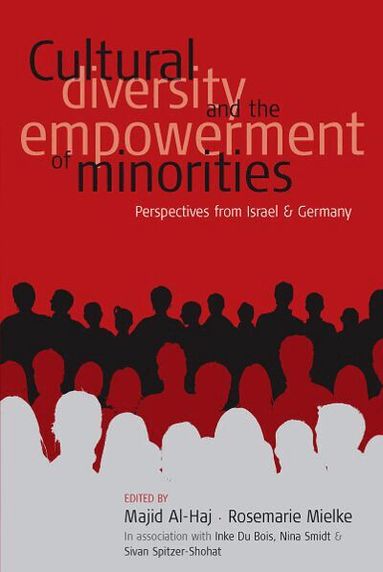
Cultural Diversity and the Empowerment of Minorities
Rosemarie Mielke, Majid Al-Haj
Inbunden, 2007
2 499 kr
Hoppa över listan








Mer från samma serie
Del 50
Del 58
Del 70
Del 69
Del 71
Del 73
Del 75
Del 78
Dynamics and Policy Implications of the Global Reforms at the End of the Second Millennium
Tukumbi Lumumba-Kasongo
Häftad, 2000
1 459 kr
Del 77
Del 79
Critical Perspectives on Globalization and Neoliberalism in the Developing Countries
Richard Harris, Melinda Seid
Häftad, 2001
1 459 kr
Hoppa över listan


Du kanske också är intresserad av
Cultural Diversity and the Empowerment of Minorities
Rosemarie Mielke, Majid Al-Haj
Inbunden, 2007
2 499 kr
- Nyhet
Del 7
- Nyhet
Del 4
- Nyhet
Del 6