
Semiotics of Performances
An Introduction to the Analysis, Interpretation, and Theory of the Performing Arts
Inbunden, Engelska, 2025
1 409 kr
Beställningsvara. Skickas inom 10-15 vardagar. Fri frakt för medlemmar vid köp för minst 249 kr.
Finns i fler format (1)
What is a live performance? And why is semiotics the best approach for the analysis and interpretation of the performing arts?Drawing on semiotic developments of the past five decades, this book introduces students to the semiotic analysis of live performances and provides them with a clear method for untangling the multimodal complexity of performance from the spectator’s point of view.Presenting live performances as two-way communication processes, social events, and cognitive and affective experiences, each chapter of this highly accessible book begins first with an overview of the basics. This is followed by a case study, and moves through to a more advanced discussion, accompanied by suggestions for exercises and further reading. Diagrams and flow charts help to clearly illustrate the conceptual tools used in the analytical process, and a companion website contains recorded extracts from the live performances discussed in the book, which students can use to put their knowledge into practice. The book explores a broad range of performance types from across different cultures, including music, opera, ballet, theatre, circus, mime, improvisation, and immersion. It offers a guide for understanding the way in which a performance is produced, from an initial idea through to the final presentation in front of a live audience, and provides the reader with the tools and understanding they need for a successful semiotic analysis of live performance.
Produktinformation
- Utgivningsdatum2025-01-09
- Mått162 x 238 x 16 mm
- Vikt420 g
- FormatInbunden
- SpråkEngelska
- Antal sidor184
- FörlagBloomsbury Publishing PLC
- ISBN9781350372665
Tillhör följande kategorier
Hoppa över listan


Mer från samma författare
Pronominal Systems: Patterns of Change in the Addressing, Gendering, and Referencing Functions in Contemporary European Languages
Paul Bouissac
Inbunden, 2028
2 579 kr
Hoppa över listan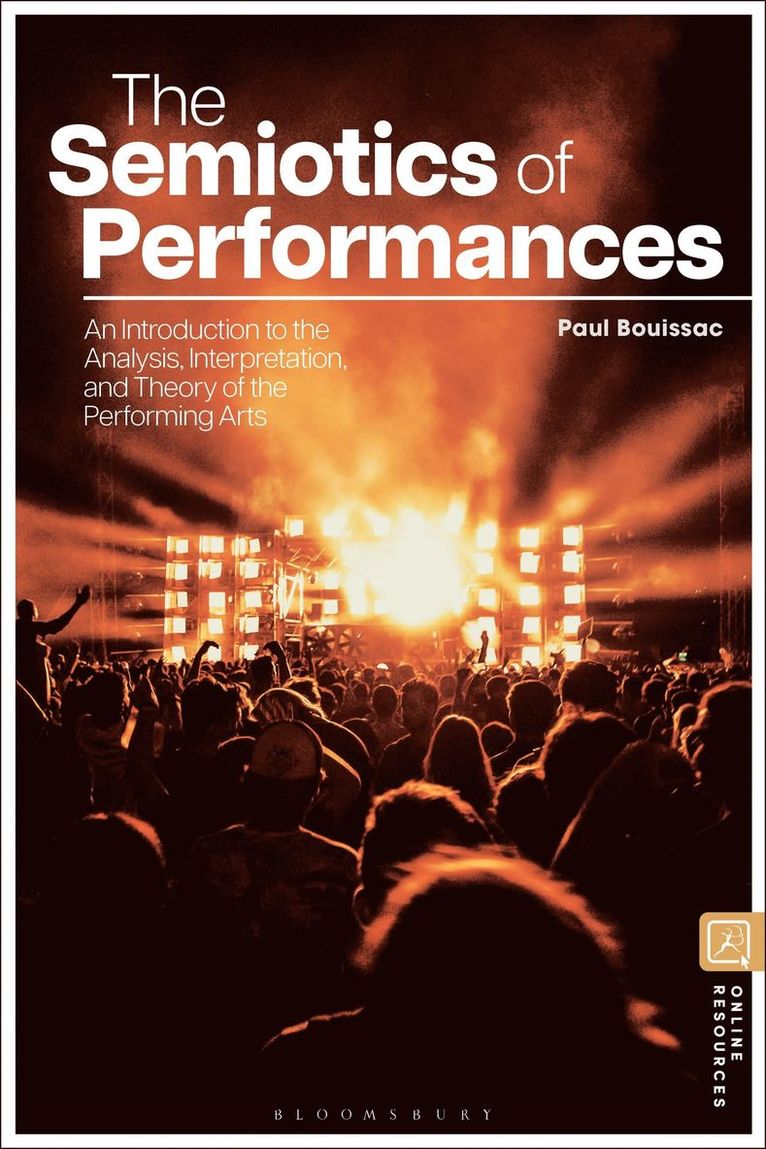
Du kanske också är intresserad av
N - Z
Thomas A. Sebeok, Paul Bouissac, Umberto Eco, Jerzy Pelc, Roland Possner, Alain Rey, Ann Shukmann
Inbunden, 1986
3 709 kr
Del 3