
Seen, the Unseen, and the Unrealized
How Regulations Affect Our Everyday Lives
Inbunden, Engelska, 2016
1 699 kr
Beställningsvara. Skickas inom 10-15 vardagar. Fri frakt för medlemmar vid köp för minst 249 kr.
Finns i fler format (1)
This book illuminates the real effects of regulations on people’s everyday lives. It traces the effects of regulations on an economy by working through the ripple effects of changes. In so doing, the book provides a fundamental understanding for the economy as an organism rather than a machine, and enlightens the reader by offering a model for understanding the economy and market. Regulations, which are restrictions placed on the working of the economy, have consequences, both intended and unintended, direct and indirect. While the direct effects are well understood, the indirect effects are often overlooked because they don’t fit with the machine understanding of an economy. More to the point, this book emphasizes the real effects of regulation and market change on individual actors, thereby stressing how the economy works to provide an individual with the options that exist in choice situations. We draft a new definition of prosperity and well-being which focuses on the individual’s access to valuable alternatives. From this point of view, the real implications of regulation are traced step by step, following the logic of exchange and the effects on individual actors rather than the economy as a whole.
Produktinformation
- Utgivningsdatum2016-08-03
- Mått157 x 238 x 18 mm
- Vikt422 g
- FormatInbunden
- SpråkEngelska
- SerieCapitalist Thought: Studies in Philosophy, Politics, and Economics
- Antal sidor192
- FörlagBloomsbury Publishing Plc
- ISBN9780739194577
Tillhör följande kategorier
Hoppa över listan

Mer från samma författare
Research Handbook on Austrian Economics in Management and Entrepreneurship
Vishal K. Gupta, Per L. Bylund
Inbunden, 2025
3 599 kr
Hoppa över listan

Mer från samma serie
- Nyhet
Perspectives on Ayn Rand's Contributions to Economic and Business Thought
Edward W. Younkins
Häftad, 2020
889 kr
Hoppa över listan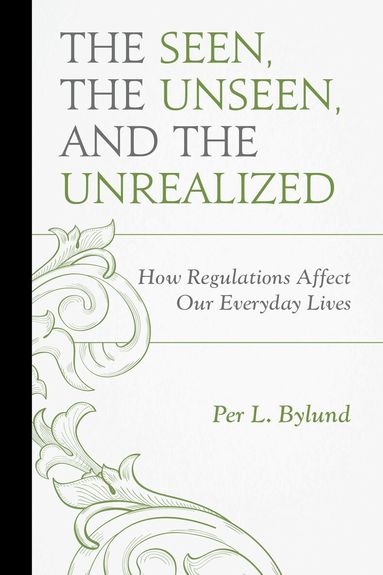

Du kanske också är intresserad av
Research Handbook on Austrian Economics in Management and Entrepreneurship
Vishal K. Gupta, Per L. Bylund
Inbunden, 2025
3 599 kr
- Nyhet
Del 7