
From Politics to Morality
- Nyhet
Implications of Rasmussen and Den Uyl’s Norms of Liberty
Inbunden, Engelska, 2026
1 629 kr
Beställningsvara. Skickas inom 10-15 vardagar. Fri frakt för medlemmar vid köp för minst 249 kr.
Navigating the intersection of philosophy, morality, economics and politics, this multidisciplinary volume explores the implications of Douglas B. Rasmussen and Douglas J. Den Uyl’s Norms of Liberty twenty years on from publication.Written by acclaimed scholars, this multidisciplinary volume of essays is a timely and necessary addition to existing scholarship on political theory and neo-Aristotelian ethics. The holistic and varied approach taken by each of the contributors results in a collection of essays that is impressive in both its scope and depth.From Politics to Morality examines the broader implications of Norms of Liberty for liberalism, conservatism, utilitarianism and natural law, amongst others. Alongside more established topics such as realistic versus idealistic conceptions of political philosophy, this book additionally explores novel topics including the compatibility between liberal theory and Catholic social thought.As well as furthering the readers’ understanding of the key arguments put forward by Rasmussen and Den Uyl, the essays contribute to debates within the contemporary political landscape. Using Norms of Liberty as a springboard, the essays comment on issues ranging from the extent of government power, to the protection of individual natural rights and the fostering of cohesive society.Part of the Capitalist Thought series, From Politics to Morality is the perfect companion for students studying philosophy, politics, and social ethics. With its relevance to the contemporary political landscape, the text would also be invaluable for scholars and practitioners interested in the field of political theory or neo-Aristotelian ethics.
Produktinformation
- Utgivningsdatum2026-10-01
- Mått156 x 234 x 20 mm
- Vikt584 g
- FormatInbunden
- SpråkEngelska
- SerieCapitalist Thought: Studies in Philosophy, Politics, and Economics
- Antal sidor280
- FörlagBloomsbury Publishing PLC
- MedarbetareEdwardW. Younkins
- ISBN9781350585706
Tillhör följande kategorier
Hoppa över listan



Mer från samma författare
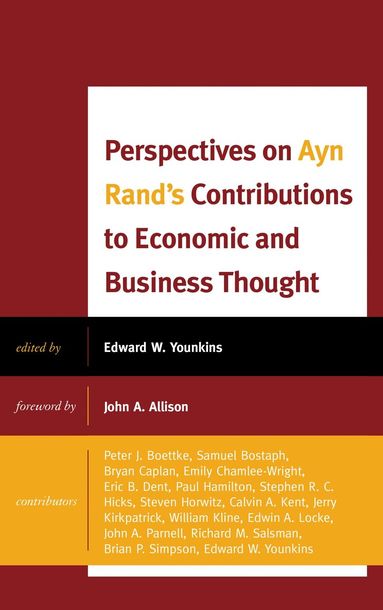
Perspectives on Ayn Rand's Contributions to Economic and Business Thought
Edward W. Younkins
Häftad, 2020
889 kr
Hoppa över listan


Du kanske också är intresserad av
Dialectics of Liberty
Roger E. Bissell, Chris Matthew Sciabarra, Edward W. Younkins
Häftad, 2020
779 kr