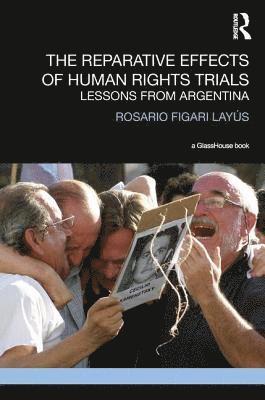
Justice in domestic courts is one of the most prominent aims of victims seeking to obtain accountability for human rights violations. It is, however, also one of the most difficult to achieve. In many Latin American countries, as well as elsewhere, activists have put human rights prosecutions forward as a fundamental means to end impunity, build democracy, strengthen the rule of law and address victims’ rights. But there is still little knowledge about what actually happens when these judicial mechanisms are effectively put to work. Can prosecutions of mass human rights violations contribute to overcome the effects of state violence and impunity? Can trials enable meaningful reparative changes for victims in their local contexts? Analysing the human rights trials in Argentina established to prosecute those responsible for human rights violations during the military dictatorship, this book addresses how and why domestic prosecutions can operate as a means for reparation and contribute to dealing with the damage caused by crimes against humanity. Based on a series of interviews conducted with victims participating in these prosecutions, as well as with lawyers, prosecutors, judges and other relevant actors in five provinces of Argentina, this book will be of considerable interest to those studying and working in the interdisciplinary field of transitional justice and human rights. The PhD thesis on which this book was based was awarded with the 2016 Doctoral Studies Award of the Philipps University of Marburg in Germany.
Rosario Figari Layús is based at the Philipps University of Marburg in Germany from where she holds a PhD in Political Science. Her areas of work and research are transitional justice, human rights and political violence.
INTRODUCTION: "Small Victories" The Argentine Case: State Repression and the Path to Human Rights Trials Reparative JusticeVictimhood and JusticeDebates on the Social and Political Construction of Victims The Relevance of the Victims’ Perspective in ArgentinaFieldwork and Data CollectionStructure of the Book PART I: Theoretical Approaches to Reparative Criminal Justice CHAPTER 1: Justice and Reparation of Human Rights Violations 1.1. Research on Human Rights Prosecutions 1.1.1. The Post Second World War Trials1.1.2. The Transitional Justice Approach1.1.3. The Debate for and against Prosecutions1.2. What does Reparation Mean?1.2.1. Civic and Legal Reparation1.2.2. Personal Reparation1.2.3. Social Reparation1.3. Why Do Human Rights Trials Provide Reparation?1.3.1. Communicating and Shaping Social Behaviour1.3.2. Symbolic Effectiveness: Legitimacy, Acknowledgment and its Social Implications1.3.3. The Power of Law: PART II: Implications of State Terror, Limited Justice and Impunity for Victims of Human Rights Violations CHAPTER 2: The Hallmarks of State Terror on Victims and the Wider Argentine Society 2.1. State Organised Violence in Argentina2.1.1. The Military Dictatorship2.1.2. Reconstructing the Meaning of State Violence 2.2. Forced Disappearance in Argentina 2.2.1. Repression and Denial 2.2.2. Psychosocial Consequences 2.3. The Erasure of Rights and the Attempts of Resistance 2.4. Terror and the Rupture of Social Bonds 2.5. Victims under Suspicion: Displacement of Responsibility 2.5.1. The Stigma of SurvivingCHAPTER 3: Darkness and Light of the Military Juntas Trial3.1. The Transition and the Military Obstacles to Accountability3.2. The Promise of Justice3.3. Limitations of the Juntas Trial 3.3.1. The Number of Prosecutions3.3.2. Testifying in Fear3.3.3. Silences in the Testimonies: The Reflection of Stigmatisation on the Judiciary 3.3.4. The Capital-centric Approach to Justice CHAPTER 4: "As if Nothing Had Happened." Legal Impunity and its Social Implications for Victims 4.1. The Era of Impunity 4.1.1 Partial Justice: Accountability for the Theft of Children and Truth Trials4.2. Social and Political Implications of Impunity for Victims 4.2.1. Reproducing Fear: Victims at Risk4.2.2. The Silence and Paralysis of Society4.2.3. Indifference and Social Impunity4.3. Public Support for Perpetrators4.4. Victims as Second-Class CitizensPART III: Reparation through Domestic Human Rights TrialsCHAPTER 5: An Introduction to Human Rights Trials in Argentina. Dynamics, Advances and Challenges 5.1. The Path towards Justice5.2. Prosecuting Human Rights Violations in the Domestic Legal System5.3. The Constellation of Actors in the Trials5.4. The Dynamics of the Trials 5.4.1. Political and Bureaucratic Challenges 5.4.2. The Criminal Responsibility of Civil Actors 5.4.3. The Trials "In the Provinces"5.4.4. Human Rights Policies in Times of the Macri Administration: Trials at Risk?CHAPTER 6: Towards Legal and Civic Reparation 6.1. Civic and Legal Reparation: Towards the Restitutions of Rights 6.2. The Right to the Truth: Reconstructing the Puzzle of the Past 6.2.1. The Incomplete Puzzle6.3. Acknowledging and Legitimating the Victims’ Voices CHAPTER 7: Reparation as Empowerment 7.1. Dealing with Fear7.1.1. Facing Fear in Court7.2. Breaking the Silence Inside and Outside of Court7.2.1. Taboo 1: Denouncing Sexualised Violence7.2.2. Taboo 2: Testifying on Political Militancy 7.2.3. The Other Face of TestimonyCHAPTER 8: The Restorative Effects of Trials on the Victims’ Social Context 8.1. Trials as Restorative Justice 8.1.1. The Restorative versus Retributive Justice Debate8.2. Beyond the Victims: The Social Scope of Prosecutions8.2.1. The Public Modality of the Trials 8.2.2. The Federal Scope of the Trials: "This also happened to us"8.3. Social Inclusion. Making Victims Visible8.4. Decrease in Public Support for Perpetrators 8.5. Towards a Social Framework of Reparation CONCLUDING REFLECTIONSTowards a Distinction in Criminal Prosecutions and Human Rights Trials