Nineteenth Century British Pharmacy and Pharmaceuticals
- Nyhet
Volume III: Drugs – From Plant Remedy to Pharmaceutical
Inbunden, Engelska, 2026
2 829 kr
Kommande
Produktinformation
- Utgivningsdatum2026-08-24
- Mått156 x 234 x undefined mm
- FormatInbunden
- SpråkEngelska
- SerieNineteenth-Century Science, Technology and Medicine: Sources and Documents
- Antal sidor412
- FörlagTaylor & Francis Ltd
- ISBN9781032745848
Tillhör följande kategorier
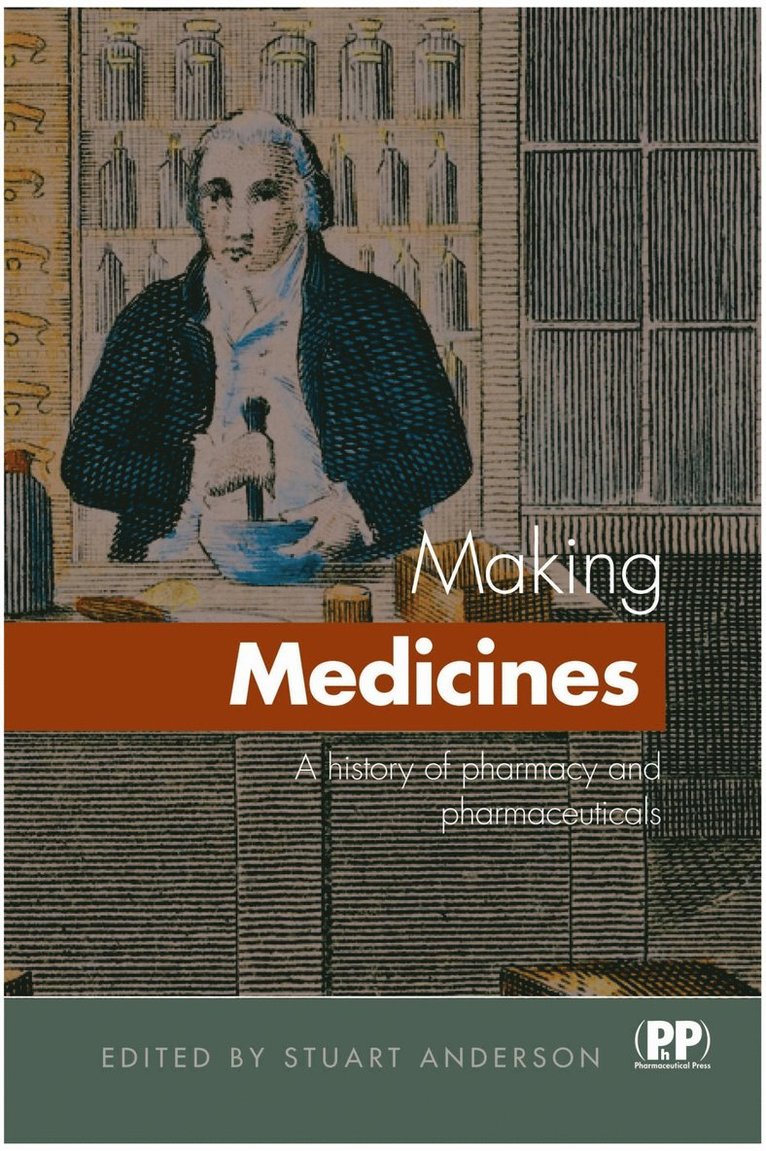
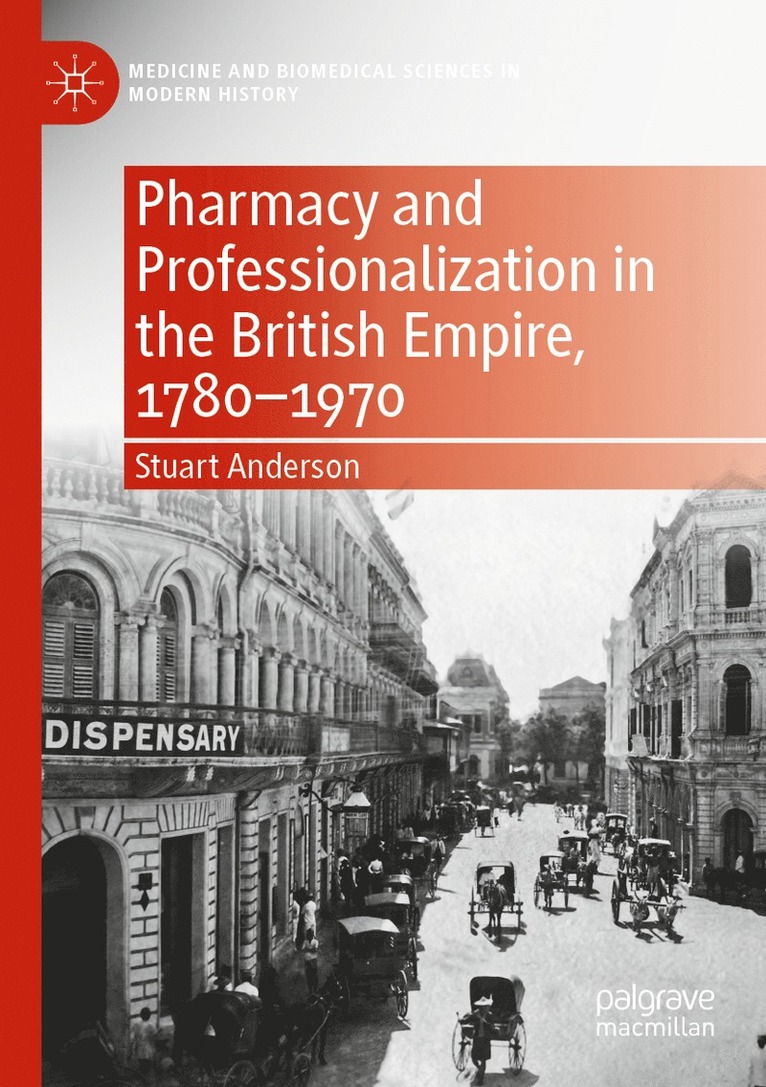
Stuart Anderson is emeritus professor in pharmacy history at the Centre for History in Public Health at the London School of Hygiene & Tropical Medicine. He is the author of Pharmacy and Professionalization in the British Empire, 1780-1970 (Palgrave McMillan, 2021), and his book Pharmacopoeias, Drug Regulation, and Empire: Making Medicines Official in Britain’s Imperial World, 1681-1968 will be published by McGill-Queen’s University Press in 2024. He was the editor of Making Medicines: A Brief History of Pharmacy and Pharmaceuticals (Pharmaceutical Press, 2005) and is the editor of the international journal Pharmaceutical Historian. He is a past chair of the Society for the Social History of Medicine, a past president of the British Society for the History of Pharmacy and was president of the International Academy for the History of Pharmacy 2009 to 2017. He is a Fellow of both the Royal Pharmaceutical Society and the Royal Historical Society.
- Volume 3. Drugs – From Plant Remedy to PharmaceuticalAcknowledgementsGeneral IntroductionIntroduction to Volume 3Part 1. Plants with active ingredients1. E. Stone, ‘An account of the Success of the Bark of the Willow in the Cure of Agues’, Philosophical Transactions (London: Royal Society, 1763), pp. 195–200. 2. W. Withering, ‘Introduction’, ‘An Account of the Introduction of Foxglove into modern practice’, and ‘Of the preparations and doses of the Foxglove’, in An Account of the Foxglove and some of its medical uses, (London: G. C. J. and J. Robinson, 1785), pp. xi-xx, 1-10, 179-923. J. Spence, ‘Practical Remarks on the Use of Digitalis in Consumption’, Medical repository, and review of American publications on medicine, surgery, and the auxiliary branches of philosophy, volume V (New York: Swords, 1802), pp. 17–21.4. H. Gerland, ‘New formation of salicylic acid’, Journal of the Chemical Society 5 (1852), pp. 133–6. 5. J. Pereira, ‘Cinchona’, in The Elements of Materia Medica and Therapeutics, volume 2 (London: Longman, Brown, Green and Longman, 1854), pp. 631–4.6. C. Bernard, ‘Études physiologiques sur quelques poisons américains: le curare’, La Revue des Deux Mondes, 1864, 53, pp. 164–90. (Trans. J. Black, ‘Claude Bernard on the action of curare’, British Medical Journal (4 September 1999), p. 622.7. C. A. Brown, and T. R. Fraser, ‘On the physiological action of the salts of the ammonium bases, derived from strychnia, brucia, thebaia, codeia, morphia, and nicotia’, Transactions of the Royal Society of Edinburgh XXV (1869), pp. 151–54.8. T. Maclagan, ‘The treatment of rheumatism by salacin and salicylic acid’, British Medical Journal 1 (20 May 1876), p. 627. 9. T. R. Fraser, ‘Strophanthis hispidus: its natural history, chemistry, and pharmacology’, Transactions of the Royal Society of Edinburgh XXXIV (1890), pp. 955–960.Part 2. Extracting active ingredients from plants 10. J. H. Dickson, ‘Vegetable alkalis’, Edinburgh Medical and Surgical Journal 18 (January 1822), pp. 151–9. 11. J. Elliotson, ‘Illustrations of the medical properties of Quinina’, Medico–Chururgical Transactions (1823), p. 543-549.12. W. Gregory, ‘On a process for preparing economically the muriate of opium’, Edinburgh Medical and Surgical Journal 35 (January 1831), p. 331–8. 13. C. Babbage, ‘Call to stop importing Peru bark’, in On the Economy of Machinery and Manufactures (London: Charles Knight, 1832), pp. 380–1. 14. H. How, ‘On some new basic products obtained by the decomposition of vegetable alkaloids’, Quarterly Journal of the Chemical Society 6 (1853), pp. 125–30.Part 3. Chemical medicines15. J. Y. Simpson, ‘On a new anaesthetic agent, more efficient than sulphuric ether,’ Lancet (20 November 1847), pp. 549–50. 16. J. Syme, ‘On the use of ether in the performance of surgical operations,’ Monthly Journal of Medical Science (1847–48), pp. 73–6.17. F. C. Calvert, ‘On the therapeutic properties of carbolic acid’, Lancet 2 (1863), pp. 362–3. 18. T. L. Brunton, ‘On the use of nitrite of amyl in angina pectoris,’ Lancet 2 (1867), pp. 97–8. 19. J. Lister, ‘On the antiseptic principle in the practice of surgery’, Lancet 2 (1867), pp. 353–6. 20. J. Lister, ‘A method of antiseptic treatment applicable to wounded soldiers in the present war’, British Medical Journal 2 (3 September 1870), pp. 243–4.21. W. Murrell, ‘Nitro–glycerine as a remedy for angina pectoris,’ Lancet 1 (1879), pp. 80–1.22. J. G. McKendrick, J. Coats and D. Newman, ‘Report on the action of anaesthetics’, British Medical Journal 2 (18 December 1880), pp. 957–9.Part 4: Biological medicines23. E. Jenner, ‘Instructions for vaccine inoculation’, Medical repository, and review of American publications on medicine, surgery, and the auxiliary branches of philosophy, volume V (New York: Swords, 1802), pp. 483–5.24. Instructions for vaccine inoculation, commonly called vaccination (Philadelphia, 1807), pp. 3–7.25. G. R. Murray, ‘Note on the treatment of myxoedema by hypodermic injections of an extract of the thyroid gland of a sheep’, British Medical Journal 2 (10 October 1891), pp. 796–7. 26. ‘Report of the Lancet Special Commission on the relative strengths of diphtheria anti–toxic serums’, Lancet 2 (18 July 1896), pp. 182–3.27. ‘Patent for Diphtheria Antitoxin’, Lancet 2 (27 August 1898), pp. 559–60.Part 5. Pharmaceutical manufacturers 28. ‘List of New Chemical Medicines, T. Morson, 1821.29. Trade List, Allen and Hanburys (1850s), front cover.30. Product List, May and Baker Ltd, Chemist and Druggist (15 September 1859), p. xxxii.31. Mineral Waters, Allen and Hanburys Ltd (London: 1861), pp. 1–8.32. ‘Messrs Newberry’, Chemist and Druggist (15 January 1874), pp. 112–6.33. Priced Catalogue of Coated Pills (Brighton: A. H. Cox and Co., 1875), front cover. 34. ‘Visit to Messrs Allen and Hanbury’s works’, Chemist and Druggist (15 January 1880), pp. 14–15. 35. Medical Price List, Burroughs, Wellcome & Co, 188236. ‘Obituary, John May’, Chemist and Druggist (11 November 1893), p. 698-9. 37. ‘Obituary, Silas Burroughs’, Chemist and Druggist (16 February 1895), pp. 254–8. 38. ‘Opening of Wellcome Chemical Research Laboratories’, Pharmaceutical Journal (25 July 1896), pp. 78–9. 39. Howards & Sons product list, Chemist and Druggist, (7 January 1899), p.37.40. ‘Wellcome Physiological Research Laboratory’, Chemist and Druggist (11 November 1899), pp. 780–1. 41. ‘Obituary, Thomas Beecham’, Chemist and Druggist (13 April 1907), pp. 544–5. Part 6. Dosage form and drug administration 42. J. A. Paris, ‘An Analysis of the Art of Forming Medicinal Combinations’, in Pharmacologia, or, the history of medicinal substances: in order to enable the practitioner to prescribe them with efficacy, and elegance, and to dispense them with accuracy (London: Callow, 1812), pp. 9–16.43. ‘Brockedon’s Patent Process’, Pharmaceutical Journal (1 May 1844), p. 554. 44. Specification of William Brockedon: Shaping pills, lozenges, and black lead by pressure in dies. Great Seal Patent Office, (London: George E. Eyre and William Spottiswoode, 1856).45. J. Snow, ‘On the inhalation of chloroform and ether, with description of an apparatus’, Lancet 1 (5 February 1848), pp. 177–80. 46. J. Snow, ‘Inhalation of chloroform and ether’, London Medical Gazette 6 (14 January 1848), pp. 74–6. 47. B. Woodcroft, ‘Titles of patents of invention: chronologically arranged from 2 March 1617 to 1 October 1852’, selected extracts.48. A. Wood, ‘Treatment of neuralgic pain by narcotic injections’, British Medical Journal 1 (28 August 1858), pp. 721–3. 49. ‘Legal queries: compressed medicines’, Chemist and Druggist (7 May 1892), p. 679. 50. P. MacEwan, ‘Capsules’, in Art of Dispensing, sixth edition (London: Chemist and Druggist, 1901), pp. 156–64. 51. P. MacEwan, ‘Cachets’, in Art of Dispensing, sixth edition (London: Chemist and Druggist, 1901), pp. 176–8. Part 7. Patent medicines and secret remedies 52. Medicines Duties Act (23 Geo. III, Cap. LXXIX, 1 September 1783) Schedule, p. 742.53. ‘On quackery and most effective means of checking its dangerous progress’, Medical and Physical Journal 1 (24 April 1799), pp. 337–40.54. ‘Composition of quack medicines’, Lancet 1 (5 October 1823), p. 30.55. ‘Composition of quack medicines’, Lancet 1 (12 October 1823), pp. 62–3.56. ‘Composition of quack medicines’, Lancet 1 (19 October 1823), p. 89.57. ‘Composition of quack medicines’, Lancet 1 (26 October 1823), p. 138.58. ‘Court of Common Pleas, Guildhall’, Lancet 2 (26 July 1834), p. 619-21.59. ‘Some late achievements of quackery’, London Medical Gazette 14 (26 July 1834), pp. 610–16.60. ‘Anti–Medical Quackery Society’, Lancet 1 (12 March 1836), pp. 948–9.61. ‘Anti–Medical Quackery Society’, Lancet 1 (19 March 1836), pp. 976–8.62. F. S. Garlick, ‘On mischief of self–administration of medicines’, Lancet 1 (13 March 1847), pp. 291–3. 63. ‘Patent medicines’, Lancet 1 (5 March 1870), p. 358.64. ‘Orange Quinine Wine’, Historical Sketch (1880), pp. 317–19. 65. ‘Patent medicine trade’, Chemist and Druggist (5 January 1889), pp. 17–18. 66. ‘Trademarks applied for’, Chemist and Druggist (23 April 1892), p. 582. Part 8. Medicines and poisoning 67. Sale of Arsenic Regulation Act 1851 (14 & 15 Vict. Chap. 13, 5 June 1851). 68. ‘Wholesale poisoning by arsenic at Bradford’, Pharmaceutical Journal (1 December 1858), pp. 340–3. 69.‘Adulteration and poisoning’, Pharmaceutical Journal (1 December 1858), pp. 297–301.70. ‘Poisoning by Strychnia’, Chemist and Druggist (14 May 1864), p. 73.71. ‘Alleged Death from chlorodyne’, Pharmaceutical Journal (1 July 1864), p. 39.72. C. H. Fagge and T. Stevenson, ‘On application of physiological tests for certain organic poisons, and especially digitalis’, Proceedings of the Royal Society 14 (1865), pp. 270–4.73. ‘Is chlorodyne subject to medicine stamp?’ Pharmaceutical Journal (1 January 1866), pp. 385–6.74. ‘Sale of patent medicines containing poisons’, Pharmaceutical Journal (15 May 1880), pp. 919–20.75. ‘Sale of patent medicines containing poisons’, Pharmaceutical Journal (21 October 1882), p. 339. 76. ‘Death from overdose of Chlorodyne’, Pharmaceutical Journal (8 March 1884), p. 735.77. ‘Chlorodyne’, Lancet 1 (7 May 1892), pp. 1042–3.78. ‘Proprietary medicines’, Lancet 2 (17 December 1892), pp. 1411–12. 79. ‘Regulating sale of patent medicines’, Hansard, House of Commons Debates, vol. 9 (13 March 1893), cc. 1831–2. 80. A. E. Harris, ‘The fatal record of carbolic acid’, Lancet (28 November 1896), pp. 1519–20.81. ‘Poisonous proprietary medicines’, Lancet 1 (14 June 1902), p. 1268.Part 9. Drug purity and adulteration 82. F. Accum, ‘Attempt to discover the genuineness and purity of drugs and medical preparations’, Journal of Natural Philosophy, Chemistry, and the Arts 2 (1798), pp. 118–22. 83. F. Accum, Treatise on Adulterations of Food and Culinary Poisons (London: Longman, Hurst, Rees, Orme, and Brown 1820), pp. 23-9. 84. ‘Adulteration of drugs’, London Medical and Surgical Journal (14 February 1835), p. 87.85. J. Bell, ‘On adulteration of drugs’, Pharmaceutical Journal (1 November 1841), pp. 253–7.86. J. Bell, ‘On adulteration of senna’, Pharmaceutical Journal (1 August 1842), pp. 63–6.87. J. Pereira, ‘On adulteration of scammony’, Pharmaceutical Journal (1 December 1844), pp. 267–9. 88. ‘Adulteration of drugs’, Lancet 1 (4 January 1851), p. 172.89. A. H. Hassall, Adulterations Detected, or Plain Instructions for the Discovery of Frauds of Food and Medicine (London: Longman, Brown, Green, Longmans, and Roberts 1857), pp. 1–11.90. ‘Adulteration Act’, Pharmaceutical Journal (7 June 1873), pp. 979–80.91. ‘Sale of Food and Drugs Act 1875’, Medical Times and Gazette (27 February 1875), pp. 228–9. 92.‘Sale of Food and Drugs Act 1875’, Medical Times and Gazette (27 February 1875), pp. 234–5.93. ‘Adulteration Act’, Historical Sketch (1880), pp. 297–9.Part 10. Medicine safety, quality and standards94. ‘Report of Scientific Committee on uses and physiological, therapeutical, and toxical effects of chloroform’, Royal Medical and Chirurgical Society, (1864), pp. 1-8.95. M. Kuborn, ‘Poisoning by stramonium and by Hyoscyamus’, British Medical Journal (19 May 1866), p. 523.96. ‘Abuse of chloral hydrate’, Quarterly Journal of Inebriety (January 1880), pp. 53–4.97. ‘Report of Hyderabad Chloroform Commission’, British Medical Journal 2 (12 December 1891), pp. 1265–8.98. ‘Report of Lancet Commission appointed to investigate subject of administration of chloroform and other anaesthetics’, Lancet (18 March 1893), pp. 629–30.99. D. J. Leach and W. Hunter, ‘An inquiry regarding importance of ill–effects following use of antipyrine, antifebrin, and phenacetin’, BMA Therapeutic Committee, British Medical Journal 1 (13 January 1894), pp. 85–90. 100. A. Chevallier, ‘On variable quality and strength of opium’, Pharmaceutical Journal (1 August 1850), pp. 78–9.101. ‘Report by Pharmacopoeia Committee’, Minutes of the General Medical Council (16 June 1860), pp. 89-91. 102. British Pharmacopoeia, first edition (London, General Medical Council, 1864), pp. ix–xx.103. ‘Report by Pharmacopoeia Committee’, Minutes of the General Medical Council (2 July 1868), p. 224. 104. P. Squire, Companion to new edition of British Pharmacopoeia 1867, sixth edition (London: J. and A. Churchill, 1888), pp. vii–viii.105. W. Martindale and W. W. Westcott, Extra Pharmacopoeia, fifth edition (London: H. K. Lewis, 1883), pp. 3–5. 106.‘British Pharmacopoeia’, British Medical Journal 2 (10 December 1892), p. 1297. 107. D. J. Leach, N. Tirard and R. Stockman, ‘Approaching revision of the British Pharmacopoeia. Memorandum on the British Pharmacopoeia by the Therapeutics Committee of the British Medical Association, British Medical Journal 1 (8 June 1895) 1276–8.108. N. Tirard, ‘Pharmacy and the British Pharmacopoeia’, British Medical Journal 2 (23 December 1899), pp. 1727–8. 109. C. Umney, ‘The pharmacopoeia in its relations to pharmacists’, Pharmaceutical Journal (6 January 1900), p. 2. Index