
Del 18 i serien Contemporary Trends and Issues in Science Education
Neurological Basis of Learning, Development and Discovery
Implications for Science and Mathematics Instruction
Inbunden, Engelska, 2003
2 219 kr
Beställningsvara. Skickas inom 10-15 vardagar. Fri frakt för medlemmar vid köp för minst 249 kr.
Finns i fler format (1)
A goal of mine ever since becoming an educational researcher has been to help construct a sound theory to guide instructional practice. For far too long, educational practice has suffered because we have lacked firm instructional guidelines, which in my view should be based on sound psychological theory, which in turn should be based on sound neurological theory. In other words, teachers need to know how to teach and that "how-to-teach" should be based solidly on how people learn and how their brains function. As you will see in this book, my answer to the question of how people learn is that we all learn by spontaneously generating and testing ideas. Idea generating involves analogies and testing requires comparing predicted consequences with actual consequences. We learn this way because the brain is essentially an idea generating and testing machine. But there is more to it than this. The very process ofgenerating and testing ideas results not only in the construction of ideas that work (i. e. , the learning of useful declarative knowledge), but also in improved skill in learning (i. e. , the development of improved procedural knowledge).
Produktinformation
- Utgivningsdatum2003-04-30
- Mått156 x 234 x 23 mm
- Vikt626 g
- FormatInbunden
- SpråkEngelska
- SerieContemporary Trends and Issues in Science Education
- Antal sidor285
- Upplaga2003
- FörlagKluwer Academic Publishers
- ISBN9781402011801
Tillhör följande kategorier
Hoppa över listan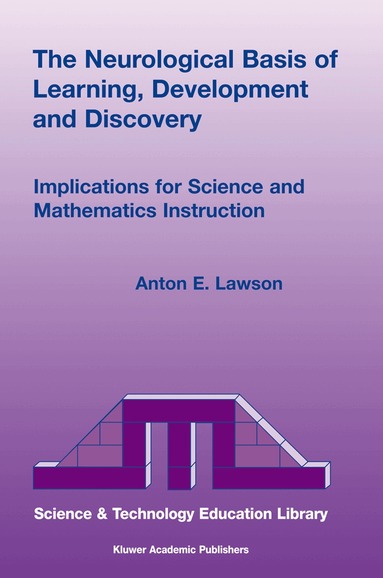








Du kanske också är intresserad av
Del 18
- Nyhet
Del 7
- Nyhet
Del 6
- Nyhet
Del 4
- Nyhet
Del 3
- Nyhet
- Nyhet
Del 11
- Nyhet
Del 3