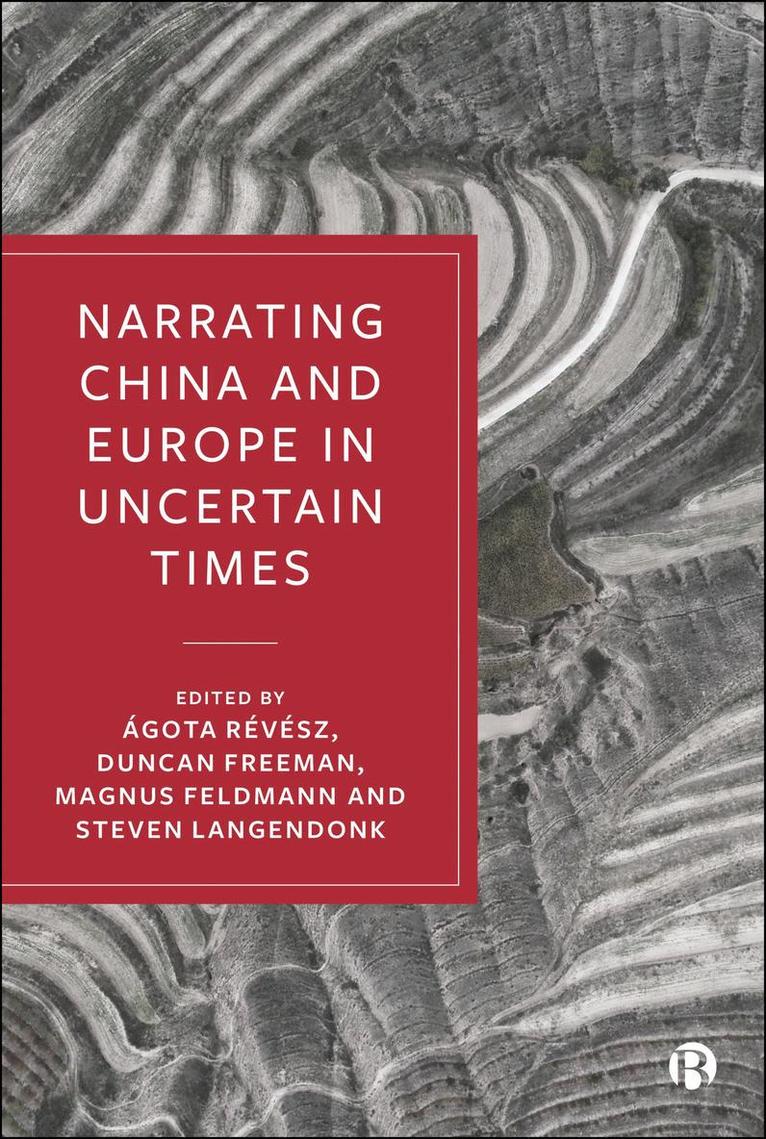
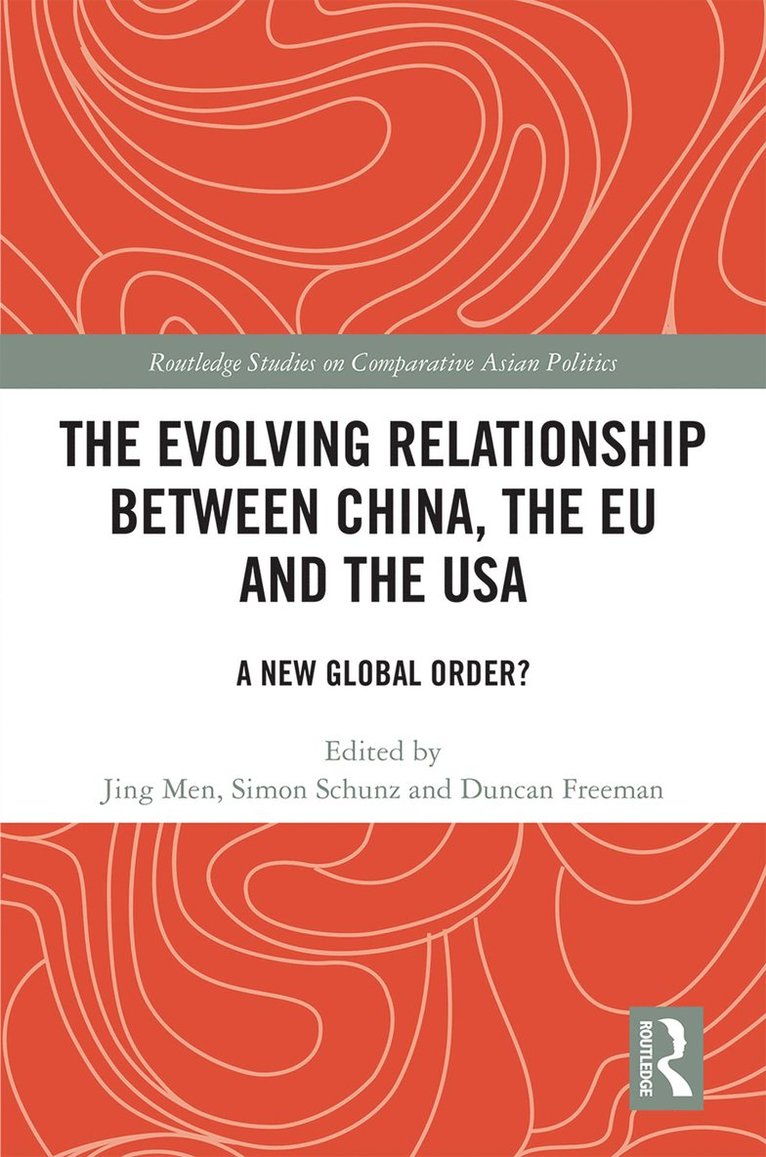
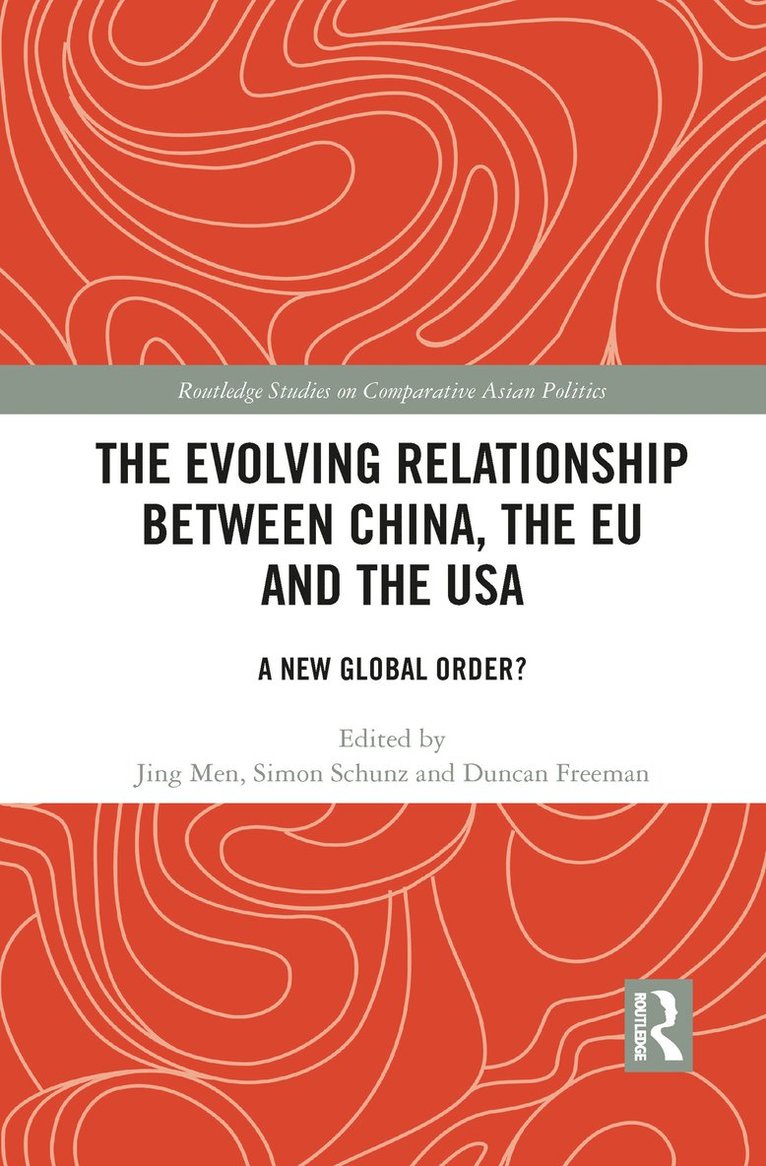
This edited volume examines the crucial, yet overlooked, role narratives play in the rapidly changing relationship between Europe and China. Its contributors analyse the role of narratives in different societies and arenas ranging from economic and foreign policy to history and social media. Emphasizing the social dimension of narrative, the volume challenges traditional state-centric and strategic approaches in international politics. It also engages with the ubiquity of stories about the “other” in present manifold crises, and underscores the need for a heightened awareness of narratives and their consequences in decision-making processes.
Ágota Révész is a sinologist with experience in diplomacy. She currently works for Helmholtz Centre Potsdam. Magnus Feldmann is Associate Professor in Politics at the University of Bristol. Duncan Freeman is Lecturer at the Brussels Management School (ICHEC). Steven Langendonk is Postdoctoral Researcher at the Helmut Schmidt University in Hamburg and KU Leuven.
Introduction: Studying Narratives and China-Europe Relations – Ágota Révész, Duncan Freeman, Magnus Feldmann, Steven LangendonkPart 1: Foreign Policy and International Relations1. Where Does Discourse Take Us? Perceptions of the State(craft) in UK-China Relations – Shaun Breslin2. Italy and the ‘China Issue’: (Populist) Narratives Across Recent Critical Junctures – Daniela Caterina3. Narrating the Sino-Serbian ‘Iron Friendship’: European and Chinese Approaches to the Role of Culture in International Relations – Jelena Gledić4. The Unicorn, the Dragon, and the Storytellers: A study of Foreign Narrative Making’ in the EU – Steven LangendonkPart 2: Public Policy5. China, Europe and Dual Circulation: Emerging Narratives of China’s New Economic Model – Duncan Freeman and Ágota Révész6. The EU and the Chinese Human Rights Narrative: Who Benefits from Politicization? – Christelle Genoud7. The EU’s Narratives of Counter-terrorism and the Prospects of Sino-European Security Cooperation - Chi Zhang, Xuechen Chen and Jilong YangPart 3: Media and Communication8. The Role of Science and Technology in European Narratives about China – Magnus Feldmann and Aleksandra Stelmach9. From Academic Partner to ‘Academic Threat’? German and UK Media Narratives on European-Chinese Academic Cooperation since Xi Jinping – Eva Seiwert10. Emotions and Narratives on China in Turkish Social Media and Political Speeches: A Comparative Analysis - Cagri Cöltekin and Gül Kurtoglu EskisarPart 4: Historical perspectives11. Chosen Traumas: China’s Ever-lasting Century of Humiliation (Bai Nian Guochi) and Sino-European Relations – Jasper Roctus12. The Weight of History: Narratives of Crisis and Cold War Rhetoric – Bart Dessein13. Conclusion – Ágota Révész, Duncan Freeman, Magnus Feldmann, Steven Langendonk
“This book is required reading for academics, students and members of the general public with an interest in Europe–China relations, as these become increasingly crucial to global politics.” Richard McMahon, University College London
Magnus Feldmann, Glenn Morgan, University of Bristol) Feldmann, Magnus (Senior Lecturer in Politics in the School of Sociology, Politics and International Studies, Senior Lecturer in Politics in the School of Sociology, Politics and International Studies, University of Bristol) Morgan, Glenn (Honorary Professor in the School of Management, Honorary Professor in the School of Management