
Del 103 i serien Studies in the History of Christian Traditions
Kings, Politics, and the Right Order of the World in German Historiography c. 950-1150
Inbunden, Engelska, 2002
3 249 kr
Beställningsvara. Skickas inom 3-6 vardagar. Fri frakt för medlemmar vid köp för minst 249 kr.
This volume discusses German historiography from the c. 950 to 1150 through a close examination of six works. In contrast to most earlier scholarship, it focuses on the narrative as an expression of the authors' way of finding meaning in the sequence of events, and as evidence for their understanding of society, politics, and human behaviour. In particular, it is shown that changing attitudes to society are reflected in the different ways the narrative is organized and individuals and their actions are represented. While the earlier works depict a society based on face-to-face relationships, the idea of an organised community, governed by the king as God's representative, becomes increasingly prominent in the later ones. Finally, the results of the analysis are discussed against the background of more general trends in medieval political and intellectual history.
Produktinformation
- Utgivningsdatum2002-03-13
- Mått155 x 235 x 34 mm
- Vikt890 g
- FormatInbunden
- SpråkEngelska
- SerieStudies in the History of Christian Traditions
- Antal sidor460
- FörlagBrill
- ISBN9789004124684
Tillhör följande kategorier
Hoppa över listan




Mer från samma serie
Del 48
Del 90
Del 106
Gesungene Innigkeit: Studien zu einer Musikhandschrift der Devotio moderna (Utrecht, Universiteitsbibliotheek, ms. 16 H 34, olim B 113). Mit einer Edition der Gesaenge
Ulrike Hascher-Burger
Inbunden, 2002
3 159 kr
Del 118
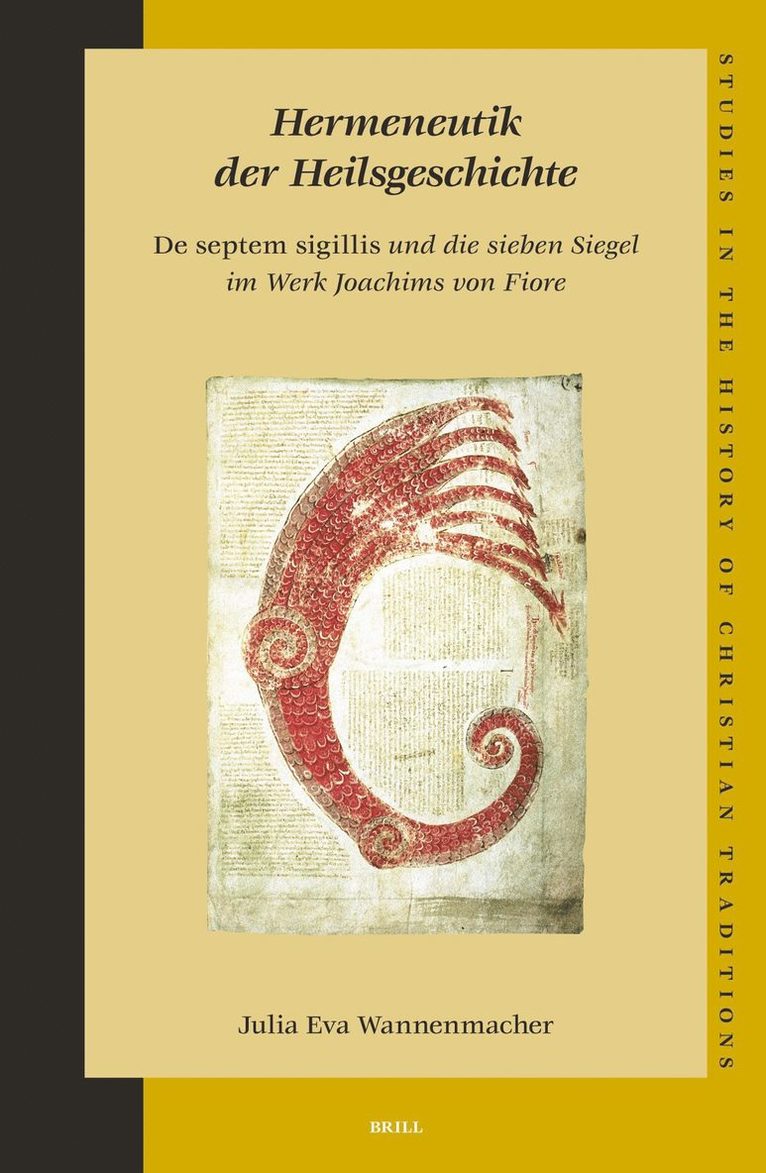
Hermeneutik der Heilsgeschichte: De septem sigillis und die sieben Siegel im Werk Joachims von Fiore
Julia Eva Wannenmacher
Inbunden, 2004
2 749 kr
Del 120
Del 116
Del 122
Images of the Divine: The Theology of Icons at the Seventh Ecumenical Council - Revised Edition
Ambrosios Giakalis
Inbunden, 2005
2 669 kr
Del 133
Del 134
Renaissance Inquisitors: Dominican Inquisitors and Inquisitorial Districts in Northern Italy, 1474-1527
Michael Tavuzzi
Inbunden, 2007
3 109 kr
Del 141