
Del i serien SUNY series in the Philosophy of the Social Sciences
Karl Popper and the Social Sciences
Häftad, Engelska, 2006
469 kr
Beställningsvara. Skickas inom 7-10 vardagar. Fri frakt för medlemmar vid köp för minst 249 kr.
The first systematic treatment of Karl Popper's contribution to the philosophy of the social sciences.This is the first book-length exploration of Karl Popper's often-neglected contributions to the philosophy of social science. William A. Gorton situates Popper's ideas on social inquiry within the broader framework of his thought, including his philosophy of natural science, his ontological theories, and his political thought. Gorton places special attention on Popper's theory of situational analysis and how it aims to heighten our understanding of the social world by untangling the complex web of human interaction that produces unintended-and often unwanted-social phenomena. Situational analysis, Gorton contends, involves a significant departure from the method of the natural sciences, despite Popper's plea for the unity of scientific method. Gorton also addresses some common misconceptions concerning Popper's stance toward economics and Marxism, making the provocative claim that contemporary analytical Marxism provides the best current example of Popperian social science put into practice.
Produktinformation
- Utgivningsdatum2006-01-19
- Mått154 x 228 x 10 mm
- Vikt227 g
- FormatHäftad
- SpråkEngelska
- SerieSUNY series in the Philosophy of the Social Sciences
- Antal sidor157
- FörlagState University of New York Press
- ISBN9780791466629
Tillhör följande kategorier
Hoppa över listan





Mer från samma serie
Philosophy, Social Theory, and the Thought of George Herbert Mead
Mitchell Aboulafia
Häftad, 1991
779 kr
Hoppa över listan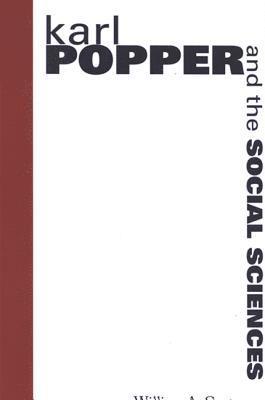









Du kanske också är intresserad av
- Nyhet
- Nyhet
Del 6
- Nyhet
Del 11
- Nyhet
Del 3
- Nyhet
Del 7
- Nyhet
Del 4
- Nyhet
- Nyhet
Del 3
- Nyhet
Del 1