
Del i serien SUNY series in the Philosophy of the Social Sciences
Habermas's Critical Theory of Society
Häftad, Engelska, 1991
589 kr
Beställningsvara. Skickas inom 5-8 vardagar. Fri frakt för medlemmar vid köp för minst 249 kr.
This book provides an understanding of the content and aims of Habermas's critical theory of society - the theory that analyzes the causes of our cultural lack of direction, polical apathy, and the increasing complexity of modern society. The author offers a foothold on the current debates regarding the credibility and cogency of the theory. Braaten presents Habermas's defense of his critique of reason in his most recent work concerning the confrontation between postmodernists and neoconservatives, and modernists and liberal theorists. She also explores the possibility of applying Habermas's critical resources in the United States in ways that he himself may not have considered.
Produktinformation
- Utgivningsdatum1991-09-19
- Mått152 x 229 x 12 mm
- Vikt313 g
- FormatHäftad
- SpråkEngelska
- SerieSUNY series in the Philosophy of the Social Sciences
- Antal sidor202
- FörlagState University of New York Press
- ISBN9780791407608
Tillhör följande kategorier
Hoppa över listan



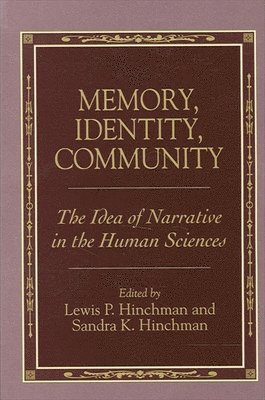


Mer från samma serie
Philosophy, Social Theory, and the Thought of George Herbert Mead
Mitchell Aboulafia
Häftad, 1991
779 kr
Hoppa över listan









Du kanske också är intresserad av
- Nyhet
Del 3
- Nyhet
Del 11
- Nyhet
- Nyhet
- Nyhet
Del 2
- Nyhet
Del 1
- Nyhet
Del 6
- Nyhet