
Del i serien New Horizons in Environmental Economics series
International Environmental Externalities and the Double Dividend
Inbunden, Engelska, 2001
2 469 kr
Beställningsvara. Skickas inom 5-8 vardagar. Fri frakt för medlemmar vid köp för minst 249 kr.
The twin benefits of improving environmental quality and reducing tax distortions through the recycling of environmental tax proceeds prove an attractive policy objective. This book analyses the use of the double dividend concepts for evaluating ecological tax reforms.The author aims to analyse unilateral environmental policy measures thoroughly and to assess under which conditions a double dividend can be achieved. The analysis is undertaken in the context of international capital mobility and cross-border externalities. He also includes a discussion of an empirically relevant example for an ecological tax reform scenario in Germany - the DIW proposal.International Environmental Externalities and the Double Dividend will be of great interest to all researchers and those working in NGOs in the areas of environmental economics, ecological tax reform issues as well as trade and the environment.
Produktinformation
- Utgivningsdatum2001-01-26
- Mått156 x 234 x undefined mm
- FormatInbunden
- SpråkEngelska
- SerieNew Horizons in Environmental Economics series
- FörlagEdward Elgar Publishing Ltd
- ISBN9781840644937
Tillhör följande kategorier
Hoppa över listan

Mer från samma serie
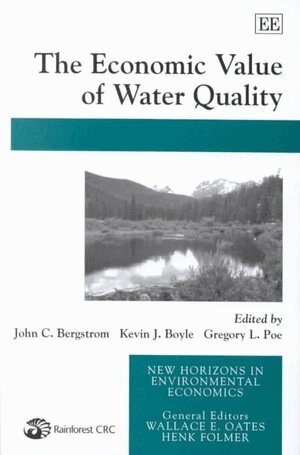
Economic Value of Water Quality
John C. Bergstrom, Kevin J. Boyle, Gregory L. Poe
Inbunden, 2001
2 279 kr
International Yearbook of Environmental and Resource Economics 1999/2000
Henk Folmer, Tom Tietenberg
Inbunden, 1999
4 089 kr
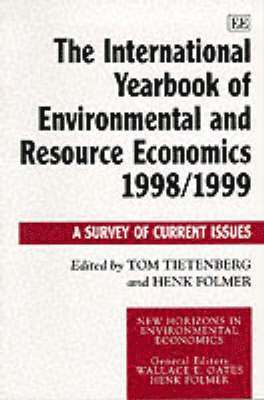
International Yearbook of Environmental and Resource Economics 1998/1999
Tom Tietenberg, Henk Folmer
Häftad, 1999
1 119 kr
Hoppa över listan









Du kanske också är intresserad av
- Nyhet
Del 3
- Nyhet
Del 7
- Nyhet
Del 6
- Nyhet
Del 4
- Nyhet
Del 11
- Nyhet
- Nyhet
Del 3
- Nyhet
- Nyhet
Del 1
- Nyhet