
Del i serien New Horizons in Environmental Economics series
Valuing Nature with Travel Cost Models
A Manual
Inbunden, Engelska, 2000
2 509 kr
Beställningsvara. Skickas inom 5-8 vardagar. Fri frakt för medlemmar vid köp för minst 249 kr.
Increasingly, natural environments are being changed by our activities, and potential human uses of natural resources are often incompatible with environmental protection goals. Travel cost models supply economic information to estimate values in environmental decision-making that otherwise are not available. In the absence of this information, non-market benefits are likely to be ignored in the decision-making process. An important question faced by policymakers centres around the appropriate mix of policies to provide a balance in the use of environments in their natural state versus commodity production. Appropriate analyses of rival policies regarding land usage depend on the availability of data on benefits and costs. This book provides indispensable guidance to the TCM (Travel Cost Method) methodology and its uses, as well as highlighting areas where further development is necessary.The book presents a self-contained treatment of TCM along with a wide range of applications to natural resource and environmental policy questions. It will be an indispensable tool for policymakers in both government and NGOs, natural resource site managers as well as academics and researchers.
Produktinformation
- Utgivningsdatum2000-01-26
- Mått156 x 234 x undefined mm
- FormatInbunden
- SpråkEngelska
- SerieNew Horizons in Environmental Economics series
- FörlagEdward Elgar Publishing Ltd
- ISBN9781840640786
Tillhör följande kategorier
Hoppa över listan

Mer från samma serie
Economic Value of Water Quality
John C. Bergstrom, Kevin J. Boyle, Gregory L. Poe
Inbunden, 2001
2 259 kr
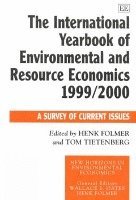
International Yearbook of Environmental and Resource Economics 1999/2000
Henk Folmer, Tom Tietenberg
Inbunden, 1999
4 049 kr
International Yearbook of Environmental and Resource Economics 1998/1999
Tom Tietenberg, Henk Folmer
Häftad, 1999
1 109 kr
International Yearbook of Environmental and Resource Economics 1999/2000
Henk Folmer, Tom Tietenberg
Häftad, 2000
909 kr
Hoppa över listan








Du kanske också är intresserad av
- Nyhet
Del 11
- Nyhet
Del 3
- Nyhet
Del 4
Del 1
Del 3
- Nyhet
Del 6
Del 2
- Nyhet
Del 1
Del 7