
Information Needs Analysis
Principles and practice in information organizations
Häftad, Engelska, 2014
1 609 kr
Beställningsvara. Skickas inom 5-8 vardagar. Fri frakt för medlemmar vid köp för minst 249 kr.
Finns i fler format (1)
If you want to provide an information service that truly fulfils your users' needs, this book is essential reading. Analysing and assessing the information needs of clients is key to the provision of effective service and appropriate collections in both face-to-face and virtual library services. The importance of information needs analysis is widely recognized by information professionals, but currently there is little substantive, detailed work in the professional literature devoted to this important topic. This new book is designed to fill that gap, by supporting practitioners in developing an information needs analysis strategy, and offering the necessary professional skills and techniques to do so. It will offer guidance to team leaders and senior managers in all areas of library work, especially those involved in collection management, service provision and web development, and is equally applicable to the needs of academic, public, government, commercial and other more specialized library and information services. The text adopts a hands-on, jargon-free approach, and includes relevant examples, case studies, reader activities and sources of further reading. Key areas covered include:what is information needs analysis?how is needs analysis conducted?what are the varieties of needs analysis?how are analyses evaluated and reported? Readership: The book will be essential reading for library and information practitioners, team leaders and senior managers. It will also be a core text on course reading lists in departments of library and information studies.
Produktinformation
- Utgivningsdatum2014-12-31
- Mått158 x 234 x 16 mm
- Vikt200 g
- FormatHäftad
- SpråkEngelska
- Antal sidor256
- FörlagFacet Publishing
- ISBN9781856044844
Tillhör följande kategorier
Hoppa över listan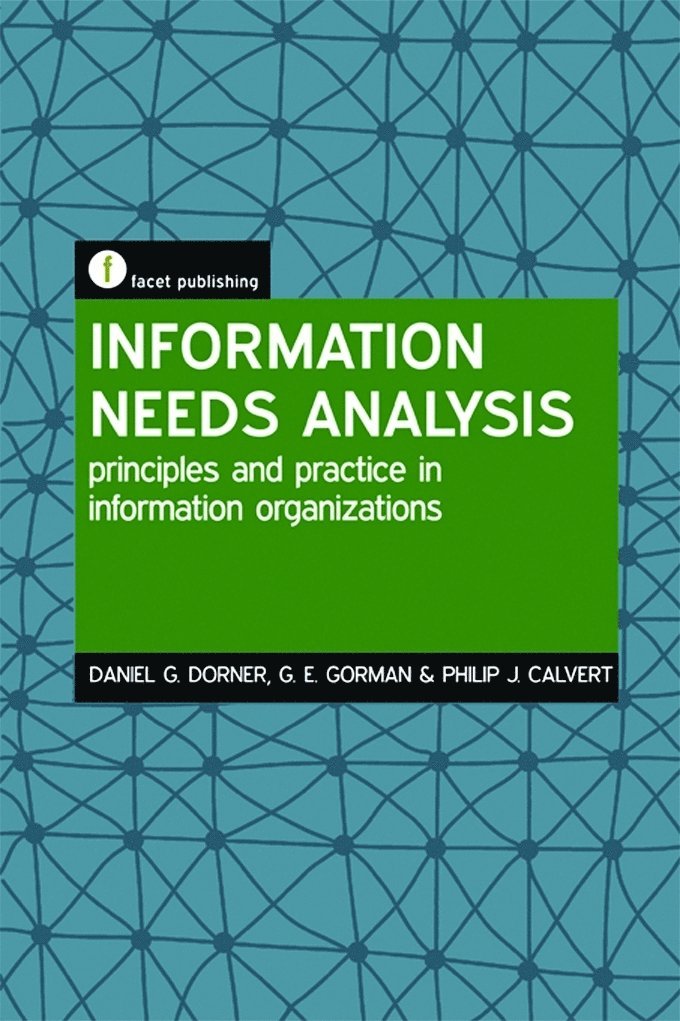






Du kanske också är intresserad av
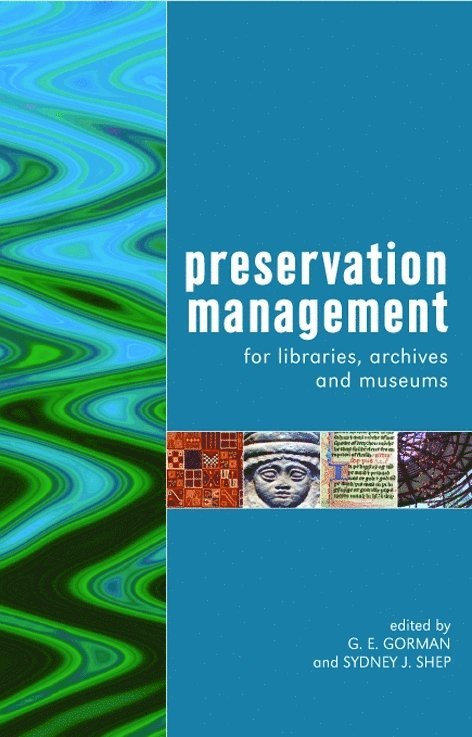
Preservation Management for Libraries, Archives and Museums
G. E. Gorman, Sydney J. Shep, G E Gorman, Sydney J. Shep
Inbunden, 2006
1 729 kr
- Nyhet
- Nyhet
- Nyhet
Del 4
Del 1
- Nyhet
Del 11