
Del i serien Praeger Series on Contemporary Health and Living
Fact and Fiction of Healthy Vision
Eye Care for Adults and Children
Inbunden, Engelska, 2007
939 kr
Beställningsvara. Skickas inom 10-15 vardagar. Fri frakt för medlemmar vid köp för minst 249 kr.
Finns i fler format (1)
Written by a practicing ophthalmologist, this book explains the eye and how it develops and functions—or can malfunction, especially as we age—and what our options are to maximize or retain eye health. Dr. Kitchen also explains the many treatments and surgical options available, as well as myths and false beliefs or promises that are common in relation to eye health and treatments today.Dr. Kitchen describes time-tested, proven techniques, as well as new treatments and surgeries changing the nature of eye care, including refractive surgery options. He also explains common problems from red eye to macular degeneration, and spotlights beliefs and treatment claims that are uninformed or downright deceptive. His goal is to help Boomers and parents make well-informed decisions about eye care for themselves and their family members, and also to help aging consumers retain their visual health. Appendices include a glossary of eye and eye care terms.The topics addressed include eye anatomy, examinations, medications, treatments, and surgery. Conditions described range from dry eye to ocular migraines, lazy eye, cataracts, glaucoma, and eye cancer.
Produktinformation
- Utgivningsdatum2007-05-30
- Mått156 x 235 x 16 mm
- Vikt482 g
- FormatInbunden
- SpråkEngelska
- SeriePraeger Series on Contemporary Health and Living
- Antal sidor208
- FörlagBloomsbury Publishing Plc
- ISBN9780275993450
Tillhör följande kategorier
Hoppa över listan




Mer från samma serie
Solving Health and Behavioral Problems from Birth through Preschool
Roy Benaroch M.D.
Inbunden, 2007
849 kr
Hoppa över listan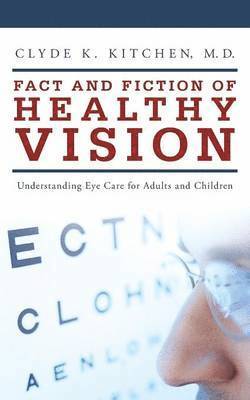




Du kanske också är intresserad av
Solving Health and Behavioral Problems from Birth through Preschool
Roy Benaroch M.D.
Inbunden, 2007
849 kr
- Nyhet
Del 3