
Del 27 i serien Brill's Studies in Language, Cognition and Culture
Experiential Verbs in Homeric Greek
A Constructional Approach
Inbunden, Engelska, 2020
3 429 kr
Beställningsvara. Skickas inom 5-8 vardagar. Fri frakt för medlemmar vid köp för minst 249 kr.
In Experiential Verbs in Homeric Greek:.A Constructional Approach Silvia Luraghi offers a comprehensive account of construction variation with two-place verbs belonging to different sub-domains of experience (including bodily sensation, perception, cognition, emotion and volitionality) in the Homeric language. Traditionally, variation is ascribed to the independent meaning of cases that mark the second argument, and explanations have focused on properties of the latter. By taking a constructional approach, the author shows that construction variation also brings about differences in the conceptualization of the subject/experiencer by pointing to different degrees of control and awareness. Variation is then shown to reflect the embodied construal of experience along with the social dimension of emotions.
Produktinformation
- Utgivningsdatum2020-11-05
- Mått155 x 235 x 26 mm
- Vikt669 g
- FormatInbunden
- SpråkEngelska
- SerieBrill's Studies in Language, Cognition and Culture
- Antal sidor312
- FörlagBrill
- ISBN9789004442481
Tillhör följande kategorier
Hoppa över listan



Mer från samma serie
Del 7
Del 5
Survival of People and Languages: Schooners, Goats and Cassava in St. Barthélemy, French West Indies
Julianne Maher
Inbunden, 2013
3 099 kr
Del 11
Del 2
Del 1
Language Contact in the Danish West Indies: Giving Jack His Jacket
Robin Sabino
Inbunden, 2012
3 349 kr
Del 6
Del 4
Del 3
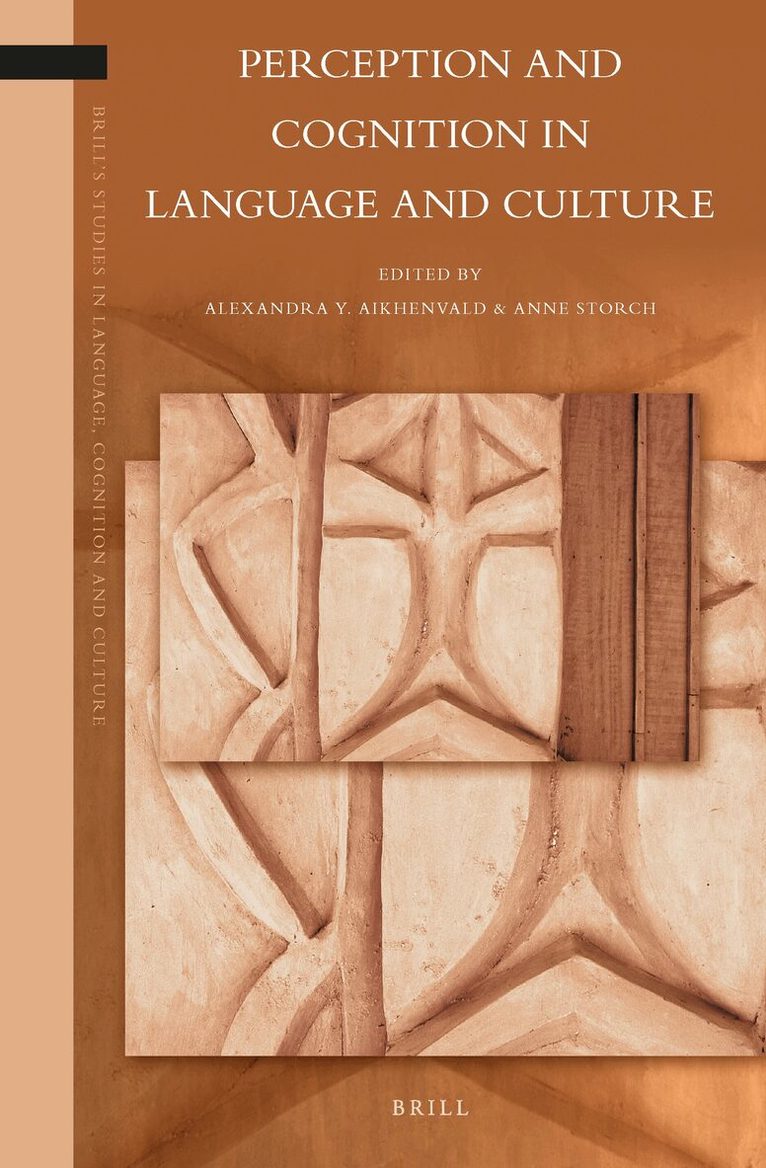
Perception and Cognition in Language and Culture
Alexandra Aikhenvald, Anne Storch
Inbunden, 2013
3 109 kr
Del 8
Del 9
Hoppa över listan



Du kanske också är intresserad av
Del 22
Missionary Linguistic Studies from Mesoamerica to Patagonia
Astrid Alexander Bakkerus
Inbunden, 2020
2 959 kr
Del 43