
Evolutionary Developmental Biology
Inbunden, Engelska, 1998
2 859 kr
Beställningsvara. Skickas inom 10-15 vardagar. Fri frakt för medlemmar vid köp för minst 249 kr.
Finns i fler format (1)
Although evolutionary developmental biology is a new field, its origins lie in the last century; the search for connections between embryonic development (ontogeny) and evolutionary change (phylogeny) has been a long one. Evolutionary developmental biology is however more than just a fusion of the fields of developmental and evolutionary biology. It forges a unification of genomic, developmental, organismal, population and natural selection approaches to evolutionary change. It is concerned with how developmental processes evolve; how evolution produces novel structures, functions and behaviours; and how development, evolution and ecology are integrated to bring about and stabilize evolutionary change. The previous edition of this title, published in 1992, defined the terms and laid out the field for evolutionary developmental biology. This field is now one of the most active and fast growing within biology and this is reflected in this second edition, which is more than twice the length of the original and brought completely up to date. There are new chapters on major transitions in animal evolution, expanded coverage of comparative embryonic development and the inclusion of recent advances in genetics and molecular biology. The book is divided into eight parts which: place evolutionary developmental biology in the historical context of the search for relationships between development and evolution; detail the historical background leading to evolutionary embryology; explore embryos in development and embryos in evolution; discuss the relationship between embryos, evolution, environment and ecology; discuss the dilemma for homology of the fact that development evolves; deal with the importance of understanding how embryos measure time and place both through development and evolutionarily through heterochrony and heterotrophy; and set out the principles andprocesses that underlie evolutionary developmental biology. With over one hundred illustrations and photographs, extensive cross-referencing between chapters and boxes for ancillary material, this latest edition will be of immense interest to graduate and advanced undergraduate students in cell, developmental and molecular biology, and in zoology, evolution, ecology and entomology; in fact anyone with an interest in this new and increasingly important and interdisciplinary field which unifies biology.
Produktinformation
- Utgivningsdatum1998-09-30
- Mått178 x 254 x 32 mm
- Vikt1 150 g
- FormatInbunden
- SpråkEngelska
- Antal sidor491
- Upplaga2
- FörlagChapman and Hall
- ISBN9780412785801
Tillhör följande kategorier
Hoppa över listan





Mer från samma författare
Patterns of Structural and Systematic Diversity
James Hanken, James Hanken, Brian K. Hall
Inbunden, 1993
1 669 kr
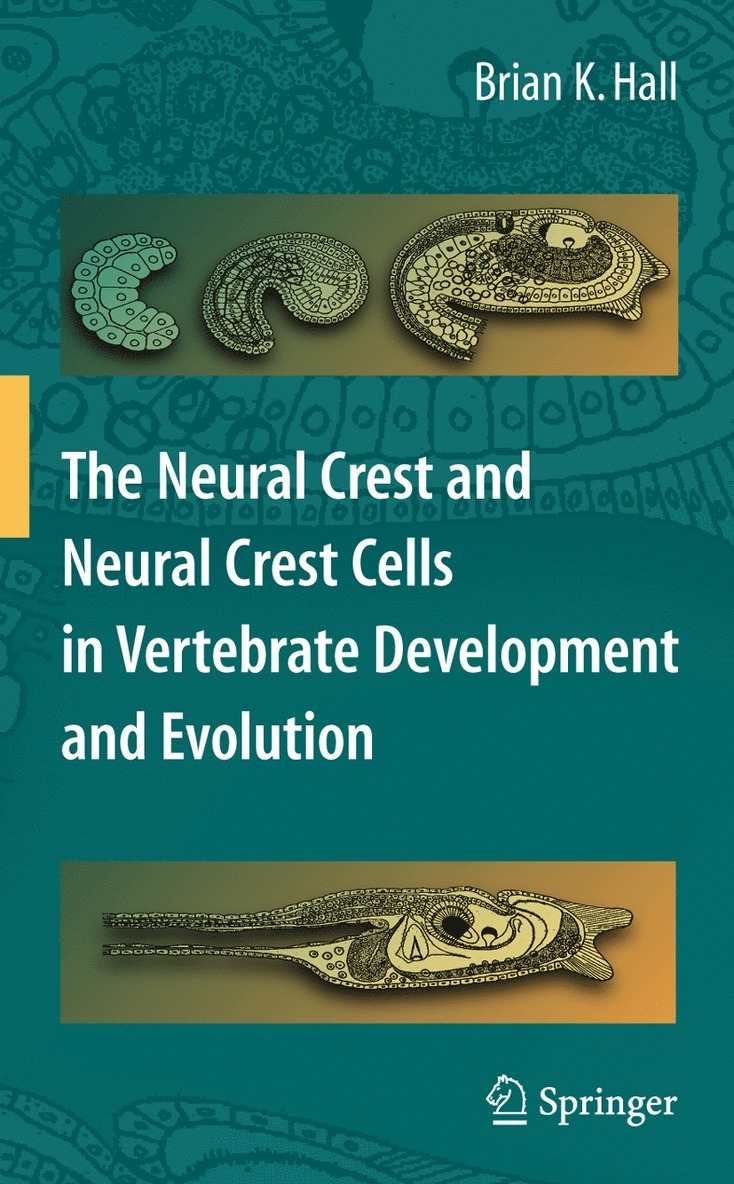
Neural Crest and Neural Crest Cells in Vertebrate Development and Evolution
Brian K. Hall
Inbunden, 2009
2 149 kr
Hoppa över listan

Du kanske också är intresserad av
Del 9
Keywords and Concepts in Evolutionary Developmental Biology
Brian K. Hall, Wendy M. Olson
Häftad, 2006
649 kr
Patterns of Structural and Systematic Diversity
James Hanken, James Hanken, Brian K. Hall
Inbunden, 1993
1 669 kr
Neural Crest and Neural Crest Cells in Vertebrate Development and Evolution
Brian K. Hall
Häftad, 2010
1 889 kr
Environment, Development, and Evolution
Brian K. Hall, Roy D. Pearson, Gerd B. Müller
Inbunden, 2003
139 kr