
Del i serien Women and Gender in the Early Modern World
Envisioning Gender in Burgundian Devotional Art, 1350–1530
Experience, Authority, Resistance
Inbunden, Engelska, 2005
3 349 kr
Beställningsvara. Skickas inom 10-15 vardagar. Fri frakt för medlemmar vid köp för minst 249 kr.
Illuminated here are the relationships between visual culture, faith, and gender in the courtly, monastic, and urban spheres of the early modern Burgundian Netherlands. By examining works by artists such as the Master of Mary of Burgundy, Jan van Eyck, Hans Memling, and Bernard van Orley, author Andrea Pearson identifies and explores pictorial constructions of masculinity and femininity in regard to the expectations, experiences, and practices of devotion. Specifically, she demonstrates that two of the most prominent visual genres of the period, books of hours and devotional portrait diptychs, were manipulated by patrons and spectators of both sexes to challenge and negotiate the boundaries and hierarchies of gender, and that marginalized individuals and groups appropriated the types to resist the authority of others and advance their own. Ultimately, the books and diptychs emerge as critical and often contentious sites for deliberating and transacting gender. By integrating books of hours and devotional portrait diptychs into current interdisciplinary theoretical discourse on gender, power and devotion, the author engages scholars in a range of disciplines: art history, history, religion and literature, as well as women's and men's studies.
Produktinformation
- Utgivningsdatum2005-09-07
- Mått153 x 219 x 21 mm
- Vikt644 g
- FormatInbunden
- SpråkEngelska
- SerieWomen and Gender in the Early Modern World
- Antal sidor264
- FörlagTaylor & Francis Ltd
- ISBN9780754651543
Tillhör följande kategorier
Hoppa över listan




Mer från samma författare
Del 9
Single Mom...Slaying It!: An Empowering Resource Guide to Expand Your Superpowers
Andrea Pearson
Häftad
249 kr
Feminist Friendships, Collaborations, and Networks in the Visual Arts
Jennifer Griffiths, Andrea Pearson
Inbunden, 2026
2 019 kr
- Nyhet
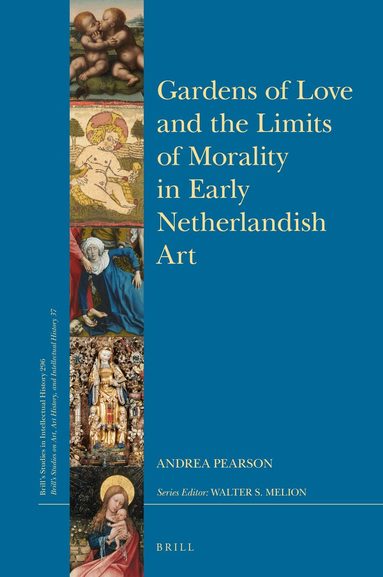
Gardens of Love and the Limits of Morality in Early Netherlandish Art
Andrea Pearson
Inbunden, 2019
4 079 kr
Hoppa över listan

Mer från samma serie
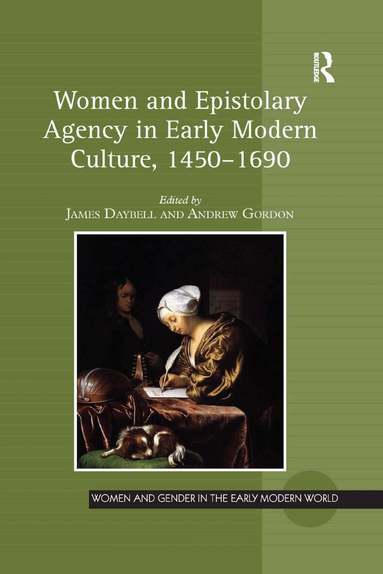
Women and Epistolary Agency in Early Modern Culture, 1450–1690
James Daybell, Andrew Gordon
Häftad, 2019
1 059 kr
Women's Somatic Training in Early Modern Spanish Theater
Elizabeth Marie Cruz Petersen
Häftad, 2019
1 059 kr
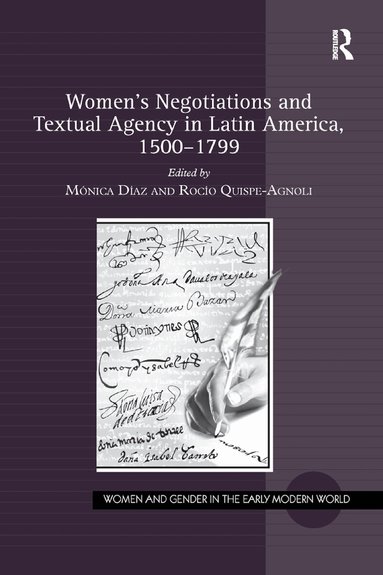
Women's Negotiations and Textual Agency in Latin America, 1500-1799
Mónica Díaz, Rocío Quispe-Agnoli
Häftad, 2019
1 059 kr
Women, Art and the Politics of Identity in Eighteenth-Century Europe
Melissa Hyde, Jennifer Milam
Inbunden, 2003
3 349 kr
Hoppa över listan

Du kanske också är intresserad av
- Nyhet
Feminist Friendships, Collaborations, and Networks in the Visual Arts
Jennifer Griffiths, Andrea Pearson
Inbunden, 2026
2 019 kr
Del 9
Gardens of Love and the Limits of Morality in Early Netherlandish Art
Andrea Pearson
Inbunden, 2019
4 079 kr
Single Mom...Slaying It!: An Empowering Resource Guide to Expand Your Superpowers
Andrea Pearson
Häftad
249 kr
- Nyhet
Del 7
- Nyhet