
English and Translation in the European Union
Unity and Multiplicity in the Wake of Brexit
Inbunden, Engelska, 2021
3 279 kr
Beställningsvara. Skickas inom 10-15 vardagar. Fri frakt för medlemmar vid köp för minst 249 kr.
Finns i fler format (1)
This book explores the growing tension between multilingualism and monolingualism in the European Union in the wake of Brexit, underpinned by the interplay between the rise of English as a lingua franca and the effacement of translations in EU institutions, bodies and agencies.English and Translation in the European Union draws on an interdisciplinary approach, highlighting insights from applied linguistics and sociolinguistics, translation studies, philosophy of language and political theory, while also looking at official documents and online resources, most of which are increasingly produced in English and not translated at all – and the ones which are translated into other languages are not labelled as translations. In analysing this data, Alice Leal explores issues around language hierarchy and the growing difficulty in reconciling the EU’s approach to promoting multilingualism while fostering monolingualism in practice through the diffusion of English as a lingua franca, as well as questions around authenticity in the translation process and the boundaries between source and target texts. The volume also looks ahead to the implications of Brexit for this tension, while proposing potential ways forward, encapsulated in the language turn, the translation turn and the transcultural turn for the EU.Offering unique insights into contemporary debates in the humanities, this book will be of interest to scholars in translation studies, applied linguistics and sociolinguistics, philosophy and political theory.
Produktinformation
- Utgivningsdatum2021-06-21
- Mått152 x 229 x 17 mm
- Vikt426 g
- FormatInbunden
- SpråkEngelska
- SerieRoutledge Advances in Translation and Interpreting Studies
- Antal sidor218
- FörlagTaylor & Francis Ltd
- ISBN9780367244910
Tillhör följande kategorier
Hoppa över listan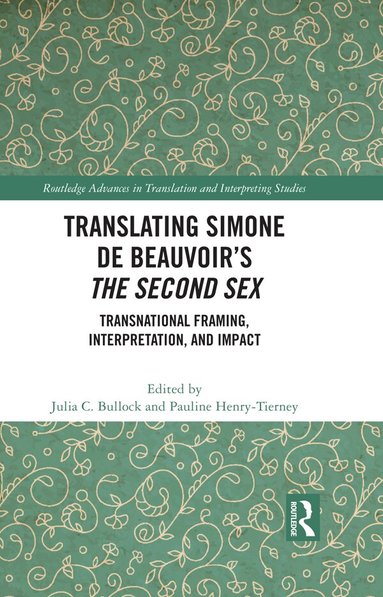





Mer från samma serie
Translating Simone de Beauvoir’s The Second Sex
Julia C. Bullock, Pauline Henry-Tierney
Inbunden, 2023
3 279 kr
New Empirical Perspectives on Translation and Interpreting
Lore Vandevoorde, Joke Daems, Bart Defrancq
Inbunden, 2019
3 379 kr