
Del i serien Baywood's Technical Communications
Communicating Race, Ethnicity, and Identity in Technical Communication
Häftad, Engelska, 2014
1 439 kr
Beställningsvara. Skickas inom 10-15 vardagar. Fri frakt för medlemmar vid köp för minst 249 kr.
Finns i fler format (1)
The purpose of this book is to move our field's discussion beyond issues of diversity in the practice of technical communication, which is certainly important, to include discussions of how race and ethnicity inform the production and distribution of technical communication in the United States. Equally important, this book is an attempt to uncover those communicative practices used to adversely affect historically marginalized groups and identify new practices that can be used to encourage cultural competence within institutions and communities. This book, like our field, is an interdisciplinary effort. While all authors have taught or practiced technical communication, their backgrounds include studies in technical communication, rhetoric and composition, creative writing, and higher education. For the sake of clarity, the book is organized into five sections: historical representations of race and ethnicity in health and science communication; social justice and activism in technical communication; considerations of race and ethnicity in social media; users' right to their own language; and communicating identity across borders, cultures, and disciplines.
Produktinformation
- Utgivningsdatum2014-03-30
- Mått152 x 229 x undefined mm
- Vikt260 g
- FormatHäftad
- SpråkEngelska
- SerieBaywood's Technical Communications
- Antal sidor216
- FörlagBaywood Publishing Company Inc
- ISBN9780895038326
Tillhör följande kategorier
Hoppa över listan








Mer från samma serie
Assessment in Technical and Professional Communication
Margaret Hundleby, Jo Allen
Häftad, 2017
1 109 kr
Culture, Communication and Cyberspace
Kirk St. Amant, Filipp Sapienza, Charles Sides
Häftad, 2017
1 079 kr
Hoppa över listan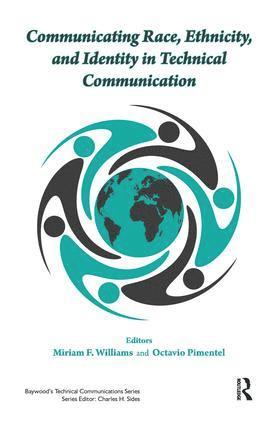









Du kanske också är intresserad av
Communicating Race, Ethnicity, and Identity in Technical Communication
Miriam Williams, Octavio Pimentel
Inbunden, 2014
3 209 kr
- Nyhet
- Nyhet
- Nyhet
Del 11
- Nyhet
Del 3