
Del 3 i serien Microsystems
Bringing Scanning Probe Microscopy up to Speed
Inbunden, Engelska, 1999
1 439 kr
Beställningsvara. Skickas inom 10-15 vardagar. Fri frakt för medlemmar vid köp för minst 249 kr.
Finns i fler format (1)
Bringing Scanning Probe Microscopy Up to Speed introduces the principles of scanning probe systems with particular emphasis on techniques for increasing speed. The authors include useful information on the characteristics and limitations of current state-of-the-art machines as well as the properties of the systems that will follow in the future. The basic approach is two-fold. First, fast scanning systems for single probes are treated and, second, systems with multiple probes operating in parallel are presented. The key components of the SPM are the mechanical microcantilever with integrated tip and the systems used to measure its deflection. In essence, the entire apparatus is devoted to moving the tip over a surface with a well-controlled force. The mechanical response of the actuator that governs the force is of the utmost importance since it determines the scanning speed. The mechanical response relates directly to the size of the actuator; smaller is faster. Traditional scanning probe microscopes rely on piezoelectric tubes of centimeter size to move the probe. In future scanning probe systems, the large actuators will be replaced with cantilevers where the actuators are integrated on the beam. These will be combined in arrays of multiple cantilevers with MEMS as the key technology for the fabrication process.
Produktinformation
- Utgivningsdatum1999-02-28
- Mått155 x 235 x 16 mm
- Vikt434 g
- FormatInbunden
- SpråkEngelska
- SerieMicrosystems
- Antal sidor159
- Upplaga1999
- FörlagKluwer Academic Publishers
- ISBN9780792384663
Tillhör följande kategorier
Hoppa över listan






Mer från samma serie
Del 17
Del 7
Scanning Probe Lithography
Hyongsok T. Soh, Kathryn Wilder Guarini, Calvin F. Quate
Inbunden, 2001
1 439 kr
Optical Microscanners and Microspectrometers using Thermal Bimorph Actuators
Gerhard Lammel, Sandra Schweizer, Philippe Renaud
Inbunden, 2002
2 149 kr
Del 2
Methodology for the Modeling and Simulation of Microsystems
Bartlomiej F. Romanowicz
Inbunden, 1998
1 439 kr
Del 1
Micromachined Ultrasound-Based Proximity Sensors
Mark R. Hornung, Oliver Brand, Mark R. Hornung, Oliver Brand
Inbunden, 1999
1 439 kr
Del 5
Microfabrication in Tissue Engineering and Bioartificial Organs
Sangeeta N. Bhatia
Inbunden, 1999
1 479 kr
Del 6
Microscale Heat Conduction in Integrated Circuits and Their Constituent Films
Y. Sungtaek Ju, Kenneth E. Goodson
Inbunden, 1999
1 439 kr
Hoppa över listan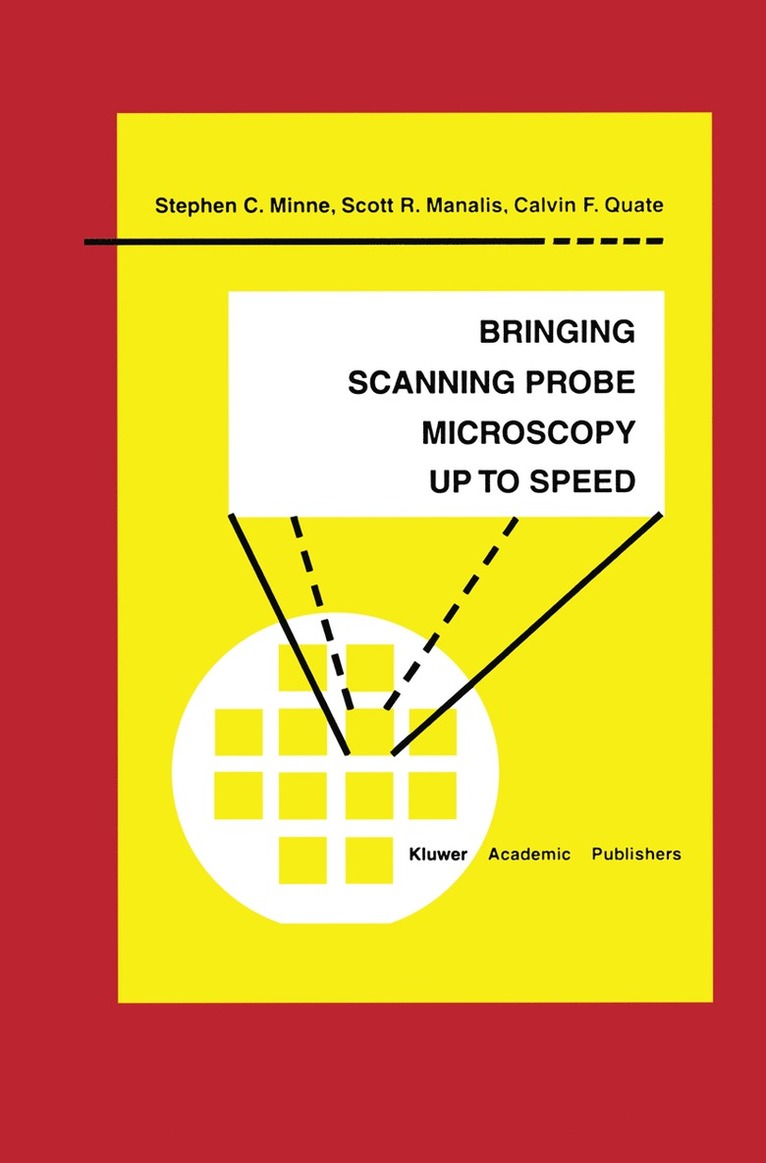


Du kanske också är intresserad av
Del 3
Bringing Scanning Probe Microscopy up to Speed
Stephen C. Minne, Scott R. Manalis, Calvin F. Quate
Häftad, 2013
1 439 kr
Scanning Probe Lithography
Hyongsok T. Soh, Kathryn Wilder Guarini, Calvin F. Quate
Häftad, 2010
1 439 kr
Del 7
Scanning Probe Lithography
Hyongsok T. Soh, Kathryn Wilder Guarini, Calvin F. Quate
Inbunden, 2001
1 439 kr
Del 13
Optical Microscanners and Microspectrometers using Thermal Bimorph Actuators
Gerhard Lammel, Sandra Schweizer, Philippe Renaud
Inbunden, 2002
2 149 kr
Micromachined Ultrasound-Based Proximity Sensors
Mark R. Hornung, Oliver Brand, Mark R. Hornung, Oliver Brand
Inbunden, 1999
1 439 kr
Del 5
Microfabrication in Tissue Engineering and Bioartificial Organs
Sangeeta N. Bhatia
Inbunden, 1999
1 479 kr