
Del i serien Language and Literacy Series
When Teaching Writing Gets Tough
Challenges and Possibilities in Secondary Writing Instruction
Inbunden, Engelska, 2024
1 719 kr
Beställningsvara. Skickas inom 5-8 vardagar. Fri frakt för medlemmar vid köp för minst 249 kr.
Writing instruction is a particular challenge because there is no singular, linear solution to teaching students to write well. This book approaches writing as a wicked problem that takes place in complicated contexts. Through both scholarly research and teacher reflection, it examines ELA classrooms and the experiences of writing teachers to identify approaches that have proven effective with adolescents. The book uses wickedity to frame the problems of teaching writing and offers context-specific solutions enacted by teachers. While it addresses the realities of standardized ways of teaching and assessing writing, the book also highlights the deep professional knowledge and practical strategies teachers bring to writing instruction in middle and high school classrooms. Chapters grapple with tensions between testing and authenticity, assessing writing in nuanced ways, and finding enjoyment in the work of teaching writing amid and alongside persistent complexities. Specific topics include students' writing process, revision, students as decision makers, multimodal writing, assessment and writer's notebooks, data-driven instruction, the high school–to-college transition, and teacher professional development.Book Features:Includes examples of how teachers approach specific challenges associated with teaching writing to adolescents, analyzing how and why their solutions proved effective. Focuses on students engaged in writing in classrooms, teachers implementing writing strategies, and professional learning.Offers a range of relevant voices on the topic of writing instruction with authors that include classroom teachers and scholars.
Produktinformation
- Utgivningsdatum2024-11-22
- Mått162 x 235 x 15 mm
- Vikt358 g
- FormatInbunden
- SpråkEngelska
- SerieLanguage and Literacy Series
- Antal sidor160
- FörlagTeachers' College Press
- ISBN9780807769935
Tillhör följande kategorier
Hoppa över listan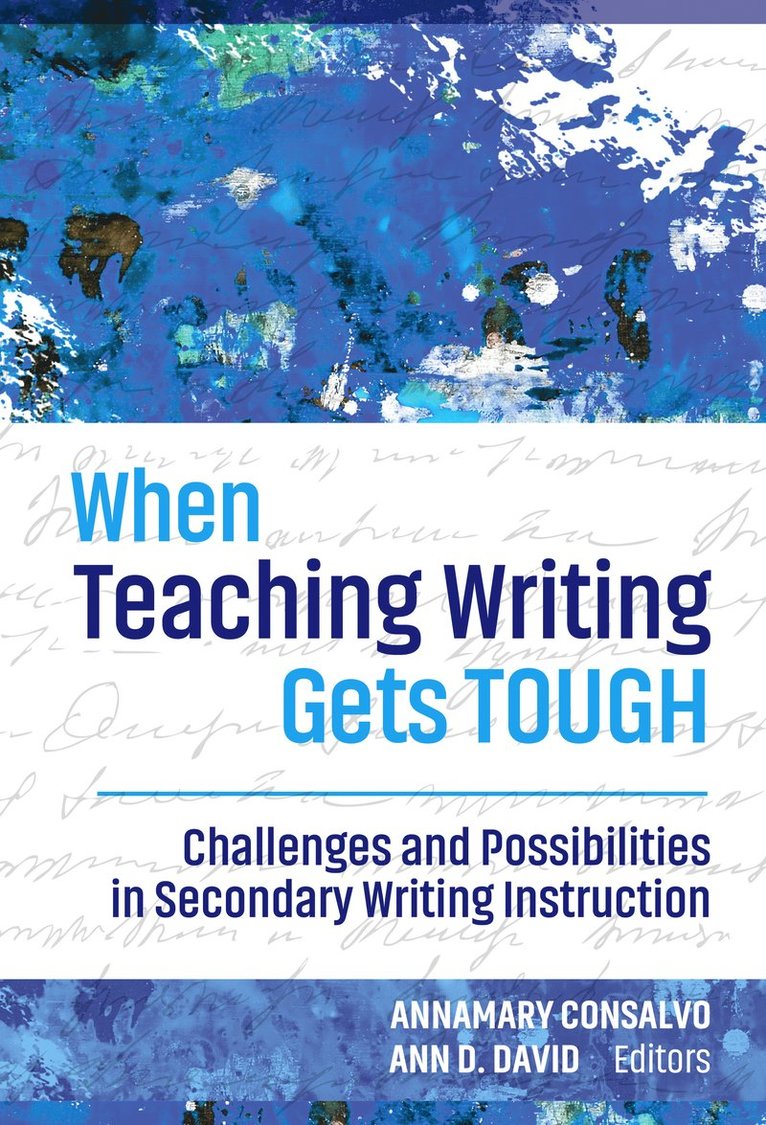




Du kanske också är intresserad av
The Impacts of Censorship: Research on the Intersection of Censorship and Teaching English
Ann D. David, Katharine Covino
Häftad, 2025
579 kr
- Nyhet
Del 11
- Nyhet
Del 4
- Nyhet
Del 3
Del 1
Del 3
- Nyhet
Del 6
Del 2
Del 7