
What are Exhibitions for? An Anthropological Approach
Häftad, Engelska, 2020
639 kr
Beställningsvara. Skickas inom 10-15 vardagar. Fri frakt för medlemmar vid köp för minst 249 kr.
Finns i fler format (1)
Why do people go to exhibitions, and what do they hope to gain from the experience? What would happen if people were encouraged to move freely through exhibition spaces, take photographs and be playful?In this book, Inge Daniels explores what might happen if people and objects were freed from the regulations currently associated with going to an exhibition. Traditional understandings of exhibitions place the viewers in a one-way communication form, where the exhibition and those behind its creation inform their audiences. However, motivations behind exhibition-going are multiple and complex and frequently the intentions ofcurators do not match the expectations of their visitors.Based on an in-depth ethnographic examination of the processes involved in the making and reception of one particular exhibition-experiment as well as a study that follows 'freed' objects into their new homes, this publication will not only shed light on what exhibitions are, but also what they could become in the future.Featuring over 175 colour illustrations and using practical examples, this is an important contribution for students and scholars of anthropology, museum studies, photography, design and architecture.
Produktinformation
- Utgivningsdatum2020-04-02
- Mått190 x 262 x 16 mm
- Vikt683 g
- FormatHäftad
- SpråkEngelska
- Antal sidor248
- FörlagBloomsbury Publishing PLC
- ISBN9781350065390
Tillhör följande kategorier
Hoppa över listan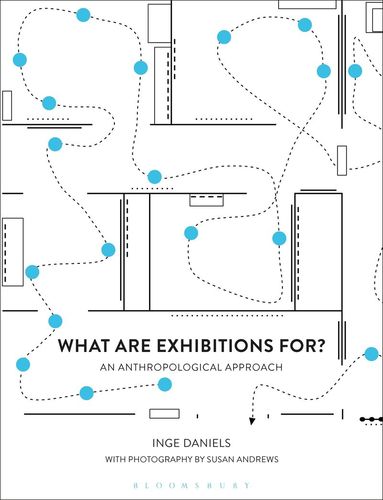








Du kanske också är intresserad av
- Nyhet
Del 7
- Nyhet
Del 6
- Nyhet
Del 4
- Nyhet
Del 3
- Nyhet
- Nyhet
Del 11
- Nyhet
Del 3