
Del i serien Architext
Urban Phantasmagorias
Domesticity, Production and the Politics of Modernity in Communist Bucharest
Inbunden, Engelska, 2023
3 219 kr
Beställningsvara. Skickas inom 10-15 vardagar. Fri frakt för medlemmar vid köp för minst 249 kr.
Finns i fler format (1)
Urban Phantasmagorias examines the legacies of socialist housing in the city of Bucharest during the period of communist rule in Romania. The book explores the manner in which the socialist state reconfigured the city through concrete acts of demolition and construction, as well as indirectly through legal frameworks aimed at the regulation of women’s reproductive agency, in an attempt to materialize its idea of modernity. It follows the effects of this state agenda with a focus on the period between 1965 and 1989 through an investigation of the transformations, representations, meanings, and uses of domestic spaces. The book draws on Walter Benjamin’s concept of phantasmagoria, which provides a critical framework through which it articulates the dynamic relationship between ideology, architecture, and everyday practices, and reassesses their impact upon individual subjectivity and agency. The woman emerges as a central subject of the book, upon whom the phantasmagoric effects of the socialist state’s modernizing agenda have an acute impact at the level of lived domesticity and everyday life. Through a focus on the lived experiences of women, the book illuminates the prismatic effect of the state’s infrastructural and legal intentions, including the ways in which these were subverted through women’s lived bodily experiences of the home. The book establishes, both theoretically and through the concrete case of the city of Bucharest, the methodological significance of Benjamin’s notion of phantasmagoria as an epistemological approach to a modern communist cityscape. Urban Phantasmagorias is an important contribution to scholarship in architectural history and theory, urban and gender studies, and post-socialist and Eastern European studies.
Produktinformation
- Utgivningsdatum2023-11-30
- Mått174 x 246 x undefined mm
- Vikt600 g
- FormatInbunden
- SpråkEngelska
- SerieArchitext
- Antal sidor238
- FörlagTaylor & Francis Ltd
- ISBN9780367859145
Tillhör följande kategorier
Hoppa över listan
Mer från samma serie
Architecture, State Modernism and Cultural Nationalism in the Apartheid Capital
Hilton Judin
Inbunden, 2021
3 309 kr
Architecture, State Modernism and Cultural Nationalism in the Apartheid Capital
Hilton Judin
Häftad, 2021
859 kr
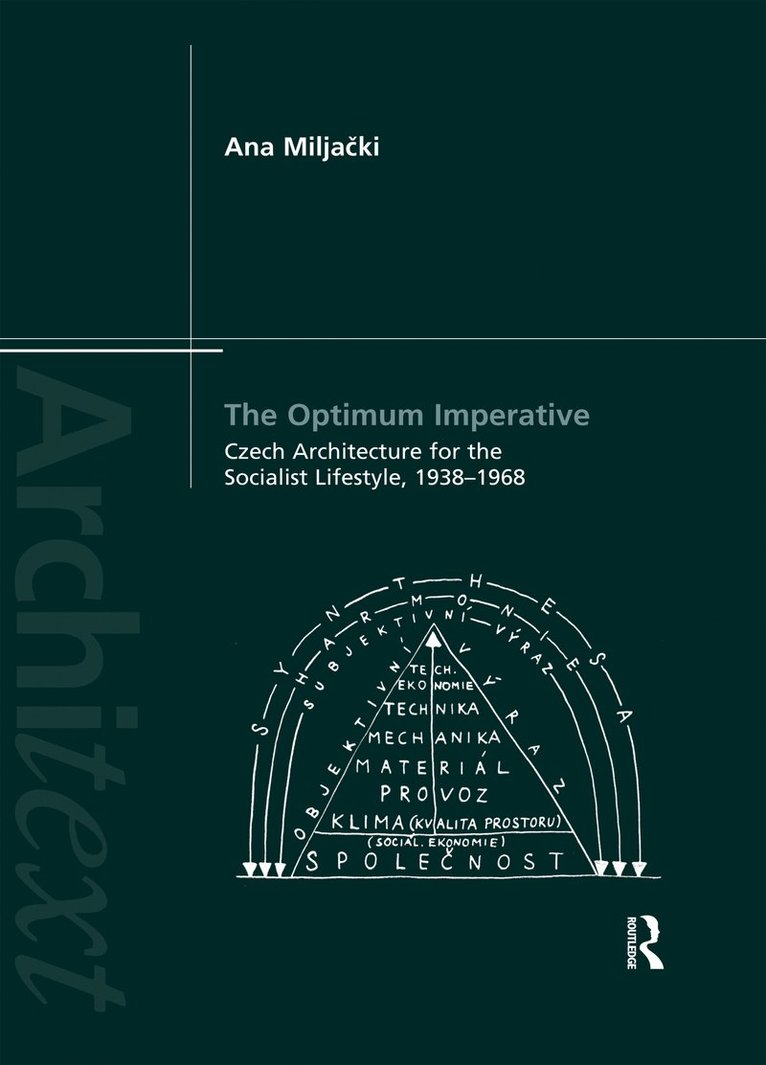
Optimum Imperative: Czech Architecture for the Socialist Lifestyle, 1938–1968
Ana Miljacki
Häftad, 2020
949 kr
Hoppa över listan








Du kanske också är intresserad av
- Nyhet
Del 11
- Nyhet
Del 3
- Nyhet
Del 3
- Nyhet
Del 4
Del 1
Del 3
- Nyhet
Del 6
Del 2
- Nyhet