
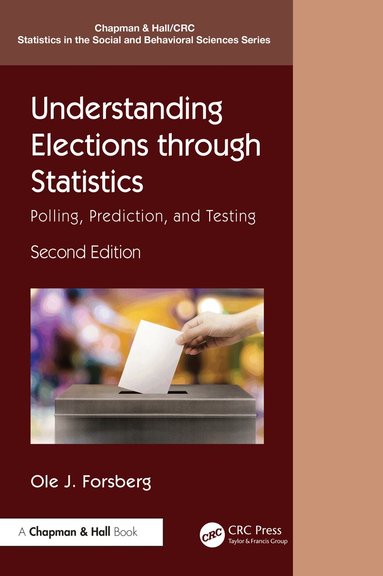
Understanding Elections through Statistics
Polling, Prediction, and Testing
Inbunden, Engelska, 2020
2 419 kr
Skickas . Fri frakt för medlemmar vid köp för minst 249 kr.
Finns i fler format (2)
Elections are random events. From individuals deciding whether to vote, to people deciding for whom to vote, to election authorities deciding what to count, the outcomes of competitive democratic elections are rarely known until election day…or beyond. Understanding Elections through Statistics: Polling, Prediction, and Testing explores this random phenomenon from two points of view: predicting the election outcome using opinion polls and testing the election outcome using government-reported data.
Written for those with only a brief introduction to statistics, this book takes you on a statistical journey from how polls are taken to how they can—and should—be used to estimate current popular opinion. Once an understanding of the election process is built, we turn toward testing elections for evidence of unfairness. While holding elections has become the de facto proof of government legitimacy, those electoral processes may hide a dirty little secret of the government illicitly ensuring a favorable election outcome.
This book includes these features designed to make your statistical journey more enjoyable:
- Vignettes of elections, including maps, to provide concrete bases for the material
- In-chapter cues to help one avoid the heavy math—or to focus on it
- End-of-chapter problems designed to review and extend that which was covered in the chapter
- Many opportunities to turn the power of the R statistical environment to the enclosed election data files, as well as to those you find interesting
From these features, it is clear the audience for this book is quite diverse. This text provides mathematics for those interested in mathematics, but also offers detours for those who just want a good read and a deeper understanding of elections.
Author
Ole J. Forsberg holds PhDs in both political science and statistics. He currently teaches mathematics and statistics in the Department of Mathematics at Knox College in Galesburg, IL.
Produktinformation
- Utgivningsdatum2020-11-03
- Mått243 x 176 x 19 mm
- Vikt486 g
- FormatInbunden
- SpråkEngelska
- SerieChapman & Hall/CRC Statistics in the Social and Behavioral Sciences
- Antal sidor226
- FörlagTaylor & Francis Ltd
- ISBN9780367895372
Tillhör följande kategorier
Hoppa över listan
Mer från samma serie
Big Data and Social Science
Ian Foster, Rayid Ghani, Ron S. Jarmin, Frauke Kreuter, Julia Lane
Inbunden, 2020
3 249 kr
Introduction to Bayesian Data Analysis for Cognitive Science
Bruno Nicenboim, Daniel J. Schad, Shravan Vasishth
Inbunden, 2025
3 249 kr
Introduction to Bayesian Data Analysis for Cognitive Science
Bruno Nicenboim, Daniel J. Schad, Shravan Vasishth
Häftad, 2025
1 219 kr
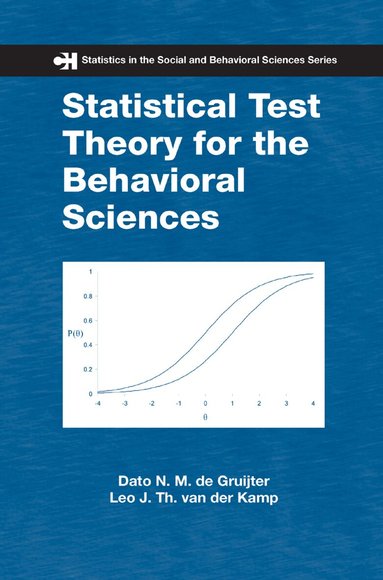
Statistical Test Theory for the Behavioral Sciences
Dato N. M. de Gruijter, Leo J. Th. van der Kamp
Häftad, 2019
1 359 kr
Hoppa över listan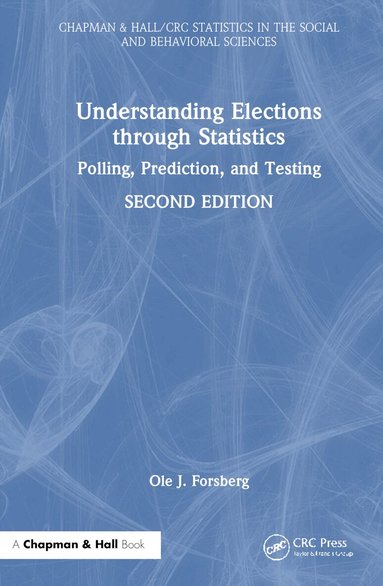







Du kanske också är intresserad av
- Nyhet
Del 7
- Nyhet
Del 3
- Nyhet
Del 6
Kemiboken nivå 1
Anna Johansson, Cecilia Stenberg, Sten-Åke Sundkvist, Niklas Wästeby
Häftad, 2025
1 169 kr
- Nyhet
Del 4
- Nyhet
Del 11
- Nyhet
- Nyhet