
Understanding Confucian Philosophy
Classical and Sung-Ming
Häftad, Engelska, 1998
659 kr
Beställningsvara. Skickas inom 10-15 vardagar. Fri frakt för medlemmar vid köp för minst 249 kr.
Finns i fler format (1)
Although Western interest in Chinese philosophy has been increasing in the last decade, the Confucian tradition is still often misunderstood. This volume offers the key to understanding Confucian philosophy by presenting a comprehensive account of its spiritual roots. The author focuses on the Classical and Sung-Ming periods, the two most important periods of Confucianism. Topics covered include: Confucius, Mencius, the I-Ching, and important figures from the Sung and Ming periods.
Produktinformation
- Utgivningsdatum1998-07-17
- Mått156 x 235 x 15 mm
- Vikt454 g
- FormatHäftad
- SpråkEngelska
- Antal sidor288
- FörlagBloomsbury Publishing Plc
- ISBN9780275963170
Tillhör följande kategorier
Hoppa över listan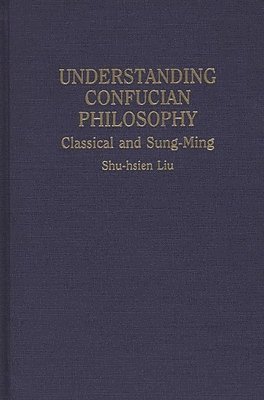





Du kanske också är intresserad av
- Nyhet
- Nyhet
Del 4
- Nyhet
Del 11
- Nyhet
- Nyhet
Del 3
- Nyhet
Del 6
- Nyhet
Del 4
- Nyhet