
Translation and the Intersection of Texts, Contexts and Politics
Historical and Socio-Cultural Perspectives
Häftad, Engelska, 2018
1 439 kr
Beställningsvara. Skickas inom 10-15 vardagar. Fri frakt för medlemmar vid köp för minst 249 kr.
Finns i fler format (1)
This book analyzes the impact of historical, political and sociocultural contexts on the reading, rewriting and translating of texts. The authors base their arguments on their experiences of translating or researching different text types, taking in fiction, short stories, memoirs, religious texts, scientific treatises, and news reports from a variety of different languages and cultural traditions. In doing so they cover a wide range of contexts and time periods, including Early Modern Europe, post-1848 Switzerland, nineteenth-century Portugal, Egypt in the early twentieth century under British colonial rule, Spain under Franco’s dictatorship, and contemporary Peru and China. They also consider the theoretical and pedagogical implications of their conclusions for translation students and practitioners. This edited collection will be of great interest to scholars working in translation studies, applied linguistics, and on issues of cultural difference.
Produktinformation
- Utgivningsdatum2018-05-13
- Mått148 x 210 x 14 mm
- Vikt316 g
- FormatHäftad
- SpråkEngelska
- Antal sidor227
- FörlagSpringer International Publishing AG
- ISBN9783319852348
Tillhör följande kategorier
Hoppa över listan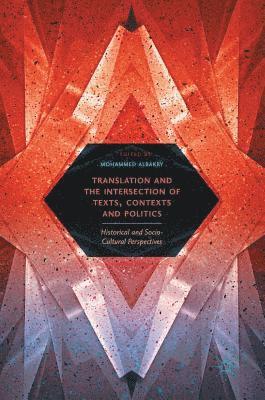









Du kanske också är intresserad av
Translation and the Intersection of Texts, Contexts and Politics
Mohammed Albakry
Inbunden, 2017
1 439 kr
- Nyhet
- Nyhet
- Nyhet
Del 3
- Nyhet
Del 11
- Nyhet
Del 6
- Nyhet