TRADE: Transformations of Adriatic Europe (2nd–9th Centuries AD)
Proceedings of the Conference in Zadar, 11th–13th February 2016
Häftad, Engelska, 2023
Av Igor Borzić, Enrico Cirelli, Kristina Jelinčić Vučković, Ana Konestra, Ivana Ožanić Roguljić, Igor Borzic, Kristina Jelincic Vuckovic, Ivana Ozanic Roguljic
1 269 kr
Produktinformation
- Utgivningsdatum2023-08-03
- Mått205 x 290 x 18 mm
- Vikt1 970 g
- FormatHäftad
- SpråkEngelska
- Antal sidor416
- FörlagArchaeopress
- ISBN9781803271729
Tillhör följande kategorier
Igor Borzić is Associate professor at the Department of Archaeology, University of Zadar, Croatia. His main research interests are focused on two big themes: the transition from the Iron Age to the Classical world in the Dalmatian area, and Hellenistic/Roman pottery. Currently he is a member of several excavation teams and a leader of a national scientific project investigating continuity of life on the island of Korčula. Enrico Cirelli is a medieval archaeologist and lecturer at the University of Bologna. His research interests are focused on the transformations of cities and ports in the Mediterranean, the birth of castles in the Medieval Europe and the development of techniques and artisan productions. Kristina Jelinčić Vučković joined the Institute of Archaeology in Zagreb in 2004 and works there as a senior expert assistant-documentalist. Her research interests are Roman pottery, villae rusticae, rural settlements, economy, trade, Dalmatia and Pannonia. Ana Konestra is a Research Associate at the Institute of Archaeology in Zagreb. She currently leads several fieldwork projects revolving around landscape archaeology, in particular in insular and coastal areas of the eastern Adriatic and concerning the development of Roman rural sites. Ivana Ožanić Roguljić is a Senior Research Associate at the Institute of Archaeology in Zagreb. Her interests focus on classical archaeology, especially Roman pottery and ceramics workshops, instrumenti domestici, the history of food, travel stations and communications, experimental archaeology and the popularisation of science.
- Preface – The Editors Invited lectureThe Adriatic route of the Attic sarcophagus trade – Nenad Cambi Regional trends of Late Roman and early medieval urban transformationsMutations of the late antique urban landscape in Byllis and other cities in Epirus Nova (5th-7th century) – Pascale ChevalierFranco-Albanian archaeological collaboration (2012-2015): research on the topography of Durrës – Eduard Shehi, Catherine Abadie-Reynal, Brikena Shkodra-Rrugia and Yann MannonThe imperial presence in Dalmatian epigraphy from Decius to Diocletian. A note on the epigraphic landscape – Mattia Vitelli CasellaThe Spolia phenomenon in the architecture of Dalmatian towns – Vedrana Jović GazićDiocletian’s Palace: monument of the new social system – tetrarchy – Ivana Jadrić-KučanEarly medieval architectural adaptation of the early Christian churches in the territory of Zadar – Ana Jordan KneževićPesaro. A necropolis from the 6th-7th centuries AD, adjacent to the Via Flaminia – Laura Cerri, Chiara Delpino, Vanessa Lani, Claudia Maestri and Erika ValliCupra Marittima (Marche): transformations of the ‘villa with nymphaeum’ from the 2nd through the 6th century AD – Nicoletta Frapiccini, Federica Galazzi and Loris SalvucciThe periphery of the Mediterranean – Aguntum (Southwestern Noricum) in Late Antiquity – Martin Auer, Sabine Deschler-Erb and Veronika Sossau Late Antique landscapes, fortifications and churches in Adriatic rural areasMapping the early medieval shores of the Balkans – Dominik HeherTransformations of a Post-Roman countryside: first results from field survey and excavations in the Upper Vjosa valley (SE Albania) – Ardit Miti and Eglantina SerjaniWine and olive oil in Roman Histria and Dalmatia. Production centres in Late Antiquity and the Early Middle Ages – Jana KopáčkováTransformations of baptismal complexes in central Dalmatia during the late antique period – Ana MiškovićBanjače – an example of rural architecture of the 5th and 6th centuries – Ivana Ožanić Roguljić and Ina MiloglavRural landscape transformations in Roman Aenona – Martina Dubolnić Glavan, Igor Kulenović and Neda KulenovićIssues related to the transformation of Late Antique fortresses on the east coast of the Adriatic Sea: the example of the Benedictine monastery of Sts. Cosmas and Damian located on the hill Ćokovac, on the island of Pašman – Josipa Baraka Perica and Božana MaletićStivanje field in Telašćica Nature Park – from Antiquity into the Middle Ages – Jona PetešićCrkvišće-Bukovlje near Generalski Stol – Late Antique hillfort. Results of the 2012-2015 excavations – Ana Azinović Bebek and Ivana Hirschler MarićContinuity of use of the landscape of the Vinodol valley (northern Liburnia, NE Adriatic): communications, settlements and surveillance points from prehistory to Late Antiquity and the Early Middle Ages – Goranka Lipovac Vrkljan, Ranko Starac and Ana KonestraRural landscapes in Istrian Late Antiquity – Robert Matijašić and Davor BulićLandscape, resource management and plant economy in the Parentium area (Croatia) between the Imperial period and the beginning of the Middle Ages. First results of archaeobotanical investigation – Christophe Vaschalde, Margaux Tillier, Nuria Rovira, Frédéric Guibal, David Kaniewski, Charlotte De Bruxelles, Marie-Brigitte Carre, Corinne Rousse, Gaetano Benčić, Vladimir Kovačić and Davor Munda Stancija Blek (Tar-Vabriga): craft activities and traces of transformations from a villa to a medieval settlement – Ana Konestra, Bartul Šiljeg and Gaetano BenčićSettlement and economy in early medieval Franciacorta – Simone SestitoNew excavations at Santa Maria in Pado Vetere and in the Po Delta (2014-2015) – Mario Cesarano and Carla Corti The Late Antique and medieval landscape to the north-west of Ravenna. The Bassa Romandiola Project – Marco Cavalazzi, Michele Abballe, Anna Benato and Michela De FelicibusPopulation and rural landscape organization in Numana (Ancona, Italy) between the 2nd and 9th centuries: preliminary notes – Maurizio Bilò and Sonia Virgili Material culture in Late Antiquity: trends in the Adriatic regionCrecchio Ware: a special connection between Abruzzo and Egypt? – Archer MartinA look through the glass – glass trade on the Adriatic and its hinterland in the imperial period – Irena LazarAdriatic imports to Rome: an insight from the wine amphorae – Giorgio Rizzo and Cristina MolariLate Roman pottery standardization: Hayes 85 as a case study – Miguel Busto-Zapico and Enrico CirelliExpanding African trade in the Adriatic during the early Imperial age – Diana DobrevaThe trade networks of Butrint within the mid-Imperial Adriatic (2nd-4th century AD): the amphorae from the Roman Forum Excavations Project – Gloria BolzoniExport of Dalmatian sarcophagi in the 6th century: chronology and topography – Ivan Basić Aquileia, Canale Anfora – finds from 1988: pottery as a marker of trade – Patrizia Donat, Paola Maggi, Paola Ventura and Ella ZuliniAquileia, Canale Anfora – the 2004-2005 excavation: commercial trade between the 2nd and the 3rd century AD witnessed by terra sigillata – Patrizia Donat, Paola Maggi, Franca Maselli Scotti and Ella ZuliniThe Mediterranean inside the city. The Late Antique imports from the Padua Baptistery excavation – Giovanna GanzarolliThe limestone sarcophagus trade from the quarries on Brač: New evidence from Ravenna and the Northern Adriatic – Paola NovaraAmphorae from a medieval context of the Monastery of St Severo in Classe (RA) – Bianca Maria ManciniEconomy and trade in the mid- Imperial Adriatic between Classe and the Mediterranean – Francesca AssirelliSoapstone from the northern Marches: Reconstruction of the ancient trade routes to Senigallia in the upper and middle Adriatic between Late Antiquity and the Middle Ages – Maria Teresa GattoShort and long range trade in the Roman Adriatic (3rd-6th century). The material culture: between counterfeit goods and original products – Carlo De MitriChanging trade routes in Late Antique and early medieval Cicolano: evidence of Adriatic and other imported pottery at the San Martino site(Torano di Borgorose, Rieti, Italy) – Elizabeth Colantoni, Gabriele Colantoni, Maria Rosa Lucidi, Jeffrey A. Stevens and Francesco Tommasi
Du kanske också är intresserad av
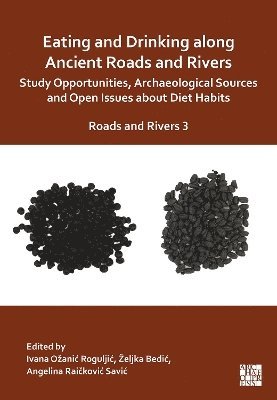
Eating and Drinking along Ancient Roads and Rivers: Study Opportunities, Archaeological Sources and Open Issues about Diet Habits
Ivana Ožanić Roguljić, Željka Bedić, Angelina Raičković Savić, Institute of Archaeology) Ozanic Roguljic, Ivana (Senior Research Associate, Institute for Anthropological Research) Bedic, Zeljka (Research Associate, Centre for Applied Bioanthropology, Angelina Raickovic Savic, Zeljka Bedic, Ivana Ozanic Roguljic
729 kr