
Theory of Minimalism
Inbunden, Engelska, 2017
2 359 kr
Beställningsvara. Skickas inom 10-15 vardagar. Fri frakt för medlemmar vid köp för minst 249 kr.
Finns i fler format (1)
The explosion of minimalism into the worlds of visual arts, music and literature in the mid-to-late twentieth century presents one of the most radical and decisive revolutions in aesthetic history. Detested by some, embraced by others, minimalism’s influence was immediate, pervasive and lasting, significantly changing the way we hear music, see art and read literature.In The Theory of Minimalism, Marc Botha offers the first general theory of minimalism, equally applicable to literature, the visual arts and music. He argues that minimalism establishes an aesthetic paradigm for rethinking realism in genuinely radical terms. In dialogue with thinkers from both the analytic and continental traditions – including Kant, Danto, Agamben, Badiou and Meillassoux – Botha develops a constellation of concepts which together encapsulate the transhistorcial and transdisciplinary reach of minimalism. Illustrated by a range of historical, canonical and contemporary minimalist works of different media, from the caves of early Christian ascetics to Samuel Beckett’s late prose, Botha offers a bold and provocative argument which will equip readers with the tools to engage critically with past, present and future minimalism, and to recognize how, in a culture caught between the poles of excess and austerity, minimalism still matters.
Produktinformation
- Utgivningsdatum2017-10-19
- Mått156 x 234 x 18 mm
- Vikt594 g
- FormatInbunden
- SpråkEngelska
- Antal sidor304
- FörlagBloomsbury Publishing PLC
- ISBN9781472530301
Tillhör följande kategorier
Hoppa över listan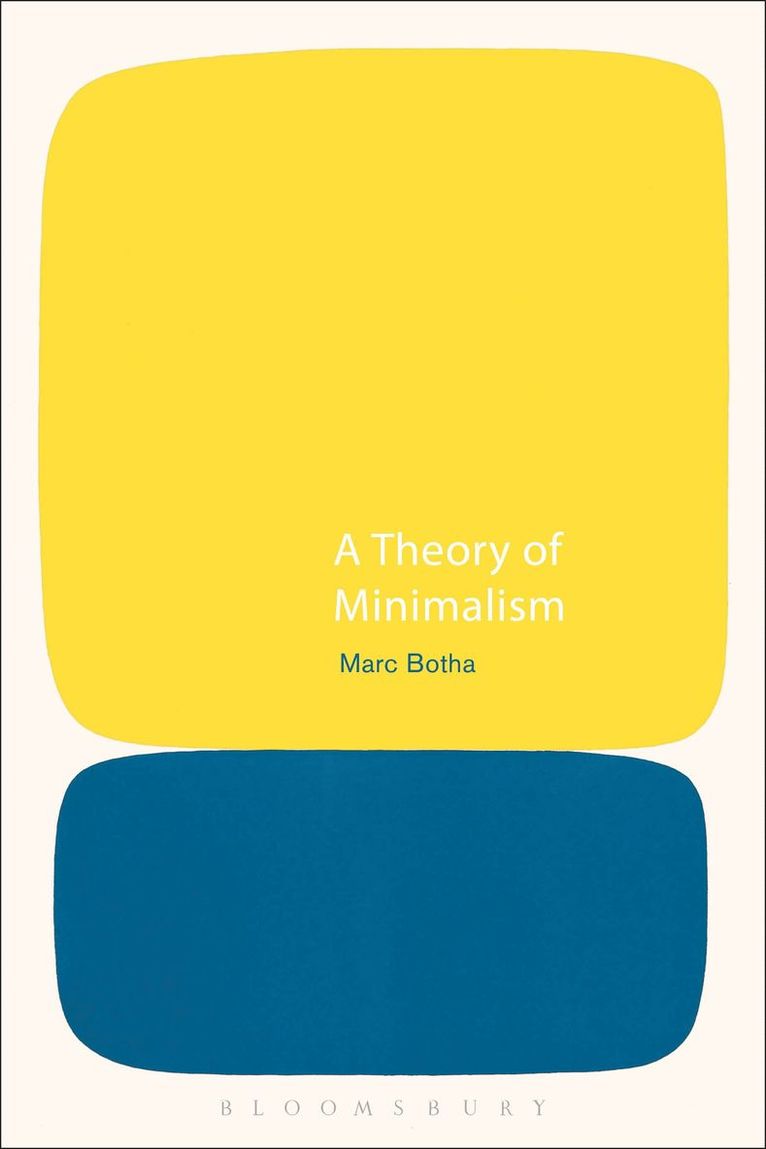





Du kanske också är intresserad av
- Nyhet
Del 3
- Nyhet
Del 11
- Nyhet
Del 6
- Nyhet
Del 4
Del 3
Del 1
Del 2