
TephroArchaeology in the North Pacific
Häftad, Engelska, 2019
1 209 kr
Skickas . Fri frakt för medlemmar vid köp för minst 249 kr.
‘TephroArchaeology’ is a translation of the Japanese word kazanbai kōkogaku (lit. volcanic ash archaeology), referring to a sub-discipline of archaeology that has developed in Japan in the last few decades. The first book compilation using the term, edited by the doyen of tephroarchaeology, geologist ARAI Fusao, appeared in 1993; chapters were written by 5 geologists, 3 archaeologists, 3 geographers, an engineer, and a historian. From its beginning, this subdiscipline has been interdisciplinary in approach and applied to all time periods throughout the Japanese Islands. Honouring this tradition, a panel on TephroArchaeology was organized by Barnes & Soda at the World Archaeology Congress 8 meetings in Kyoto (August–September 2016). The scope of concern was broadened to include other parts of the world and further disciplines. Several of the papers presented at WAC8 are included here together with other invited papers that complete the North Pacific focus. Most of the chapters are case-studies written by their excavators in Japan, Canada, and the United States, but a historian and a behavioural psychologist contribute important perspectives and add world-wide content. The volume is rounded out by an extensive Preface, Introduction and Appendices by co-editor Barnes, and a historic contextualization of TephroArchaeology by co-editor Soda. A final appendix consists of a translation of the techniques of tephra identification by MACHIDA Hiroshi & ARAI Fusao, to whom the volume is dedicated. The strengths of this book are many. It was primarily designed to bring into the English-speaking world the work being done by local archaeologists in Japan whose results are usually only accessible in Japanese. In addition to the meticulous excavation methodologies, innovative analytical techniques and interpretive analyses represented herein by all the authors are the variety of problems in human history that can be addressed through tephroarchaeological investigation. This subdiscipline may spawn a more general Volcanic Archaeology or Archaeological Volcanology as adherents grow and as volcanologists themselves take heed of the archaeological record to inform on eruption processes and products.
Produktinformation
- Utgivningsdatum2019-03-31
- Mått203 x 276 x 15 mm
- Vikt1 670 g
- FormatHäftad
- SpråkEngelska
- Antal sidor350
- FörlagArchaeopress
- ISBN9781789691726
Tillhör följande kategorier
Hoppa över listan







Du kanske också är intresserad av
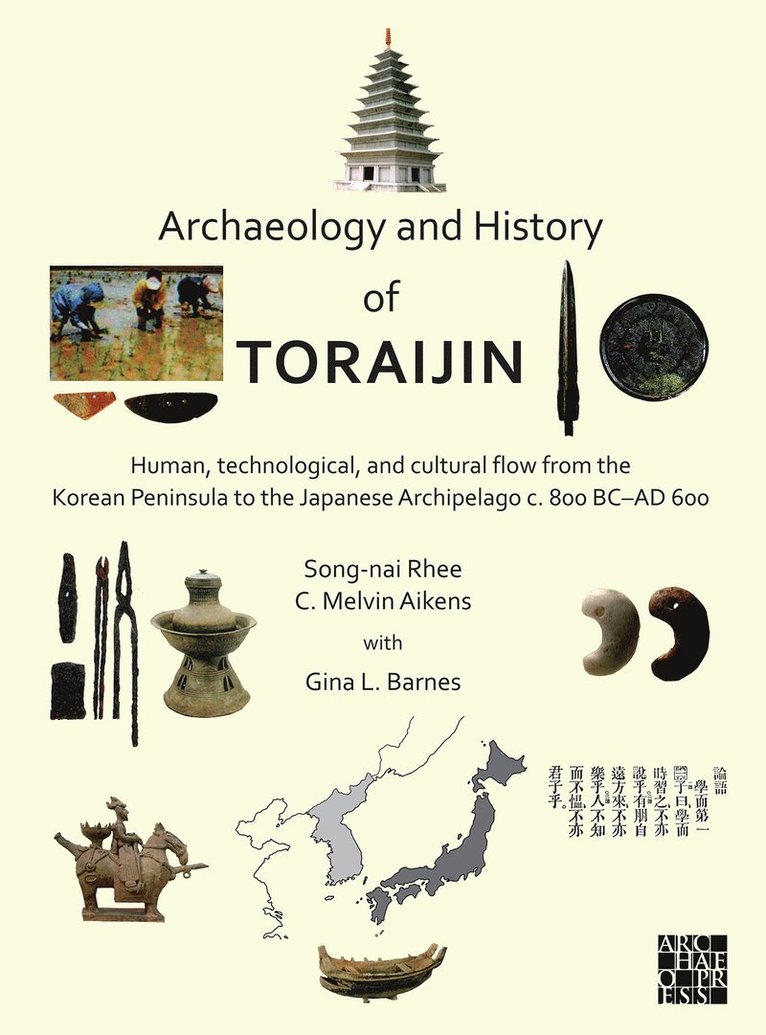
Archaeology and History of Toraijin
Song-nai Rhee, C. Melvin Aikens, Gina L. Barnes
Häftad, 2021
769 kr
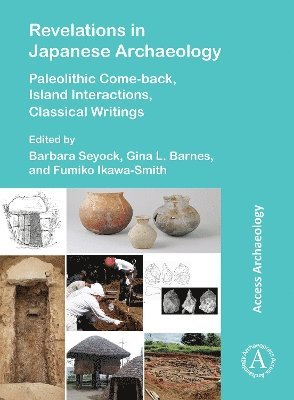
Revelations in Japanese Archaeology
Barbara Seyock, Gina L. Barnes, Fumiko Ikawa-Smith
Häftad, 2025
1 099 kr
- Nyhet
Del 3
- Nyhet
Del 11
- Nyhet
Del 4
Del 3
Del 1