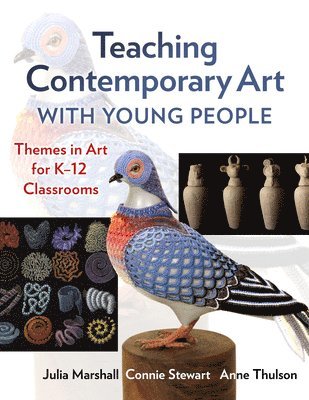
This practical resource will help educators teach about current art and integrate its philosophy and methods into the K-12 classroom. The authors provide a framework that looks at art through the lens of nine themes-everyday life, work, power, earth, space and place, self and others, change and time, inheritance, and visual culture-highlighting the conceptual aspects of art and connecting disparate forms of expression. They also provide guidelines and examples for how to use contemporary art to change the dynamics of a classroom, apply inventive non-linear lenses to topics, broaden and update the art "canon," and spur creative and critical thinking. Young people will find the selected artwork accessible and relevant to their lives, diverse and expansive, probing, serious and funny. Challenging conventional notions of what should be considered art and how it should be created, this book offers a sampling of what is out there to inspire educators and students to explore the limitless world of new art.Book Features:Indicators and lenses that make contemporary art more familiar, accessible, understandable, and useable for teachers. Easy-to-reference descriptions and images from a variety of contemporary artists.Strategies for integrating art thinking across the curriculum.Suggestions to help teachers find contemporary art to fit their curriculum and school settings.Concrete examples of art-based projects from both art and general classrooms.Guidance for developing curriculum, including how to create guiding questions to spur student thinking.
Julia Marshall is professor emeritus of art education at San Francisco State University. Her books include Integrating the Visual Arts Across the Curriculum and Art-Centered Learning Across the Curriculum. Connie Stewart is a professor of art education at the University of Northern Colorado, School of Art and Design. Anne Thulson is an associate professor of art education at the Metropolitan State University of Denver.
ContentsAcknowledgments viiiIntroduction 1Reflections From Anne Thulson 1Reflections From Connie Stewart 1Reflections From Julia Marshall 2About This Book 2PART I: Overview of Contemporary Art and Links to Education1 Contemporary Art 7Julia MarshallCharacteristics of Contemporary Art 7Final Thoughts 122 Exploding the Canon 14Anne ThulsonThe Canon 14Enlarging the Canon 153 Curating Artists for the Classroom 16Anne ThulsonResearching: A Sustainable Practice 16Looking at the Criteria ThroughEightmile Whisper 17Editing: Covering Up to Uncover 19Archiving 20Combining 20Sharing 24PART II: Themes in Contemporary Art4 We Need to Know About That! 27Connie StewartThe Purpose of Teaching With Themes 27Summary of the Themes 27Conclusion 285 Exploring Contemporary Art Through Themes 29THEME 1: Self and Others 29Jorge LuceroEmphasizing Relationships 29Contemporary Art With a Focus on Relationships 30Guide to Teaching Theme 1 33THEME 2: Science, Nature, and the Earth 34Trena NovalContemporary Art That Spans Art and Science 34Mutual Processes and Their Value 34Artists Who Explore Nature and Science 34Guide to Teaching Theme 2 37THEME 3: The Everyday 38Connie StewartArtists and The Everyday 38Guide to Teaching Theme 3 41THEME 4: Space and Place 42Rachael DelaneyArtists, Place, and Space 43Conclusion 44Guide to Teaching Theme 4 45THEME 5: Power 46Pamela Harris LawtonRecognizing Power 46Powerful Artists and Artworks 47Guide to Teaching Theme 5 50THEME 6: Popular Culture 51Lisa HochtrittUsing Popular Culture in Art 51Artists Who Connect to Popular Culture 52Guide to Teaching Theme 6 54THEME 7: Work 55Connie StewartArtists and Work 55Guide to Teaching Theme 7 59THEME 8: Time and Change 60Paulina Camacho ValenciaEmbracing Constant Flux 60Art, Time, and Change 60Conclusion 62Guide to Teaching Theme 8 63THEME 9: Inheritance 64Julia MarshallHistorical Forms and Memes Convey Ideas 64History Is the Subject 64Artists and Inheritance 65Guide to Teaching Theme 9 67Further Thoughts About Themes 68Julia MarshallWays to Think About Themes 68Mining and Mapping Themes 68Artworks Harbor Many Themes 69Mapping the Overlaps 72Mapping the Development of Knowledge and Thinking About an Image 72Finding Themes Outside of Art 74Conclusion 76PART III: Classroom Applications of Contemporary Art6 Why Contemporary Art in the Classroom? 79Julia MarshallContemporary Art: Opening Up 79Concluding Thoughts 827 Transferring Contemporary Art to the Classroom 86Anne Thulson and Connie StewartStrategies for Introducing Students to Contemporary Art 86The Importance of Teacher Dispositions 90And Classroom Practices Keep Evolving 91Ideas for Introducing and Scaffolding Artmaking 928 Framing the Invisible 93Anne ThulsonDocumentation: A Practice in Contemporary Art 93Documentation: An Essential Part of Contemporary ArtCurriculum 93How to Use Documentation to Change a School’s Visual Culture 94Documentation as a Sustainable Practice 95Meaningful Assessment Through Documentation 96A Way Forward 98Contemporary Art and Students With Special Needs, by Liz McAvoy 999 Developing Classroom Projects Based on Contemporary Art 100PROJECT 1: Population Growth Helper Robots (K–1) 100Jesse Bott, Christine Loehr, and Rachael DelaneyConcepts 100Understanding Goals 101What Happened 101Field Trip and Readings 102Artists and Artwork 103Conclusion 103PROJECT 2: Telling Our Stories— Symbolic Self-Portraits (High School) 104Sara StillmanOverview 104Concepts 104Understanding Goals 105Materials 105Resources 105What Happened 105Strategies for Making Learning Visible and Supporting Artmaking 106The Power of the Graphic Memoir 106Reflections 107Contemporary Art (Middle School) 107Lindsey ShepardOverview 107Concepts 107Understanding Goals 107Materials 107What Happened/Teaching and Learning Strategies 108Making Learning Visible 108An Example: Danielle’s Artwork 109Conclusion/Reflections 110PROJECT 4: Art of Popular Culture (High School) 110Katherine GieseOverview 110Concept 111Understanding Goals 111Materials and Resources 111Scaffolding Activities 111Making and Doing 111Reflection and Final Scaffolding 114An Example of Student Work 114Teacher Reflection 114PROJECT 5: Building Critical and Creative Thinking Through InvestigatingContemporary Art (Middle School) 116Wendi OsterBeginning the Investigation 117Making Inferences 117Researching 118Making Personal Connections 118Applying Their Learning 119Conclusion 121APPENDIX A: Q and A With Two Contemporary Artists: Kathy Aoki and Yunjin La-Mei Woo 122APPENDIX B: Artist Resource Bank 125Credits 127Index 129About the Authors and the Contributors 135
“Challenging conventional notions of what should be considered art and how it should be created, Teaching Contemporary Art with Young People offers a sampling of what is out there to inspire educators and students to explore the limitless world of new art. Young people will find the selected artwork accessible and relevant to their lives, diverse and expansive, probing, serious and funny.”—Sir Read A Lot