
Species and Machines
The Human Subjugation of Nature
Inbunden, Engelska, 2017
3 209 kr
Beställningsvara. Skickas inom 10-15 vardagar. Fri frakt för medlemmar vid köp för minst 249 kr.
Finns i fler format (1)
This book offers a re-examination of the relationship between humans and nature with a new methodology: by examining our entanglement with machines. Using central ideas of critical theory, it uncovers the suppression of nature through technology, tools and engines. It focuses on the ways in which human social forms have actively subjugated and destroyed other species in order to enhance their own social power and accumulation, leading to a new Anthropocene epoch in which human intervention is signalled in the geological record. Beginning with an account of the interactions between humans and other species, the book moves on to explore the hidden history of Marx and his obsession with machines, as well as new attempts to rethink a Marxist ecology, before proceeding to examine the manner in which technologies were used to suppress and destroy one particular species - the Whale of what we call the Cetacean Holocaust. Following this, there are analyses of the emergence of the ‘human encampments’ of the cities and the rise of mobile, locomotive cultures, and consideration of the relationship between machines of memory, and the ‘capturing’ of nature. A radical rethinking of classical social theory that develops new ways of thinking about ecological catastrophe and nature, this book will appeal to scholars of social theory and environmental sociology.
Produktinformation
- Utgivningsdatum2017-09-19
- Mått156 x 234 x 17 mm
- Vikt510 g
- FormatInbunden
- SpråkEngelska
- Antal sidor188
- FörlagTaylor & Francis Ltd
- ISBN9781138087972
Tillhör följande kategorier
Hoppa över listan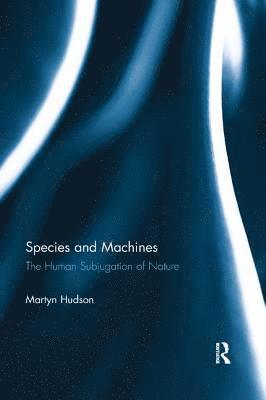




Du kanske också är intresserad av
Messy Ethnographies in Action
Mary Gearey, Sue Lewis, Martyn Hudson, Joe Painter, George Jennings, Nina Isabella Moeller, Lisa Potter, Rafi Alam, Lauren Crabb, Gabriel Popham, Nicola Harding, Alexandra Plows, Ville Savolainen, Trudy Rudge, Luisa Toffoli, Sandra West, Andréa Bruno de Sousa, Wayne Medford, Paola Jirón, Monika Rut, Alexandra Plows
Inbunden, 2018
1 059 kr