
Soviet Factography
Reality without Realism
Inbunden, Engelska, 2024
439 kr
Beställningsvara. Skickas inom 5-8 vardagar. Fri frakt för medlemmar vid köp för minst 249 kr.
A study of Soviet factography, an avant-garde movement that employed photography, film, journalism, and mass media technologies. This is the first major English-language study of factography, an avant-garde movement of 1920s modernism. Devin Fore charts this style through the work of its key figures, illuminating factography’s position in the material culture of the early Soviet period and situating it as a precursor to the genre of documentary that arose in the 1930s. Factographers employed photography and film practices in their campaign to inscribe facts and to chronicle modernization as it transformed human experience and society. Fore considers factography in light of the period’s explosion of new media technologies—including radio broadcasting, sound in film, and photo-media innovations—that allowed the press to transform culture on a massive scale. This theoretically driven study uses material from Moscow archives and little-known sources to highlight factography as distinct from documentary and Socialist Realism and to establish it as one of the major twentieth-century avant-garde forms. Fore covers works of photography, film, literature, and journalism together in his considerations of Soviet culture, the interwar avant-gardes, aesthetics, and the theory of documentary.
Produktinformation
- Utgivningsdatum2024-09-25
- Mått180 x 257 x 25 mm
- Vikt981 g
- FormatInbunden
- SpråkEngelska
- Antal sidor320
- FörlagThe University of Chicago Press
- ISBN9780226234861
Tillhör följande kategorier
Hoppa över listan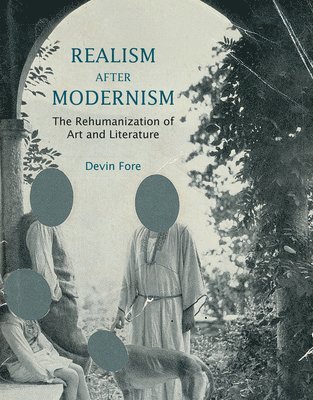


Mer från samma författare
Revoliutsiia! Demonstratsiia!: Soviet Art Put to the Test
Matthew S. Witkovsky, Devin Fore
Inbunden, 2017
799 kr
Hoppa över listan





Du kanske också är intresserad av
Revoliutsiia! Demonstratsiia!: Soviet Art Put to the Test
Matthew S. Witkovsky, Devin Fore
Inbunden, 2017
799 kr
- Nyhet
- Nyhet
- Nyhet
Del 6
- Nyhet
Long-Lived King: An Original The Owl House Graphic Novel
Dana Terrace, Mikki Crisostomo, Daun Han
Häftad, 2026
329 kr
- Nyhet
Del 11
Del 3
Del 1