
Del i serien Legitimation Code Theory
Sociology of Possibility
- Nyhet
An Invitation to Legitimation Code Theory
Häftad, Engelska, 2026
629 kr
Beställningsvara. Skickas inom 10-15 vardagar. Fri frakt för medlemmar vid köp för minst 249 kr.
Finns i fler format (1)
Legitimation Code Theory or ‘LCT’ is having significant impact on research and practice, especially in education. Around the world, scholars and educators are using LCT to reveal the usually hidden ‘rules of the game’ that underlie achievement in social arenas as varied as education, law and media. These ‘legitimation codes’ are then taught and learned or mindfully changed to give access and success to more people. This book is the first ever introduction to LCT, written by its creator and based on thirty years of developing the framework in empirical research. It is the book for learning how to creatively enact this approach in your own work.Sociology of Possibility explains the theoretical toolkit of LCT, how its concepts fit together, the ways of thinking they support, and how the framework opens up more possibilities for research. The book carefully defines LCT tools and draws on empirical studies of a wide range of real-world problems to illustrate how they can help you explain more in your research. It shows how these studies embrace the endless diversity of the social world through a shared conceptual language that supports knowledge-building. Chapters also walk you through using the concepts in ways that embrace both qualitative and quantitative methods, both rich empirical description and sharp theoretical analysis, and in interdisciplinary collaborations with other approaches. Sociology of Possibility will open your eyes to the extraordinary empowering and explanatory potential of this innovative approach. If you are looking for a sophisticated framework that will help you offer solutions to real-world problems, whether as a postgraduate student, teacher trainer, academic developer or educator, this book is where you should begin.
Produktinformation
- Utgivningsdatum2026-08-31
- Mått233 x 25 x 144 mm
- Vikt510 g
- FormatHäftad
- SpråkEngelska
- SerieLegitimation Code Theory
- Antal sidor322
- FörlagTaylor & Francis Ltd
- ISBN9780367765323
Tillhör följande kategorier
Hoppa över listan




Mer från samma författare
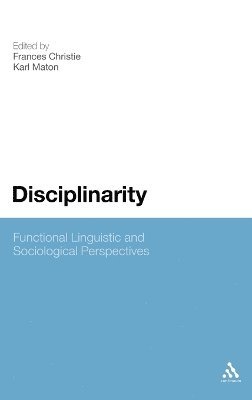
Disciplinarity: Functional Linguistic and Sociological Perspectives
Frances Christie, Karl Maton, Frances Christie, Karl Maton
Inbunden, 2011
3 179 kr
Hoppa över listan




Mer från samma serie
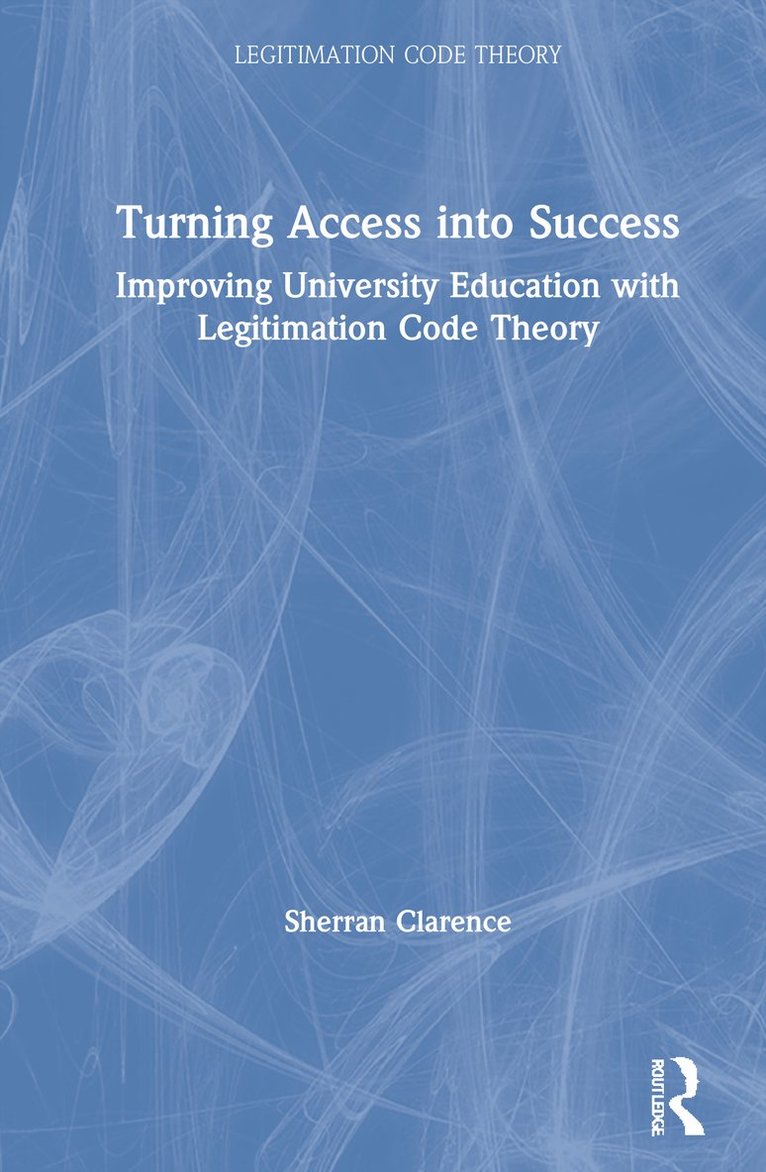
Building Knowledge in Higher Education
Christine Winberg, Sioux McKenna, Kirstin Wilmot
Inbunden, 2020
3 119 kr
Building Knowledge in Higher Education
Christine Winberg, Sioux McKenna, Kirstin Wilmot
Häftad, 2020
769 kr
Enhancing Science Education
Margaret A.L. Blackie, Hanelie Adendorff, Marnel Mouton
Inbunden, 2022
3 209 kr
Enhancing Science Education
Margaret A.L. Blackie, Hanelie Adendorff, Marnel Mouton
Häftad, 2022
769 kr
Decolonising Knowledge and Knowers
Mlamuli Nkosingphile Hlatshwayo, Hanelie Adendorff, Margaret A.L. Blackie, Aslam Fataar, Paul Maluleka
Inbunden, 2022
1 309 kr
Decolonising Knowledge and Knowers
Mlamuli Nkosingphile Hlatshwayo, Hanelie Adendorff, Margaret A.L. Blackie, Aslam Fataar, Paul Maluleka
Häftad, 2024
389 kr
Hoppa över listan

Du kanske också är intresserad av
- Nyhet
Disciplinarity: Functional Linguistic and Sociological Perspectives
Christie Frances, Christie Frances, Frances Christie, Karl Maton
Häftad, 2012
739 kr
Disciplinarity: Functional Linguistic and Sociological Perspectives
Frances Christie, Karl Maton, Frances Christie, Karl Maton
Inbunden, 2011
3 179 kr