
Del i serien Ancients and Moderns
Sex
Antiquity and Its Legacy
Häftad, Engelska, 2013
379 kr
Beställningsvara. Skickas inom 10-15 vardagar. Fri frakt för medlemmar vid köp för minst 249 kr.
Sex is fundamental to society. We cannot think about politics, power, identity or culture without also thinking about sexuality. Despite this, the scientific study of sexual behaviour is a relatively recent phenomenon. Doctors, legal experts and other intellectuals have all pondered challenging questions in an attempt to stay abreast of the latest sexual research. How might we separate talking about sex scientifically from discussing and consuming pornography? How do we speak objectively about desire and pleasure? And how do the words that we use to talk about sex affect what we are able to say about it? Such questions increasingly inform public discourse across a variety of media. Showing how ancient words and ideas have left a significant imprint on present-day ideas about sex, Daniel Orrells offers a bold new narrative of how the scientific study of sexuality came into being.Uncovering the intriguing story of how the obscene and erotic verse of Roman epigram and love poetry became the sanitised language of nineteenth-century sexual science, this divertingly readable book demonstrates how the reception of both Latin and Greek texts was central to the development of modernmsexology and psychoanalysis. Ranging from Sappho, Catullus and Martial to Michel Foucault, Richard von Krafft-Ebing and Sigmund Freud, the author reveals just how profoundly classics has shaped the landscape of sexual identity that we inhabit today.
Produktinformation
- Utgivningsdatum2013-02-28
- Mått136 x 214 x 18 mm
- Vikt320 g
- FormatHäftad
- SpråkEngelska
- SerieAncients and Moderns
- Antal sidor256
- FörlagBloomsbury Publishing PLC
- ISBN9781848855205
Tillhör följande kategorier
Hoppa över listan

Mer från samma författare
African Athena
ORRELLS ET AL, Daniel Orrells, Gurminder K. Bhambra, Tessa Roynon
Inbunden, 2011
3 639 kr
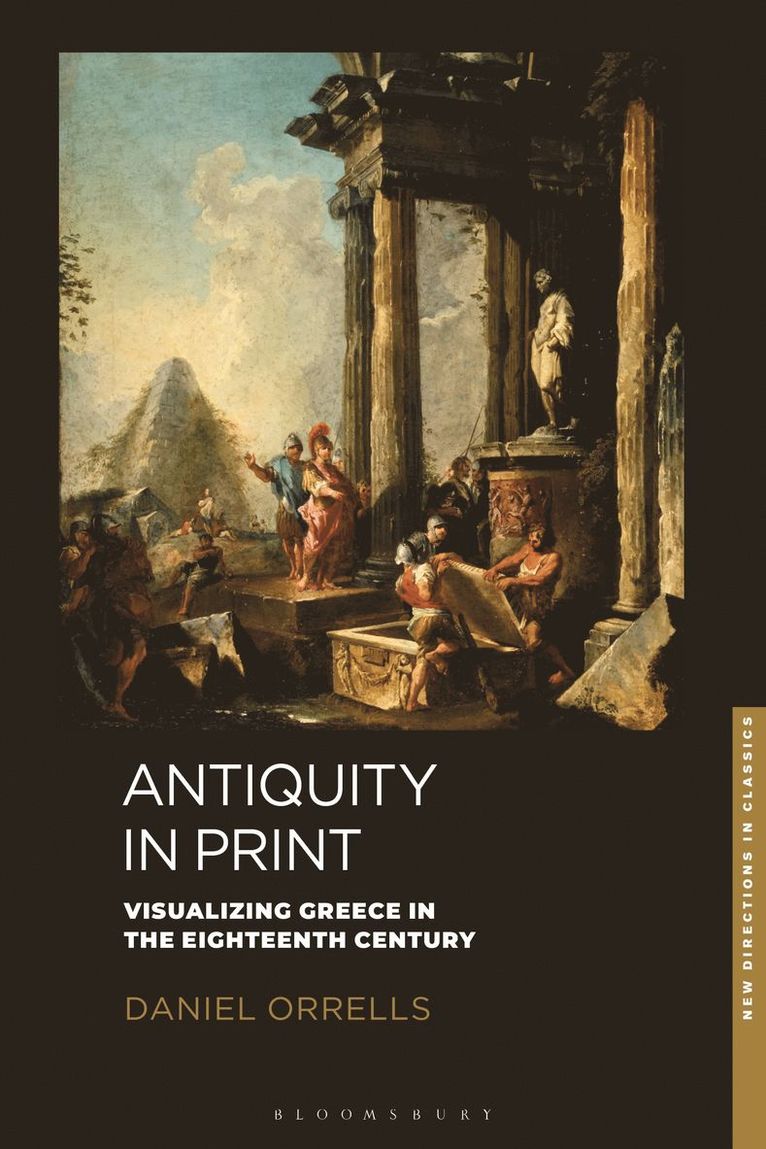
Antiquity in Print
Daniel Orrells, Fiachra Mac Góráin, Charles Martindale, Nora Goldschmidt
Häftad, 2024
459 kr
Richard Marsh, Popular Fiction and Literary Culture, 1890–1915
Victoria Margree, Daniel Orrells, Minna Vuohelainen
Inbunden, 2018
1 899 kr
Hoppa över listan

Du kanske också är intresserad av
Richard Marsh, Popular Fiction and Literary Culture, 1890–1915
Victoria Margree, Daniel Orrells, Minna Vuohelainen
Inbunden, 2018
1 899 kr
Antiquity in Print
Daniel Orrells, Fiachra Mac Góráin, Charles Martindale, Nora Goldschmidt
Häftad, 2024
459 kr
African Athena
ORRELLS ET AL, Daniel Orrells, Gurminder K. Bhambra, Tessa Roynon
Inbunden, 2011
3 639 kr
- Nyhet
Del 11