
Del i serien Scottish Religious Cultures: Historical Perspectives
Scottish Presbyterianism Re-established
The Case of Stirling and Dunblane, 1687-1710
Häftad, Engelska, 2023
429 kr
Skickas . Fri frakt för medlemmar vid köp för minst 249 kr.
Finns i fler format (1)
Presbyterianism and the governance of the Church of Scotland at the turn of the eighteenth centuryExamines church and civil records available in Stirling Archives and the National Records of Scotland, as well as memoirs, letters and diariesDescribes the new Presbyterian regime and the circumstances of its replacement of Episcopal ruleProvides statistical analysis of the recruitment and experiences of new ministers, their relatiships with each other and heritorsConsiders the survival of support for the episcopal regime locallyGives an in-depth examination of local responses to the controversy leading up to the Act of UnionIn 1690, the Church of Scotland rejected episcopal authority and settled as Presbyterian. The adjacent Presbyteries of Stirling and Dunblane covered an area that included both lowland and highland communities, speaking both English and Gaelic and supporting both the new government and the old thus forming a representative picture of the nation as a whole. This book examines the ways in which the two Presbyteries operated administratively, theologically and geographically under the new regime. By surveying and analysing surviving church records from 1687 to 1710 at Presbytery and parish level, Andrew T. N. Muirhead shows how the two Presbyteries related to civil authorities, how they dealt with problematic discipline cases referred by the Kirk Sessions, their involvement in the Union negotiations and their overall functioning as human, as well as religious, institution in seventeenth-century Scotland. The resulting study advances our understanding of the profound impact that Presbyteries had on those involved with them in any capacity.
Produktinformation
- Utgivningsdatum2023-11-15
- Mått156 x 234 x 19 mm
- Vikt440 g
- FormatHäftad
- SpråkEngelska
- SerieScottish Religious Cultures: Historical Perspectives
- Antal sidor280
- FörlagEdinburgh University Press
- ISBN9781474447393
Tillhör följande kategorier
Hoppa över listan





Mer från samma serie
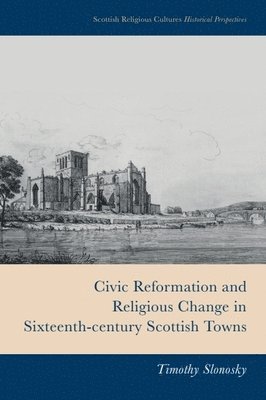
Civic Reformation and Religious Change in Sixteenth-Century Scottish Towns
Timothy Slonosky
Inbunden, 2024
1 409 kr
Civic Reformation and Religious Change in Sixteenth-Century Scottish Towns
Timothy Slonosky
Häftad, 2026
399 kr
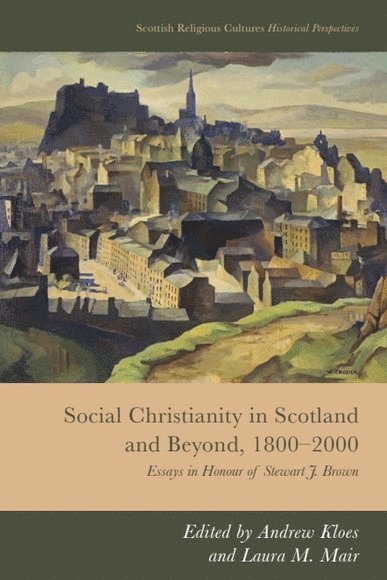
Social Christianity in Scotland and Beyond, 1800-2000
Andrew Kloes, Laura M Mair
Inbunden, 2024
2 469 kr
Hoppa över listan

Du kanske också är intresserad av
Social Christianity in Scotland and Beyond, 1800-2000
Andrew Kloes, Laura M Mair
Inbunden, 2024
2 469 kr