
Scientific History
Experiments in History and Politics from the Bolshevik Revolution to the End of the Cold War
Inbunden, Engelska, 2021
569 kr
Beställningsvara. Skickas inom 5-8 vardagar. Fri frakt för medlemmar vid köp för minst 249 kr.
Increasingly, scholars in the humanities are calling for a reengagement with the natural sciences. Taking their cues from recent breakthroughs in genetics and the neurosciences, advocates of “big history” are reassessing long-held assumptions about the very definition of history, its methods, and its evidentiary base. In Scientific History, Elena Aronova maps out historians’ continuous engagement with the methods, tools, values, and scale of the natural sciences by examining several waves of their experimentation that surged highest at perceived times of trouble, from the crisis-ridden decades of the early twentieth century to the ruptures of the Cold War. The book explores the intertwined trajectories of six intellectuals and the larger programs they set in motion: Henri Berr (1863–1954), Nikolai Bukharin (1888–1938), Lucien Febvre (1878–1956), Nikolai Vavilov (1887–1943), Julian Huxley (1887–1975), and John Desmond Bernal (1901–1971). Though they held different political views, spoke different languages, and pursued different goals, these thinkers are representative of a larger motley crew who joined the techniques, approaches, and values of science with the writing of history, and who created powerful institutions and networks to support their projects. In tracing these submerged stories, Aronova reveals encounters that profoundly shaped our knowledge of the past, reminding us that it is often the forgotten parts of history that are the most revealing.
Produktinformation
- Utgivningsdatum2021-04-02
- Mått152 x 229 x 25 mm
- Vikt481 g
- FormatInbunden
- SpråkEngelska
- Antal sidor256
- FörlagThe University of Chicago Press
- ISBN9780226761381
Tillhör följande kategorier
Hoppa över listan
Mer från samma författare
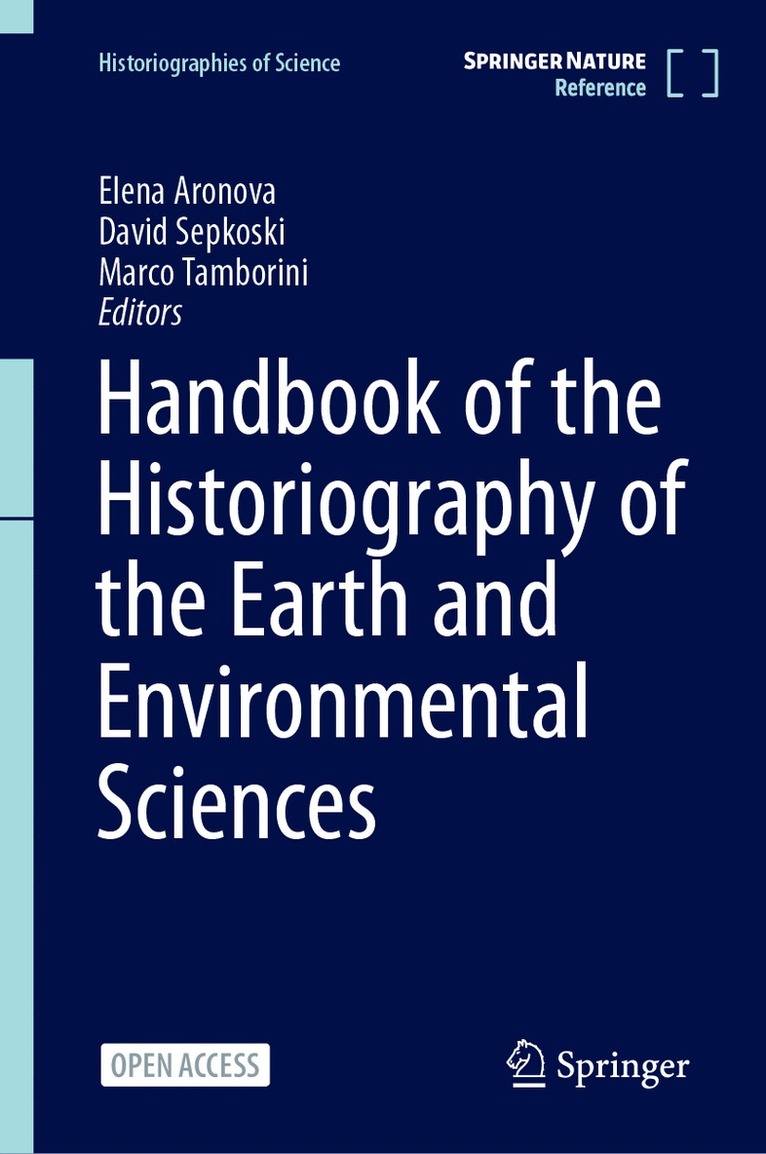
Handbook of the Historiography of the Earth and Environmental Sciences
Elena Aronova, David Sepkoski, Marco Tamborini
Inbunden, 2025
3 299 kr
Hoppa över listan






Du kanske också är intresserad av
Handbook of the Historiography of the Earth and Environmental Sciences
Elena Aronova, David Sepkoski, Marco Tamborini
Inbunden, 2025
3 299 kr
- Nyhet
- Nyhet
Del 6
- Nyhet
Del 3
- Nyhet
Del 11
- Nyhet
Del 1
- Nyhet