
Del i serien Jews and Judaism: History and Culture
Samson Raphael Hirsch's Religious Universalism and the German-Jewish Quest for Emancipation
Inbunden, Engelska, 2024
1 599 kr
Beställningsvara. Skickas inom 5-8 vardagar. Fri frakt för medlemmar vid köp för minst 249 kr.
Finns i fler format (1)
An account of how Rabbi Samson Raphael Hirsch promulgated an inclusive vision of Judaism in the context of advancing the civic equality of German Jews in the nineteenth centuryIn Samson Raphael Hirsch’s Religious Universalism and the German-Jewish Quest for Emancipation, Moshe Miller contends that nineteenth-century German Jews of all denominations actively sought acceptance within German society and aspired to achieve full emancipation from the many legal strictures on their status as citizens and residents. While non-Orthodox Jews sought a large measure of cultural assimilation, Orthodox Jews were content with more delimited acculturation, but they were no less enthusiastic about achieving emancipation and acceptance in German society. There was one issue, though, which was seen by non-Jewish critics of emancipation as a barrier to granting civic rights to Jews: namely, the alleged tribalism of Judaism and the supposedly chauvinistic notion of Jews as “the Chosen People.” These charges could not go unanswered, and in the writings of Rabbi Samson Raphael Hirsch (1808–1888), the leading thinker of the Orthodox camp, they did not. Hirsch stressed the universalism of the Jewish ethic and the humanistic concern for the welfare of all mankind, which he believed was one of the core teachings of Judaism. His colleagues in the German Orthodox rabbinate largely concurred with Hirsch’s assessment. Samson Raphael Hirsch’s Religious Universalism and the German-Jewish Quest for Emancipation places Hirsch’s views in their historical context and provides a detailed account of his attitude toward non-Jews and the Christianity practiced by the vast majority of nineteenth-century Europeans.
Produktinformation
- Utgivningsdatum2024-02-20
- Mått152 x 229 x 30 mm
- Vikt272 g
- FormatInbunden
- SpråkEngelska
- SerieJews and Judaism: History and Culture
- Antal sidor312
- FörlagThe University of Alabama Press
- ISBN9780817321833
Tillhör följande kategorier
Hoppa över listan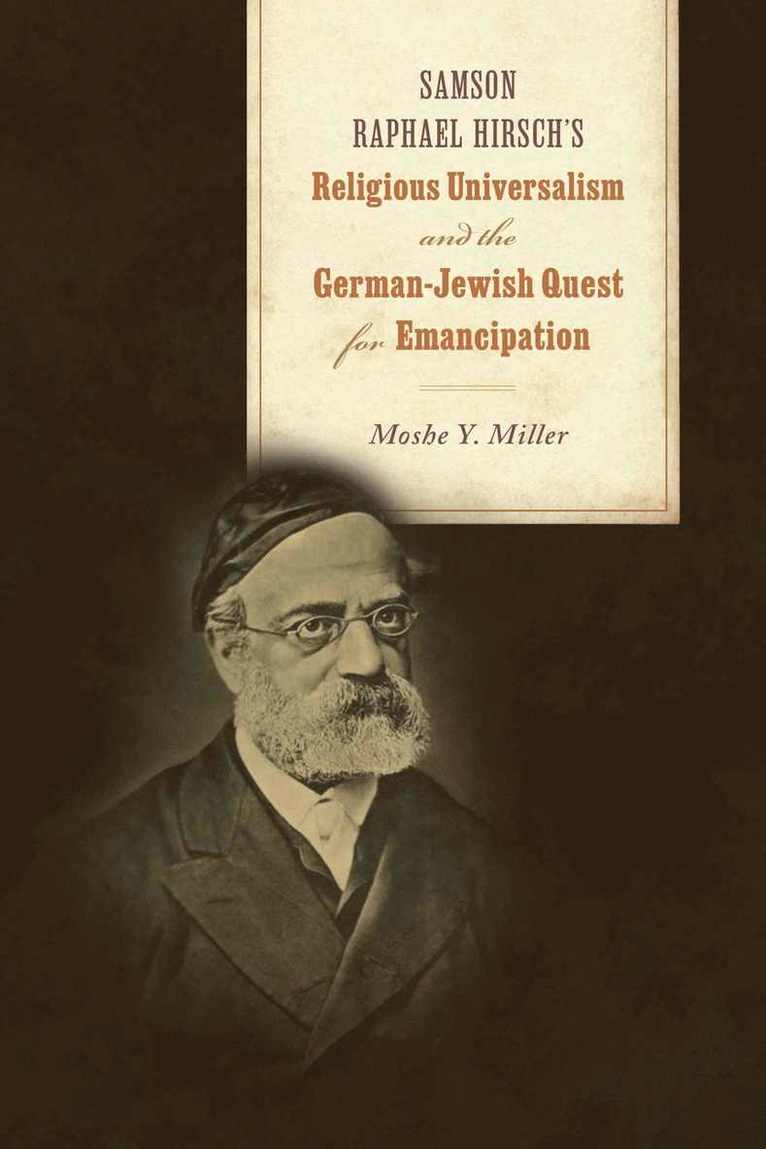









Du kanske också är intresserad av
Samson Raphael Hirsch's Religious Universalism and the German-Jewish Quest for Emancipation
Moshe Y. Miller
Häftad, 2024
499 kr
- Nyhet
Del 3
- Nyhet