
Rugged Individualism and the Misunderstanding of American Inequality
Inbunden, Engelska, 2020
2 009 kr
Beställningsvara. Skickas inom 10-15 vardagar. Fri frakt för medlemmar vid köp för minst 249 kr.
Finns i fler format (1)
Rugged Individualism and the Misunderstanding of American Inequalityexplores and critiques the widespread perception in the United States that one’s success or failure in life is largely the result of personal choices and individual characteristics. As the authors show, the distinctively individualist ideology of American politics and culture shapes attitudes toward poverty and economic inequality in profound ways, fostering social policies that de-emphasize structural remedies. Drawing on a variety of unique methodologies, the book synthesizes data from large-scale surveys of the American population, and it features both conversations with academic experts and interviews with American citizens intimately familiar with the consequences of economic disadvantage. This mixture of approaches gives readers a fuller understanding of “skeptical altruism,” a concept the authors use to describe the American public’s hesitancy to adopt a more robust and structurally-oriented approach to solving the persistent problem of economic disadvantage.
Produktinformation
- Utgivningsdatum2020-02-20
- Mått160 x 234 x 21 mm
- Vikt562 g
- FormatInbunden
- SpråkEngelska
- Antal sidor302
- FörlagAssociated University Presses
- ISBN9781611462340
Tillhör följande kategorier
Hoppa över listan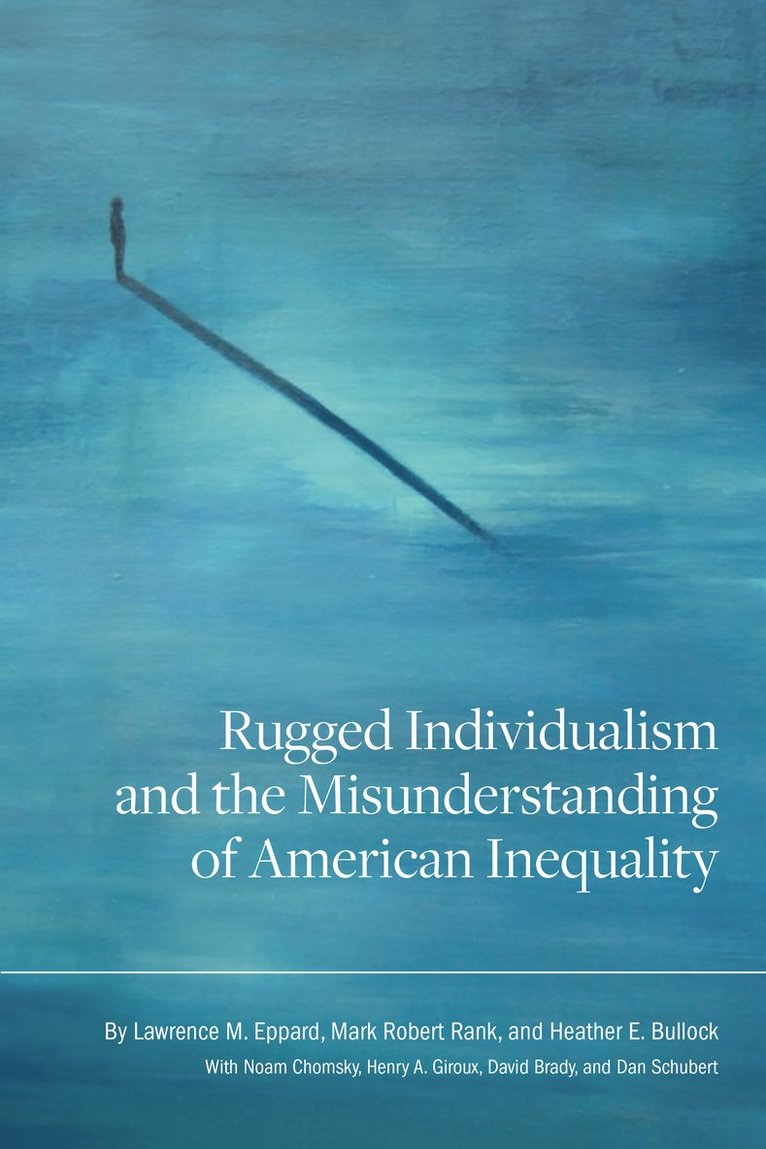

Du kanske också är intresserad av
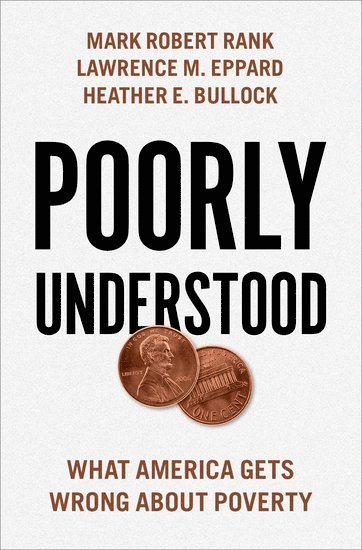
Rugged Individualism and the Misunderstanding of American Inequality
Lawrence M. Eppard, Mark Robert Rank, Heather E. Bullock
Häftad, 2022
659 kr
Listening to the Voices of Poor Women
Bernice Lott, Heather E. Bullock, Irene Hanson Frieze
Häftad, 2002
469 kr
The Psychology of Poverty, Wealth, and Economic Inequality
Deborah Belle, Heather E. Bullock
Inbunden, 2023
1 679 kr
The Psychology of Poverty, Wealth, and Economic Inequality
Deborah Belle, Heather E. Bullock
Häftad, 2023
909 kr