
Del i serien Nomos Studies in Law, Culture and Power
Revolution, Marxism and Law
Pashukanis Revisited
Inbunden, Engelska, 2026
3 309 kr
Beställningsvara. Skickas inom 10-15 vardagar. Fri frakt för medlemmar vid köp för minst 249 kr.
This book builds on Head’s previous work on Soviet legal scholar Evgeny Pashukanis, challenging Western academics who separate Pashukanis's theories from the complex realities of the Soviet state's decline under Stalin.It is not, this book argues, possible to analyse the emergence of Pashukanis as a preeminent Soviet legal theorist in the 1920s, and the subsequent retractions and reversals of his theories, outside their historical context. That context includes the prior development of Marxist legal theory, the contradictions and dynamics of the 1917 Russian Revolution, the early achievements of the Soviet state in law-related fields, the emergence of the Stalinist regime, and Pashukanis’ efforts to satisfy the demands of that regime. Reviewing the trials and the cruel methods used to pursue opponents of the Stalinist regime, the book draws on newly available material to offer a thorough analysis of what exactly it was in Pashukanis’ writings that made his disappearance essential for Stalin’s regime. In our current age of economic inequality, environmental crisis, and growing disillusionment with global capitalism, this book offers a fresh perspective on what happened in the Soviet Union, separating genuine revolutionary ideals from their later distortion.Revolution, Marxism and Law will appeal to scholars and students in legal theory, especially those interested in socialist legal theory, critical legal theory and Marxism, as well as those in other disciplines with an interest in Russia and the rise and fall of the Soviet Union.
Produktinformation
- Utgivningsdatum2026-01-22
- Mått156 x 234 x 18 mm
- Vikt600 g
- FormatInbunden
- SpråkEngelska
- SerieNomos Studies in Law, Culture and Power
- Antal sidor232
- FörlagTaylor & Francis Ltd
- ISBN9781032786285
Tillhör följande kategorier
Hoppa över listan






Mer från samma författare
Teacher-Led School Improvement
Judith Durrant, David Frost, Michael Head, Gary Holden
Häftad, 2000
999 kr
Teacher-Led School Improvement
Judith Durrant, David Frost, Michael Head, Gary Holden
Inbunden, 2000
3 119 kr
Hoppa över listan

Mer från samma serie
Law, Culture and Identity in Central and Eastern Europe
Cosmin Cercel, Alexandra Mercescu, Mirosław Michał Sadowski
Inbunden, 2023
3 229 kr
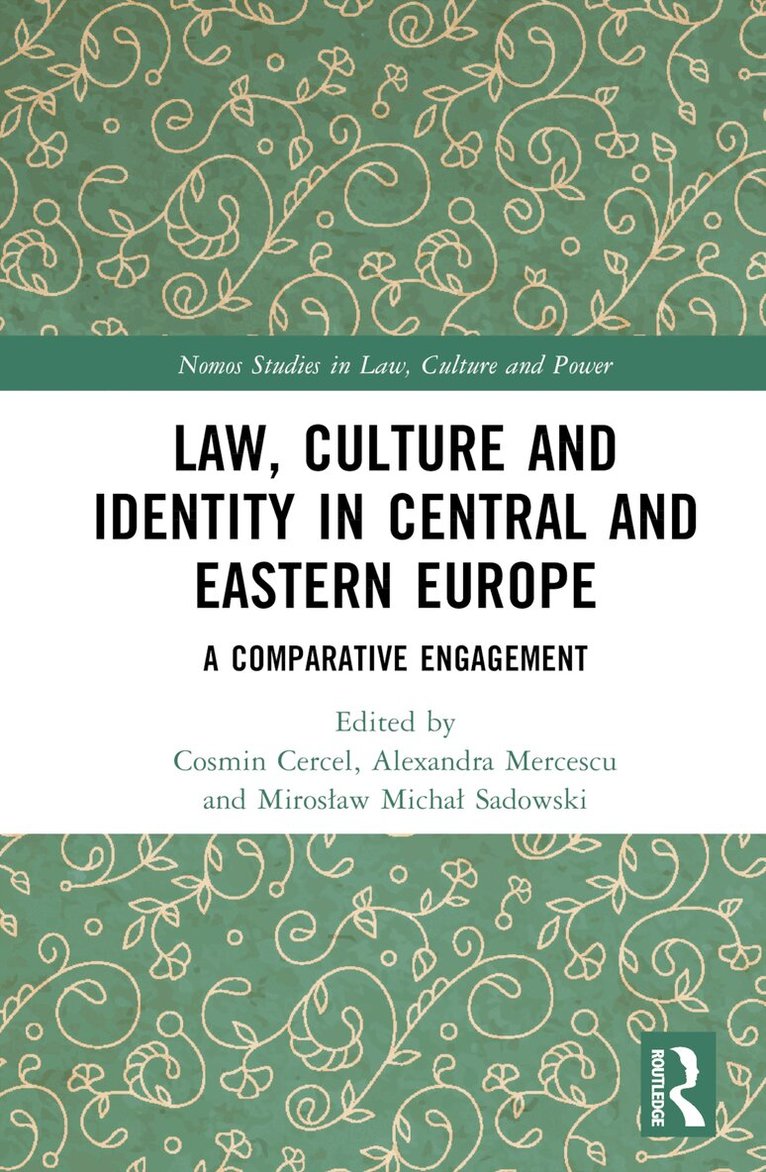
Law, Culture and Identity in Central and Eastern Europe
Cosmin Cercel, Alexandra Mercescu, Mirosław Michał Sadowski
Häftad, 2025
829 kr
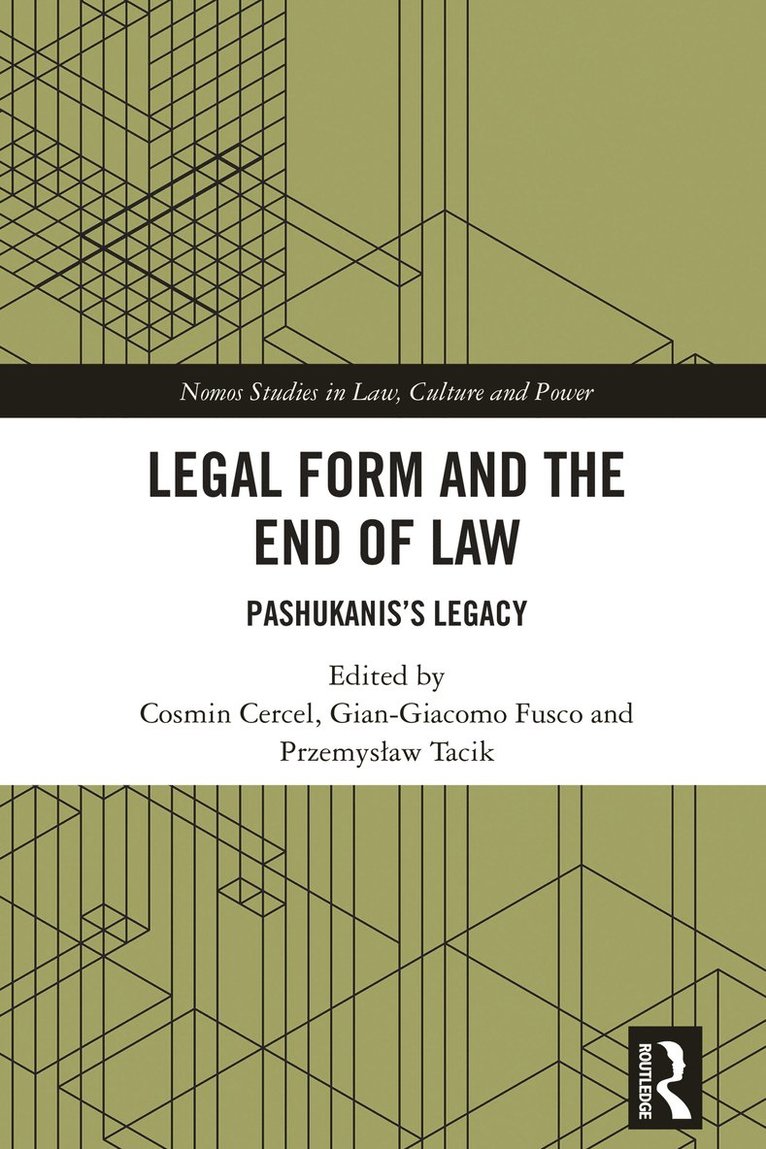
Legal Form and the End of Law
Cosmin Cercel, Gian-Giacomo Fusco, Przemyslaw Tacik
Inbunden, 2024
3 309 kr
- Nyhet
Hoppa över listan

Du kanske också är intresserad av
Law, Culture and Identity in Central and Eastern Europe
Cosmin Cercel, Alexandra Mercescu, Mirosław Michał Sadowski
Häftad, 2025
829 kr
- Nyhet
Law, Culture and Identity in Central and Eastern Europe
Cosmin Cercel, Alexandra Mercescu, Mirosław Michał Sadowski
Inbunden, 2023
3 229 kr
- Nyhet