
Del i serien SUNY series in Ancient Greek Philosophy
Revaluing Ethics
Aristotle's Dialectical Pedagogy
Häftad, Engelska, 2001
549 kr
Tillfälligt slut
Challenges influential interpretations of Aristotelian ethical and political philosophy.Revaluing Ethics criticizes the notion that the Nicomachean Ethics is a moral textbook written for an indeterminate audience. Rather, Smith argues that the Ethics is a pedagogy and so must be read in light of the demands imposed by teaching and learning about politics in a tradition. Smith claims that the Ethics initially seeks common ground with ambitious, virile young citizens of ancient city-states who valorize honorable action and competition. Their love of honor can be a spur to virtue, but the competitive character of its pursuit also leads to despotic and factional politics. The drama of the Ethics lies in the dialectical engagement and transformation of a valorization of prestige and power. Aristotle shows how these commitments are paradoxically sterile when pursued in practice. In turn, Aristotle's strategy for reforming political life is to argue for the reorientation of his audience's desires away from the non-shareable external goods of political power and honor to shareable good. His strategy for reforming personal life is to argue for the reorientation of his audience's desires away from honor to a love of contemplation.
Produktinformation
- Utgivningsdatum2001-11-01
- Mått152 x 229 x 22 mm
- Vikt454 g
- FormatHäftad
- SpråkEngelska
- SerieSUNY series in Ancient Greek Philosophy
- Antal sidor339
- FörlagState University of New York Press
- ISBN9780791451427
Tillhör följande kategorier
Hoppa över listan





Mer från samma författare
Communicating Papal Authority in the Middle Ages
Minoru Ozawa, Thomas W. Smith, Georg Strack
Inbunden, 2023
2 789 kr
Communicating Papal Authority in the Middle Ages
Minoru Ozawa, Thomas W. Smith, Georg Strack
Häftad, 2024
849 kr
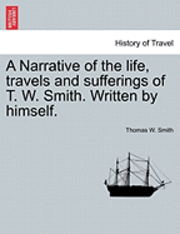
A Narrative of the Life, Travels and Sufferings of T. W. Smith. Written by Himself.
Thomas W. Smith
Häftad, 2013
359 kr
Hoppa över listan

Du kanske också är intresserad av
A Narrative of the Life, Travels and Sufferings of T. W. Smith. Written by Himself.
Thomas W. Smith
Häftad, 2013
359 kr
Communicating Papal Authority in the Middle Ages
Minoru Ozawa, Thomas W. Smith, Georg Strack
Häftad, 2024
849 kr
News in the Middle Ages
Helen Birkett, Adam Franklin-Lyons, Chris Given-Wilson, Wendy Scase, David Gary Shaw, Vasilina Sidorova, Thomas W. Smith, Igor S. Filippov
Inbunden, 2026
2 329 kr
Del 16
Del 6