
- Nyhet
Del i serien Languages and Culture in History
Rethinking the Mother Tongue in Contemporary Italy
- Nyhet
From Gramsci to Postcolonial Literature
Inbunden, Engelska, 2026
3 559 kr
Beställningsvara. Skickas inom 10-15 vardagar. Fri frakt för medlemmar vid köp för minst 249 kr.
Italy has always been a multilingual country, a place of many mother tongues. United as a state in 1861, the government attempted to “make Italians” – i.e., to create cohesion amongst its very different communities – by implementing one national language. Antonio Gramsci, who was trained as a linguist, observed how these linguistic policies played a role of intimacy in creating political hegemony, while oppressing the subalterns. Discussing language, that is, he criticized Italy’s internal colonialism and the Fascist regime. Rethinking the Mother Tongue in Contemporary Italy: From Gramsci to Postcolonial Literature asks what Gramsci’s thoughts on language mean for the present. It zooms in on Gramsci’s notion of “immanent grammar” and reads it alongside contemporary Italian postcolonial literature. It also under lines how Italy’s national Language Question has been involved with territorial expansion and questions of gendered and racialized bodies. Taking Italy as a case study, this book argues against monolingual and ethno-linguistic notions of the mother tongue and proposes to rethink the mother tongue from an immanent perspective: As an open-ended relation between language, bodies and terra, as immanent grammar. It will be of interest to scholars in the fields of gender and postcolonial theory, new materialism, Italian studies, comparative literature, intellectual history, linguistics, philosophy of language and transnational humanities.
Produktinformation
- Utgivningsdatum2026-08-28
- Mått156 x 234 x 11 mm
- Vikt460 g
- FormatInbunden
- SpråkEngelska
- SerieLanguages and Culture in History
- Antal sidor154
- FörlagPallas Publications
- ISBN9789048563913
Tillhör följande kategorier
Hoppa över listan
Mer från samma serie
French as Language of Intimacy in the Modern Age
Madeleine van Strien-Chardonneau, Marie-Christine Kok Escalle
Häftad, 2025
949 kr
Language Learning and Teaching in Missionary and Colonial Contexts
Dan Savatovsky, Mariangela Albano, Thi Kieu Ly Pham, Valérie Spaëth
Häftad, 2025
949 kr
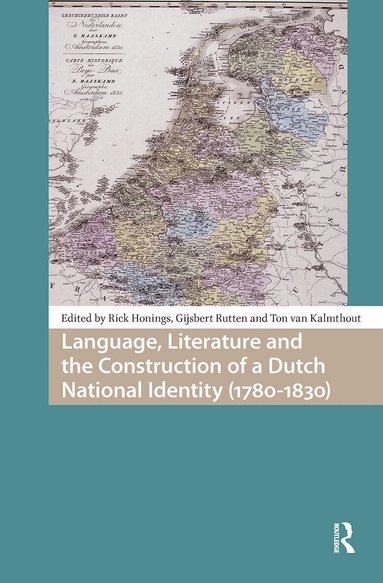
Language, Literature and the Construction of a Dutch National Identity (1780-1830)
Rick Honings, Ton van Kalmthout, Gijsbert Rutten
Häftad, 2025
949 kr
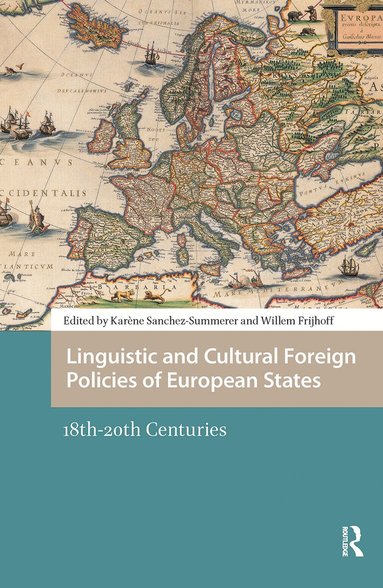
Linguistic and Cultural Foreign Policies of European States
Karène Sanchez Summerer, Willem Frijhoff
Häftad, 2025
949 kr
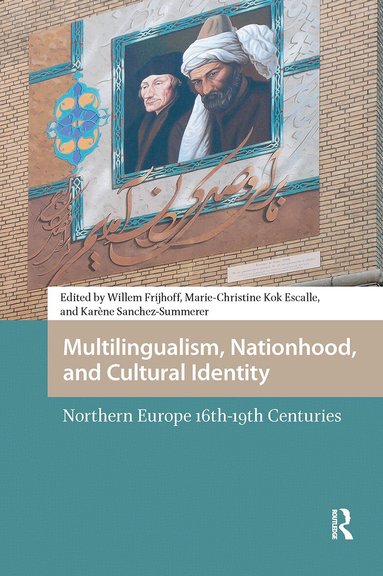
Multilingualism, Nationhood, and Cultural Identity
Willem Frijhoff, Marie-Christine Kok Escalle, Karène Sanchez Summerer
Häftad, 2025
949 kr
Early Modern Production of Missionary Books on Indigenous Languages in New Spain and Peru
Zanna Van Loon
Häftad, 2026
919 kr
Hoppa över listan

Du kanske också är intresserad av
Del 6
French as Language of Intimacy in the Modern Age
Madeleine van Strien-Chardonneau, Marie-Christine Kok Escalle
Inbunden, 2016
2 759 kr
Multilingualism, Nationhood, and Cultural Identity
Willem Frijhoff, Marie-Christine Kok Escalle, Karène Sanchez Summerer
Häftad, 2025
949 kr
Language Learning and Teaching in Missionary and Colonial Contexts
Dan Savatovsky, Mariangela Albano, Thi Kieu Ly Pham, Valérie Spaëth
Häftad, 2025
949 kr
Languages of Diplomacy in the Early Modern World
Gleb Kazakov, Vladislav Rjéoutski
Inbunden, 2026
3 349 kr
- Nyhet
Del 7