
Del i serien Advances in Chemistry Education Series
Professional Development of Chemistry Teachers
Theory and Practice
Häftad, Engelska, 2022
599 kr
Beställningsvara. Skickas inom 5-8 vardagar. Fri frakt för medlemmar vid köp för minst 249 kr.
Finns i fler format (1)
Continuous professional development of chemistry teachers is essential for any effective chemistry teaching due to the evolving nature of the subject matter and its instructional techniques. Professional development aims to keep chemistry teaching up-to-date and to make it more meaningful, more educationally effective, and better aligned to current requirements.Presenting models and examples of professional development for chemistry teachers, from pre-service preparation through to continuous professional development, the authors walk the reader through theory and practice. The authors discuss factors which affect successful professional development, such as workload, availability and time constraints, and consider how we maintain the life-long learning of chemistry teachers. With a solid grounding in the literature and drawing on many examples from the authors’ rich experiences, this book enables researchers and educators to better understand teachers’ roles in effective chemistry education and the importance of their professional development.
Produktinformation
- Utgivningsdatum2022-06-29
- Mått156 x 234 x 12 mm
- Vikt353 g
- FormatHäftad
- SpråkEngelska
- SerieAdvances in Chemistry Education Series
- Antal sidor203
- FörlagRoyal Society of Chemistry
- ISBN9781839167423
Tillhör följande kategorier
Hoppa över listan
Mer från samma serie
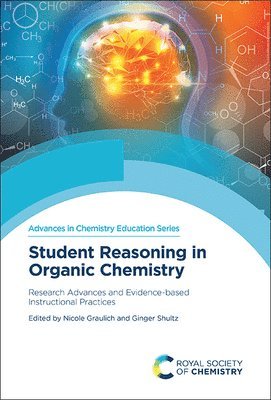
Nanochemistry for Chemistry Educators
Riam Abu Much, Kurt Winkelmann, Muhamad Hugerat
Inbunden, 2022
2 299 kr
Chemistry Education for a Sustainable Future
Catherine H Middlecamp, Mary M Kirchhoff, Peter Mahaffy, Klaus Kümmerer
Inbunden, 2025
2 329 kr
Hoppa över listan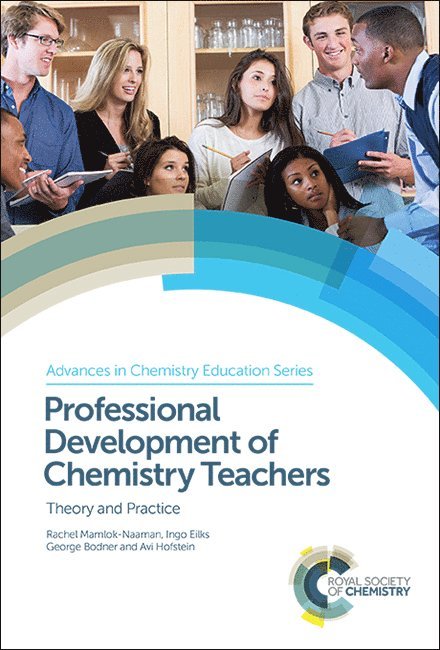


Du kanske också är intresserad av
Professional Development of Chemistry Teachers
Rachel Mamlok-Naaman, Ingo Eilks, George Bodner, Avi Hofstein
Inbunden, 2018
2 299 kr
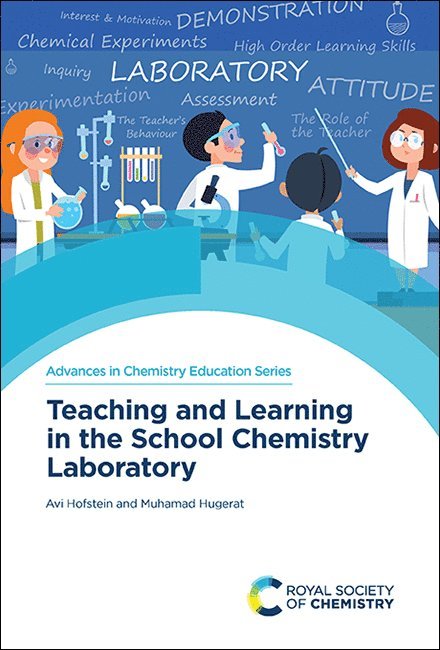
Teaching and Learning in the School Chemistry Laboratory
Avi Hofstein, Muhamad Hugerat
Inbunden, 2021
2 329 kr
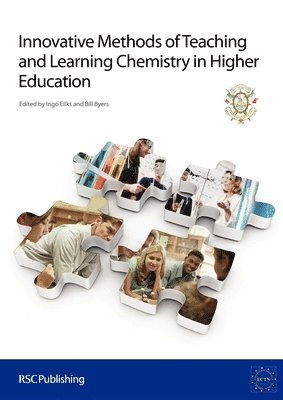
Innovative Methods of Teaching and Learning Chemistry in Higher Education
Ingo Eilks, Bill Byers
Häftad, 2009
489 kr
Del 21
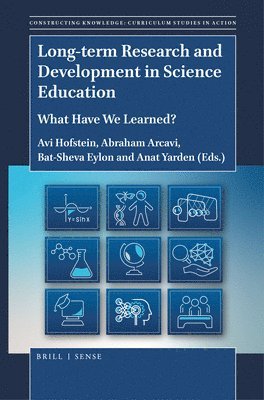
Long-term Research and Development in Science Education
Avi Hofstein, Abraham Arcavi, Bat-Sheva Eylon, Anat Yarden
Häftad, 2021
1 359 kr
Del 21
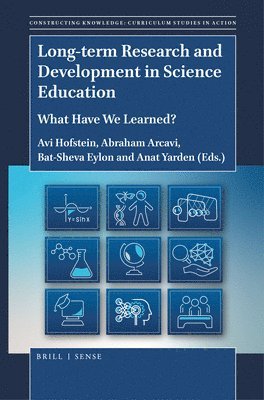
Long-term Research and Development in Science Education
Avi Hofstein, Abraham Arcavi, Bat-Sheva Eylon, Anat Yarden
Inbunden, 2021
3 079 kr
Fokus Naturwissenschaften 5./6. Schuljahr. Schülerbuch Hessen
Thomas Freiman, Ingo Eilks, Ebba Ehrnsberger, Ekhard Bruns, Siegfried Bresler, Udo Backhaus, Karin Arnold
Häftad
639 kr
- Nyhet
Del 3