
Poorhouse
America's Forgotten Institution
Häftad, Engelska, 2005
679 kr
Beställningsvara. Skickas inom 10-15 vardagar. Fri frakt för medlemmar vid köp för minst 249 kr.
Finns i fler format (1)
Many of us grew up hearing our parents exclaim "you are driving me to the poorhouse!" or remember the card in the "Monopoly" game which says "Go to the Poorhouse! Lose a Turn!" Yet most Americans know little or nothing of this institution that existed under a variety of names for approximately three hundred years of American history. Surprisingly these institutions variously named poorhouses, poor farms, sometimes almshouses or workhouses, have received rather scant academic treatment, as well, though tens of millions of poor people were confined there, while often their neighbors talked in hushed tones and in fear of their own fate at the "specter of the poorhouse."Based on the author's study of six New England poorhouses/poor farms, a hidden story in America's history is presented which will be of popular interest as well as useful as a text in social welfare and social history. While the poorhouse's mission was character reform and "repressing pauperism," these goals were gradually undermined by poor people themselves, who often learned to use the poorhouse for their own benefit, as well as by staff and officials of the houses, who had agendas sometimes at odds with the purposes for which the poorhouse was invented.
Produktinformation
- Utgivningsdatum2005-01-17
- Mått155 x 232 x 15 mm
- Vikt306 g
- FormatHäftad
- SpråkEngelska
- Antal sidor200
- FörlagBloomsbury Publishing Plc
- ISBN9780742529458
Tillhör följande kategorier
Hoppa över listan





Mer från samma författare
The Journey to Excellence in Esthetic Dentistry, An Issue of Dental Clinics of North America
Yair Whiteman, David Wagner
Inbunden, 2020
1 249 kr
Hoppa över listan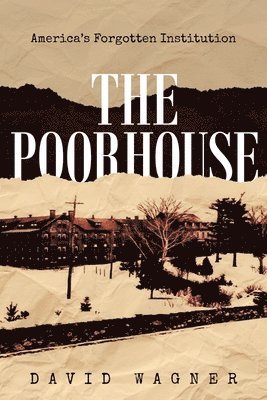








Du kanske också är intresserad av
- Nyhet
Del 11
- Nyhet
Del 3
- Nyhet
Del 3
- Nyhet
Del 4
Del 1
Del 3
- Nyhet
Del 6
Del 2
- Nyhet