
Del i serien RIPE Series in Global Political Economy
Politics of Late Urban Entrepreneurialism
The Innovation District
Inbunden, Engelska, 2025
3 209 kr
Beställningsvara. Skickas inom 10-15 vardagar. Fri frakt för medlemmar vid köp för minst 249 kr.
The Politics of Late Urban Entrepreneurialism provides a critical examination of how innovation district transformation in Barcelona has led to periodic crisis and an overproduction of commercial real estate alongside a chronic housing shortage, gentrification, touristification, and a growth in low‑quality employment, among other damaging results.Today, innovation districts are widely seen as a disruptive but generative solution to post‑industrial decline and inefficient land use in urban centres and as an effective means of bringing inclusive economic dynamism, quality jobs, and improved public spaces to city neighbourhoods. Their advocates often point to the pioneering transformation of the 22@ District. This book challenges the celebratory discourse surrounding the Barcelona case, and with a critical eye on how innovation district transformation is conditioned by the prevailing global political‑economic context. It also chronicles how this transformation has continually ignited forms of class‑based struggle in Barcelona by embattled residents angered at how their own neighbourhood has been used as an urban laboratory and site for speculative forms of capital accumulation. Ultimately, this book challenges the notion that ‘innovation’ is always a beneficent force through a critical examination of the disruptive consequences of innovation district transformation, by engaging with existing literature and interrogating the dominant narratives that celebrate them as being universally beneficial. Instead, it underscores the tensions and contradictions inherent in them.With its focus on the historical development of global capitalism and the retention of a narrow repertoire of entrepreneurial approaches towards urban governance, The Politics of Late Urban Entrepreneurialism will be of great interest to scholars and students researching globalisation and urbanisation.
Produktinformation
- Utgivningsdatum2025-11-19
- Mått156 x 234 x 17 mm
- Vikt490 g
- FormatInbunden
- SpråkEngelska
- SerieRIPE Series in Global Political Economy
- Antal sidor162
- FörlagTaylor & Francis Ltd
- ISBN9781032766621
Tillhör följande kategorier
Hoppa över listan

Mer från samma författare
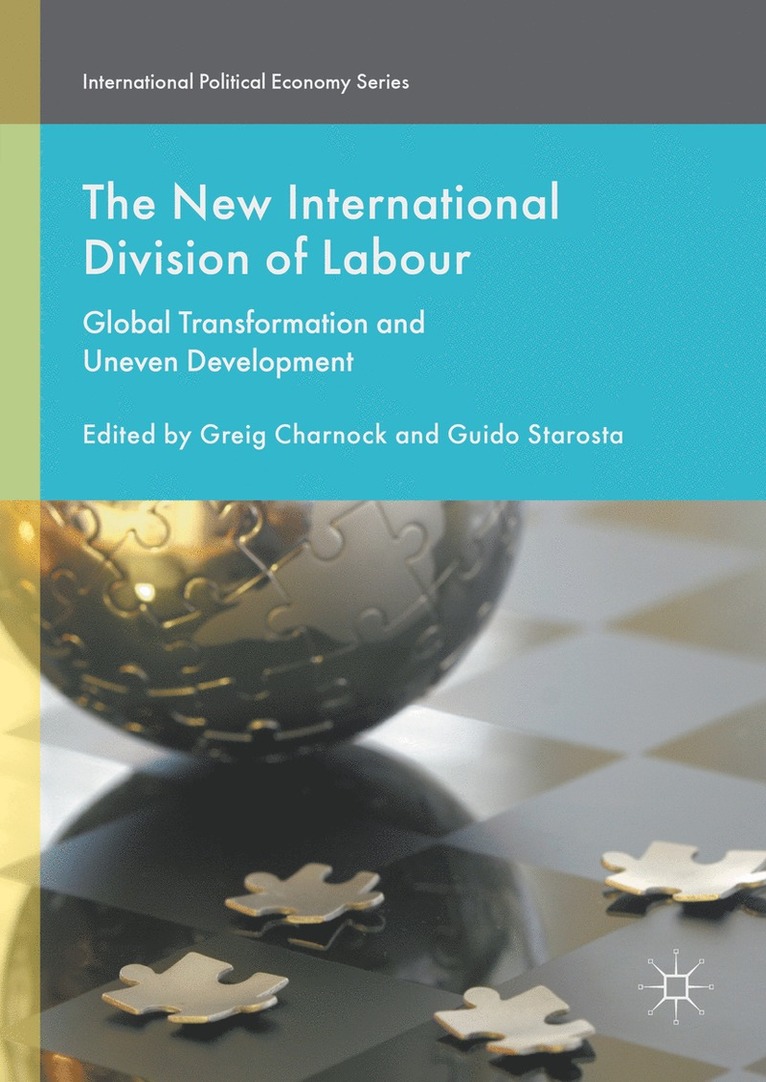
New International Division of Labour
Guido Starosta, Greig Charnock, Guido Starosta
Inbunden, 2016
1 859 kr
Hoppa över listan

Mer från samma serie
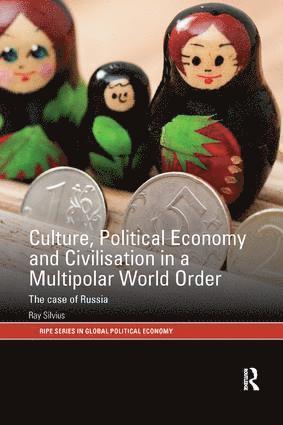
Culture, Political Economy and Civilisation in a Multipolar World Order
Ray Silvius
Häftad, 2018
789 kr
Free Trade Agreements and Global Labour Governance
Adrian Smith, James Harrison, Liam Campling, Ben Richardson, Mirela Barbu
Inbunden, 2020
3 209 kr
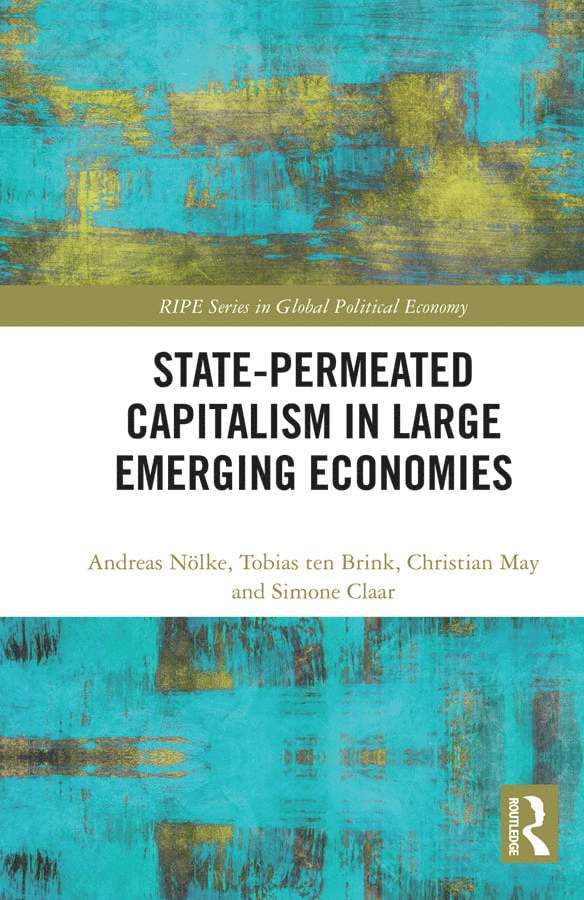
State-permeated Capitalism in Large Emerging Economies
Andreas Nölke, Tobias ten Brink, Christian May, Simone Claar
Inbunden, 2019
3 299 kr
Hoppa över listan






Du kanske också är intresserad av
New International Division of Labour
Guido Starosta, Greig Charnock, Guido Starosta
Inbunden, 2016
1 859 kr
- Nyhet
Del 3
- Nyhet
Del 11
- Nyhet
- Nyhet
- Nyhet
Del 6
Del 1
- Nyhet
Del 4