
Del i serien Forced Migration
Politics of Innocence
Hutu Identity, Conflict and Camp Life
Häftad, Engelska, 2012
579 kr
Beställningsvara. Skickas inom 5-8 vardagar. Fri frakt för medlemmar vid köp för minst 249 kr.
Finns i fler format (1)
Based on thorough ethnographic fieldwork in a refugee camp in Tanzania this book provides a rich account of the benevolent “disciplining mechanisms” of humanitarian agencies, led by the UNHCR, and of the situated, dynamic, indeterminate, and fluid nature of identity (re)construction in the camp. While the refugees are expected to behave as innocent, helpless victims, the question of victimhood among Burundian Hutu is increasingly challenged, following the 1993 massacres in Burundi and the Rwandan genocide. The book explores how different groups within the camp apply different strategies to cope with these issues and how the question of innocence and victimhood is itself imbued with ambiguity, as young men struggle to recuperate their masculinity and their political subjectivity.
Produktinformation
- Utgivningsdatum2012-02-01
- Mått152 x 229 x 11 mm
- Vikt268 g
- FormatHäftad
- SpråkEngelska
- SerieForced Migration
- Antal sidor194
- FörlagBerghahn Books
- ISBN9780857456090
Tillhör följande kategorier
Hoppa över listan





Mer från samma författare
Uranium-series Geochemistry
Bernard Bourdon, Gideon M. Henderson, Craig C. Lundstrom, Simon Turner
Häftad, 2018
739 kr
- Nyhet
Hoppa över listan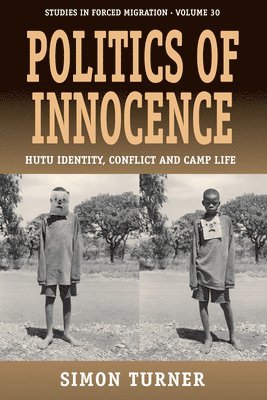


Du kanske också är intresserad av
Del 17
DNA #17: Geology of the Present
Giulia Bruno, Rowan Deer, Armin Linke, Simon Turner, Anthropocene Working Group, Katrin Klingan, Nick Houde
Häftad, 2024
169 kr
Uranium-series Geochemistry
Bernard Bourdon, Gideon M. Henderson, Craig C. Lundstrom, Simon Turner
Häftad, 2018
739 kr
- Nyhet