
Del 1
Del 5 i serien Drama and Theatre in Early Modern Europe
Politics and Aesthetics in European Baroque and Classicist Tragedy
Inbunden, Engelska, 2016
4 909 kr
Beställningsvara. Skickas inom 5-8 vardagar. Fri frakt för medlemmar vid köp för minst 249 kr.
Politics and Aesthetics in European Baroque and Classicist Tragedy is a volume of essays investigating European tragedy in the seventeenth century, comparing Shakespeare, Vondel, Gryphius, Racine and several other vernacular tragedians, together with consideration of neo-Latin dramas by Jesuits and other playwrights. To what extent were similar themes, plots, structures and styles elaborated? How is difference as well as similarity to be accounted for? European drama is beginning to be considered outside of the singular vernacular frameworks in which it has been largely confined (as instanced in the conferences and volumes of essays held in the Universities of Munich and Berlin 2010-12), but up-to-date secondary material is sparse and difficult to obtain. This volume intends to help remedy that deficit by addressing the drama in a full political, religious, legal and social context, and by considering the plays as interventions in those contexts.Contributors are: Christian Biet, Jan Bloemendal, Helmer J. Helmers, Blair Hoxby, Sarah M. Knight, Tatiana Korneeva, Frans-Willem Korsten, Joel B. Lande, Russell J. Leo, Howard B. Norland, Kirill Ospovat, James A. Parente, Jr., Freya Sierhuis, Nienke Tjoelker and Emily Vasiliauskas.
Produktinformation
- Utgivningsdatum2016-08-19
- Mått155 x 235 x 30 mm
- Vikt816 g
- FormatInbunden
- SpråkEngelska
- SerieDrama and Theatre in Early Modern Europe
- Antal sidor442
- FörlagBrill
- ISBN9789004323414
Tillhör följande kategorier
Hoppa över listan



Mer från samma författare
Del 2
Del 3
Del 10
Daniel Heinsius, Auriacus, sive Libertas saucia (Orange, or Liberty Wounded), 1602
Jan Bloemendal
Inbunden, 2020
4 359 kr
Del 346
Literature without Frontiers
Cornelis van der Haven, Youri Desplenter, J.A. Parente Jr., Jan Bloemendal
Inbunden, 2023
2 529 kr
Del 15
TransLatin: The Transnational Impact of Latin Theatre from the Early Modern Netherlands
Dinah Wouters, Jan Bloemendal
Inbunden, 2026
2 729 kr
Hoppa över listan
Mer från samma serie
Del 1
Del 2
Del 3
Del 4
Del 7
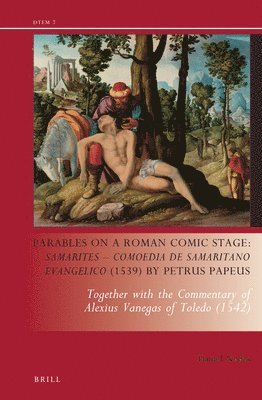
Parables on a Roman Comic Stage: Samarites — Comoedia de Samaritano Evangelico (1539) by Petrus Papeus
Daniel J. Nodes
Inbunden, 2017
3 199 kr
Del 6
Del 8
Footprints of the Dance: An Early Seventeenth-Century Dance Master’s Notebook
Jennifer Nevile
Inbunden, 2018
3 079 kr
Del 11
Del 10
Daniel Heinsius, Auriacus, sive Libertas saucia (Orange, or Liberty Wounded), 1602
Jan Bloemendal
Inbunden, 2020
4 359 kr
Del 12
Hoppa över listan









Du kanske också är intresserad av
Del 6
BIOCOMPUTING '96 - PROCEEDINGS OF THE PACIFIC SYMPOSIUM
TERI KLEIN LAWRENCE HUNTER, Lawrence Hunter, Teri E Klein
Inbunden, 1995
4 909 kr
Research Handbook on Voluntary Assisted Dying Law, Regulation and Practice
Ben P. White
Inbunden, 2025
4 909 kr
Gen Combo Corporate LL Finance: Core Princples & Applications; Connect Access Card
Stephen A. Ross, Randolph W. Westerfield
Inbunden
4 909 kr
Anatomic Atlas of Aquatic and Wetland Plant Stems
Fritz H. Schweingruber, Andrea Kučerová, Lubomír Adamec, Jiří Doležal
Häftad, 2021
4 909 kr
MODELLING OF ATMOSPHERIC FLOW FIELDS
Lalas Demetri P, Demetri P Lalas, Corrado F Ratto
Inbunden, 1996
4 909 kr