
Pirandello’s Visual Philosophy
Imagination and Thought across Media
Inbunden, Engelska, 2017
1 919 kr
Beställningsvara. Skickas inom 10-15 vardagar. Fri frakt för medlemmar vid köp för minst 249 kr.
This collection draws on cutting-edge work that crosses traditional disciplinary boundaries to offer new perspectives on the importance of visuality and the imagination in the work of Luigi Pirandello, the great Italian modernist. The volume re-examines traditional critical notions central to the study of Pirandello by focusing on the importance of the visual imagination in his poetics and aesthetics, an area of multimedia investigation which has not yet received ample attention in English-language books. Putting scholarship on Pirandello in conversation with new work on the multimedia dimensions of modernism, the volume examines how Pirandello worked across and was adapted through multiple media. It also brings Pirandello into a cross-disciplinary dialogue with new approaches to Italian cultural studies to show how his work remains relevant to scholarly conversations across the field. The essays in this collection highlight the ways in which Pirandello is engaged not only in literature and theatre but also in the visual arts, film, and music. At the same time, they emphasize the ways in which this multimedia creativity enables Pirandello to pursue complex philosophical thoughts, and how scholars’ interpretation of his works can provide new insights into problems facing us today. Crossing from aesthetics and a study of modernist notions of creative imagination into studies of multimedia works and adaptations, the volume argues that Pirandello should be understood as a thinker in images whose legacy can be felt across the arts and into the realm of 21st-century theories of literary cognition.
Produktinformation
- Utgivningsdatum2017-03-23
- Mått158 x 240 x 20 mm
- Vikt535 g
- FormatInbunden
- SpråkEngelska
- SerieThe Fairleigh Dickinson University Press Series in Italian Studies
- Antal sidor232
- FörlagAssociated University Presses
- ISBN9781683930280
Tillhör följande kategorier
Hoppa över listan




Mer från samma serie
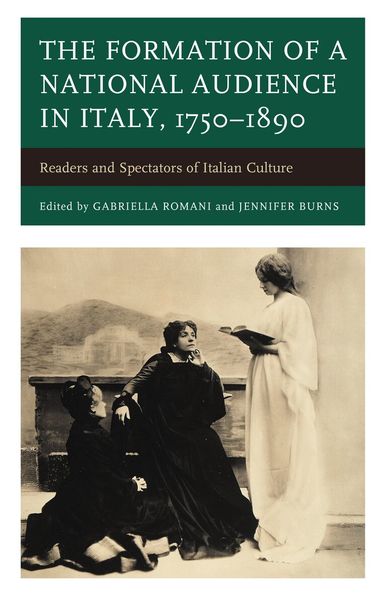
Formation of a National Audience in Italy, 1750–1890
Gabriella Romani, Jennifer Burns
Inbunden, 2017
2 339 kr
Hoppa över listan
Du kanske också är intresserad av
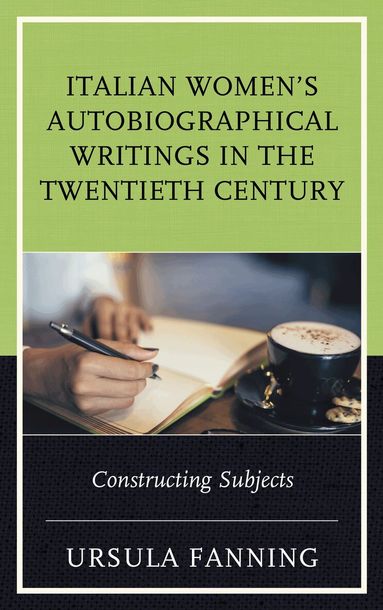
Italian Women's Autobiographical Writings in the Twentieth Century
Ursula Fanning
Inbunden, 2017
1 919 kr