
On the Edge of the Global Economy
Inbunden, Engelska, 2004
3 139 kr
Beställningsvara. Skickas inom 5-8 vardagar. Fri frakt för medlemmar vid köp för minst 249 kr.
On the Edge of the Global Economy contends that despite growing global economic integration, some nations continue to be disadvantaged by remoteness, low connectivity, a small-scale economy and low population density. The book concludes that these economies may nonetheless have significant potential, for example through offering an attractive natural environment, a pleasant climate, various types of niche production and customised services that can lure footloose firms and mobile workers.The contributors review the issues and assess the empirical evidence regarding the various opportunities and challenges facing small remote economies in the global economy. They find that locality and proximity still matter, but that the global economic configuration also offers new opportunities to peripheral nations. Expanding the literature on a somewhat neglected aspect of globalisation, this book will be of great interest to economists, geographers and other researchers specialising in globalisation and related topics. In addition, it will be very useful to policymakers in small remote economies.
Produktinformation
- Utgivningsdatum2004-11-26
- Mått156 x 234 x undefined mm
- FormatInbunden
- SpråkEngelska
- FörlagEdward Elgar Publishing Ltd
- ISBN9781843761853
Tillhör följande kategorier
Hoppa över listan


Mer från samma författare
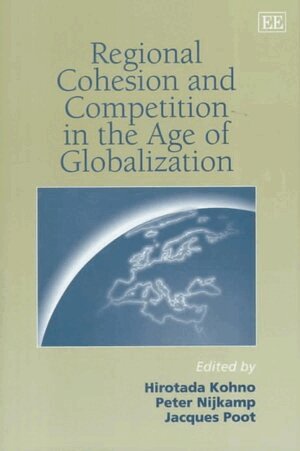
Regional Cohesion and Competition in the Age of Globalization
Hirotada Kohno, Peter Nijkamp, Jacques Poot
Inbunden, 2000
3 309 kr
Del 30
Population Change and Impacts in Asia and the Pacific
Jacques Poot, Matthew Roskruge
Inbunden, 2020
2 429 kr
Del 30
Population Change and Impacts in Asia and the Pacific
Jacques Poot, Matthew Roskruge
Häftad, 2021
2 429 kr
Hoppa över listan

Du kanske också är intresserad av
Regional Cohesion and Competition in the Age of Globalization
Hirotada Kohno, Peter Nijkamp, Jacques Poot
Inbunden, 2000
3 309 kr
Del 30
Population Change and Impacts in Asia and the Pacific
Jacques Poot, Matthew Roskruge
Häftad, 2021
2 429 kr
Del 30
Population Change and Impacts in Asia and the Pacific
Jacques Poot, Matthew Roskruge
Inbunden, 2020
2 429 kr
- Nyhet
Del 3
- Nyhet